
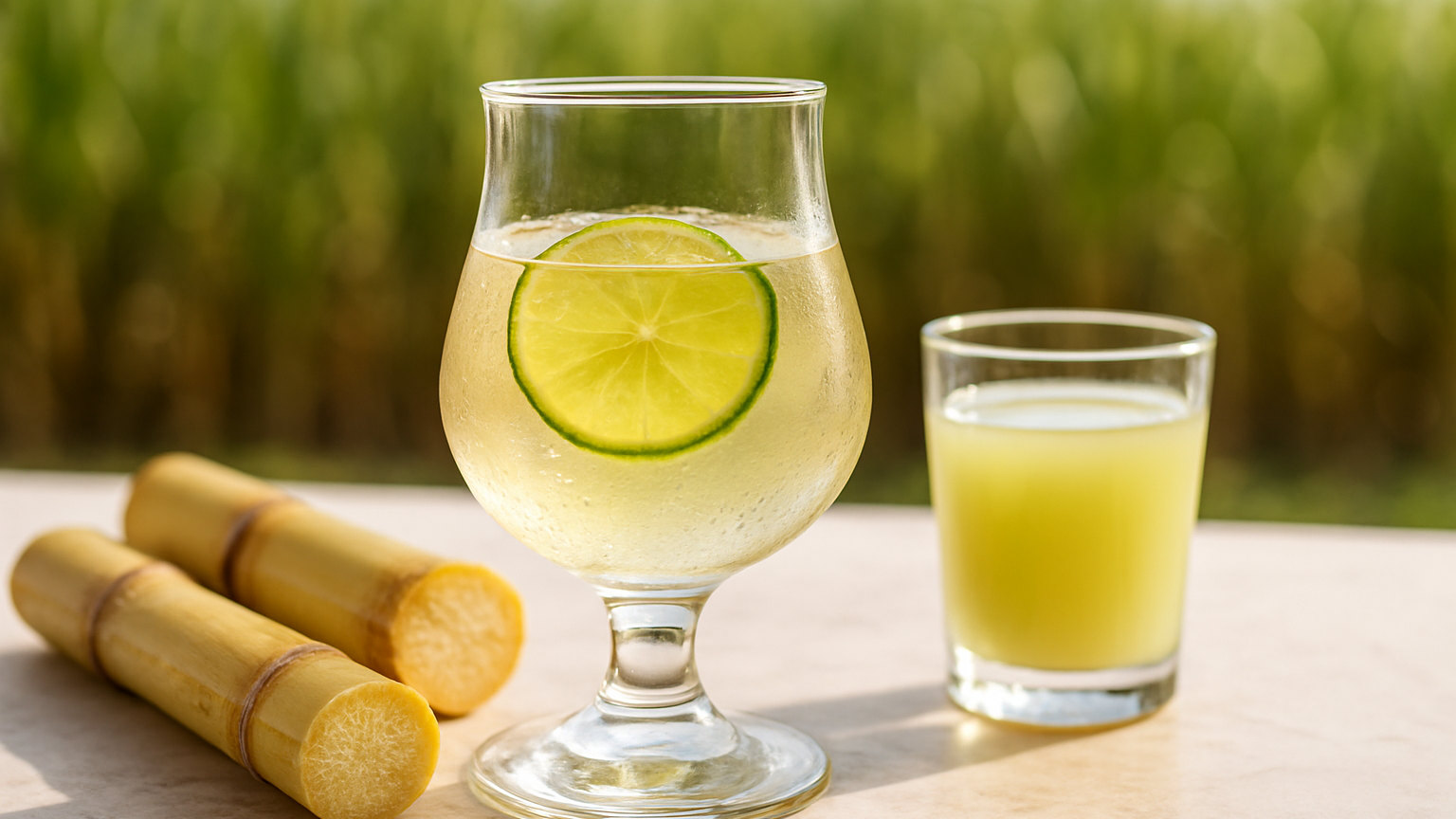
Almost all rum is made from molasses, a byproduct of sugar refining. Rhum agricole is made from fresh sugarcane juice, and the difference is large enough that people tasting it blind rarely identify it as rum.
What does agricole mean?
Agricultural, distinguishing rum made directly from the cane crop from rum made from a refinery byproduct. The term is used chiefly in the French Caribbean.
Martinique holds an AOC, a controlled designation of origin, which governs cane varieties, yields, fermentation, distillation and ageing. It is among the strictest rum regulation anywhere, in a category that is otherwise barely regulated at all.
Why does cane juice make a different spirit?
Because molasses has already had the sugar extracted and has been heated repeatedly, which produces the caramel and dried fruit character typical of rum.
Fresh cane juice keeps the grassy, vegetal, faintly saline character of the plant. The result is brighter, drier and more herbaceous, with an olive and green note that molasses rum never has.
Why is production seasonal?
Because cut cane begins fermenting within hours and must be pressed and fermented immediately. Distilleries run only during the harvest, typically February to June in Martinique.
That is why agricole production is concentrated where the cane grows, while molasses rum can be made anywhere molasses can be shipped.
What are the categories?
- Blanc. Unaged or rested briefly. Grassy, sharp, often bottled at 50 to 55 per cent.
- Élevé sous bois. At least twelve months in wood. Lightly coloured.
- Vieux. At least three years in oak barrels under 650 litres.
- VSOP and XO. Four and six years respectively, following brandy conventions.
What does it taste like?
Blanc agricole is grassy, peppery, olive-like and mineral, with a distinct vegetal sharpness. It is assertive and it divides opinion on first encounter.
Aged agricole keeps that character under oak, producing something between a rum and a cognac. Vieux expressions are among the more interesting aged spirits available and are underappreciated outside France.
Which drinks suit it?
- Ti punch. The traditional serve. Agricole, cane syrup, lime disc, little or no ice.
- Daiquiri. Sharper and more herbal than the standard version.
- Rum sours generally. The grassiness works with citrus.
- Aged versions neat. Where the vieux expressions belong.
It substitutes poorly into drinks written for molasses rum, since the flavour runs in a different direction rather than being a lighter or heavier version.
What is cane syrup?
Sirop de canne, made from cane juice rather than refined sugar. It suits agricole better than plain sugar syrup, since it echoes the base rather than simply sweetening.
Ordinary sugar syrup works if you have none, and the drink loses a little of its coherence.
Is it worth buying?
As a second or third rum rather than a first, since it will not stand in for a conventional white rum. Blanc agricole is frequently bottled at 50 per cent or more, so a 50ml measure is 2.5 units.
How should you drink blanc agricole?
In a ti punch, or neat in a small measure at room temperature. It is assertive and it rewards attention, and it is not a spirit to shot.
Many are bottled at 50 to 55 per cent, so a few drops of water genuinely helps open it up, exactly as with a cask strength whisky.
What strength is it bottled at?
Higher than most rum. Blanc agricole is commonly 50 to 55 per cent, and the AOC permits up to 62.
That matters for measures. Fifty millilitres at 55 per cent is 2.75 units, against 2 for a standard 40 per cent spirit.
Is it available outside France?
Increasingly, though still less widely stocked than conventional rum. Specialist retailers carry it and supermarkets generally do not.
Guadeloupe and Haiti also produce cane juice rum outside the Martinique AOC, and clairin from Haiti is worth trying if you find it.
Why is it less known?
Because production volumes are small and much of it is consumed in France and the French Caribbean. The AOC also restricts yields, which caps output deliberately.


