
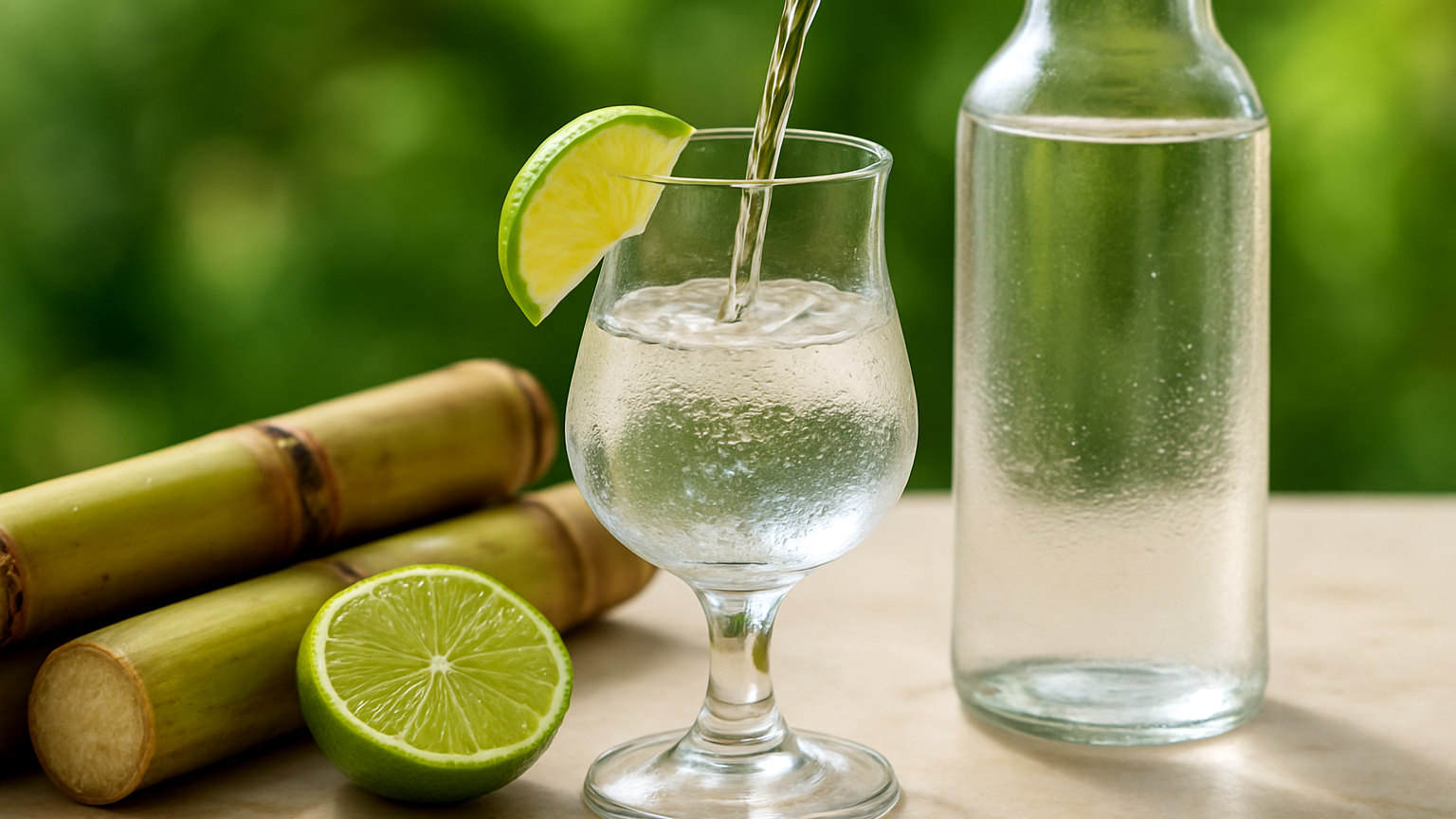
Cachaça is the most produced cane spirit in the world and among the least exported. It is made from fresh cane juice like agricole, comes from Brazil, and is legally distinct from rum in its home market.
How does it differ from rum?
Three ways. It must be made in Brazil, from fresh cane juice rather than molasses, and it must be distilled to between 38 and 48 per cent, which is lower than most rum.
That lower distillation strength retains more congeners and more of the raw material character, which is part of why cachaça tastes fuller and more vegetal than a light rum.
The United States recognises cachaça as a distinct type of rum. Brazil regards it as its own category.
What are the styles?
- Branca or prata. Unaged or rested in steel. Grassy, sharp, the standard for caipirinhas.
- Ouro or amarela. Aged, usually at least a year in wood.
- Premium. At least a year in casks under 700 litres.
- Extra premium. At least three years.
What is unusual about the wood?
Brazilian producers age in native timbers as well as oak, and the range is far wider than anything used elsewhere in spirits.
- Amburana. Cinnamon, vanilla, distinctly sweet spice.
- Jequitibá. Neutral, adds little colour.
- Bálsamo. Resinous and aromatic.
- Umburana and jatobá. Each with its own character.
Amburana in particular gives a flavour nothing else produces, and an aged cachaça in that wood is worth trying for its own sake.
How do you make a caipirinha?
Half a lime cut into wedges, two teaspoons of sugar, 60ml cachaça, crushed ice.
- Cut the lime into six or eight wedges, removing the white core if it is thick.
- Add the sugar and press gently. Do not pulverise.
- Add the cachaça and stir.
- Fill with crushed ice and stir again.
Why press gently?
Because the pith and the oil-rich peel turn bitter when crushed hard. The aim is to release juice and a little oil, not to shred the fruit.
This is the commonest fault in a home caipirinha, and it is the same principle that applies to muddling mint.
Should you use granulated sugar?
Traditionally yes, and it acts as an abrasive against the lime while dissolving. Caster sugar dissolves faster and works well.
Sugar syrup is easier to balance but loses the abrasive effect, so press the lime a little more firmly if using it.
How strong is it?
Around 2.4 units with 60ml of 40 per cent cachaça. It tastes light and sharp for something that strong, which is worth remembering across an evening.
Can you substitute rum?
A drink made with white rum is a different cocktail, sometimes called a caipiríssima. It is perfectly good and it lacks the vegetal edge that cachaça brings.
Agricole is the closer substitute, since both are cane juice spirits with grassy character.
Is it worth buying?
If you make caipirinhas, yes, since nothing else quite substitutes. As a general rum shelf addition it comes after white, aged and overproof.
An aged cachaça in amburana is worth trying for the wood alone, and it is unlike anything else in spirits.
How much is produced?
Enormous quantities, the great majority consumed within Brazil. Thousands of small producers operate alongside a handful of industrial ones, and very little of the artisanal output is exported.
What reaches export markets is therefore unrepresentative of the category as a whole.
What should you look for?
Whether it is artisanal or industrial, and what wood any aged expression used. Both are usually stated, and both change the spirit substantially.
Strength is typically 38 to 40 per cent, at the lower end of the spirits range.
How does it compare to agricole?
Both are cane juice spirits and they differ in distillation strength and wood. Cachaça is distilled lower, keeping more character, and the native timbers give flavours agricole never has.
Can you age it at home?
Not meaningfully, and small oak chips or sticks added to a bottle will contribute wood character within days rather than years. It is a different result from barrel ageing, since only extraction occurs and none of the slow oxidative development.
Taste frequently if you try it, since a small piece of oak in a bottle over-extracts far faster than most people expect and the result turns tannic and drying.


