
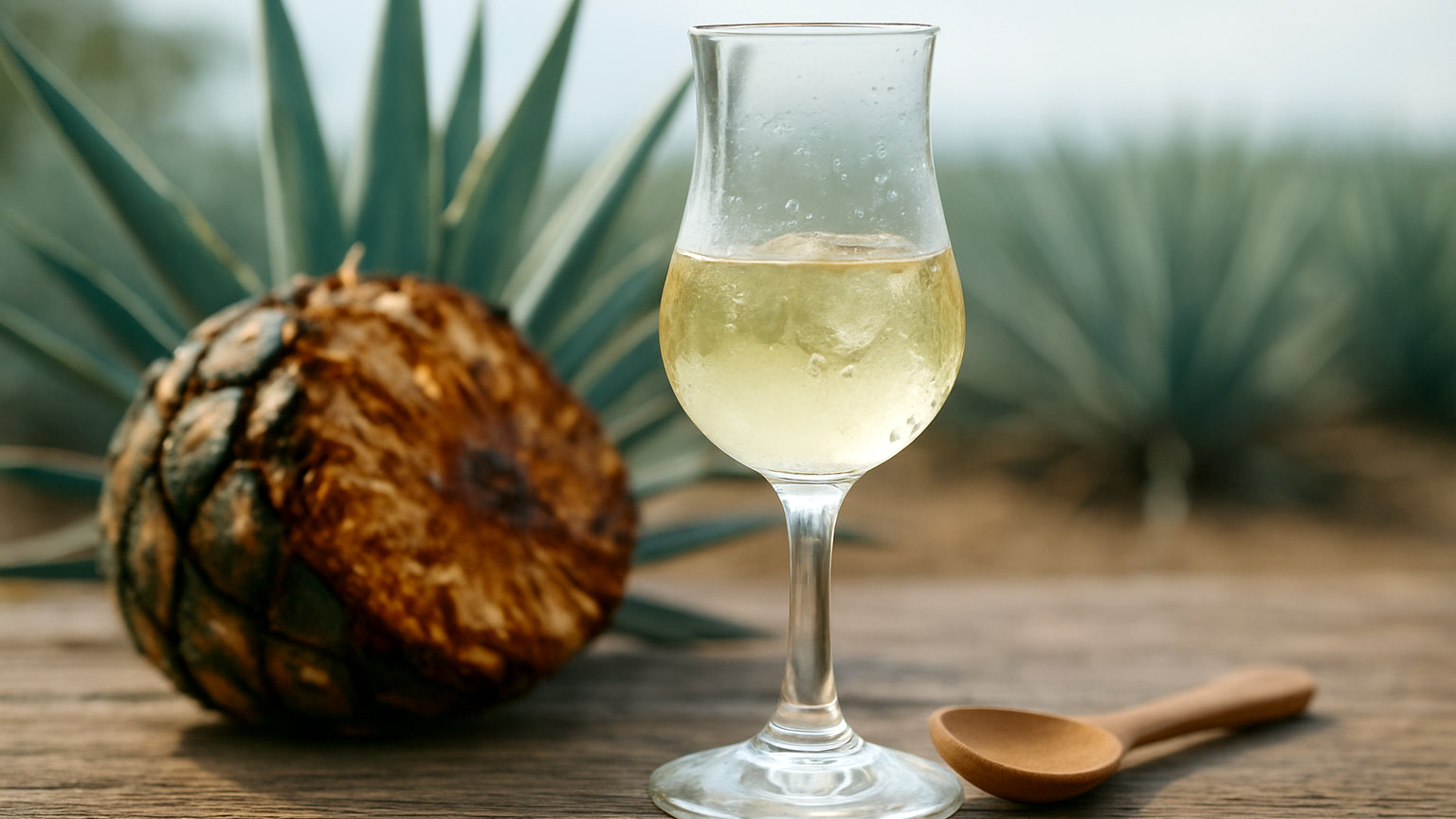
Tequila production begins with a plant that takes the better part of a decade to be ready. That single fact governs the economics of the category and explains a good deal about why cheap tequila is made the way it is.
What is agave?
A succulent, not a cactus, despite the resemblance. Blue weber agave is the only species permitted in tequila, and it stores energy as inulin in a large central core.
That core, the piña, is what is harvested. It looks like an enormous pineapple, which is where the name comes from, and can weigh anywhere from 25 to over 100 kilograms.
How long does it take to mature?
Six to eight years for blue weber, and longer for some wild mezcal species. The plant is harvested once and dies, so every piña represents most of a decade of growing.
That creates cycles of surplus and shortage that ripple through pricing for years, since a planting decision made today affects supply in 2033.
Who harvests it?
A jimador, using a flat-bladed tool called a coa to strip the spiny leaves back to the core. It is skilled physical work and the skill affects quality, since leaving too much leaf base introduces bitter compounds.
Why must it be cooked?
Because inulin is not fermentable. Cooking hydrolyses it into fermentable sugars, and it also creates the cooked-agave flavour that defines the spirit.
- Brick ovens. Traditional, slow, 24 to 48 hours. Develops caramelised sweetness.
- Autoclaves. Industrial pressure cookers, 8 to 14 hours. Efficient and cleaner tasting.
- Diffusers. Shred raw agave and extract sugars chemically with hot water and acid.
What is the objection to diffusers?
That they extract sugar efficiently while stripping much of the character, producing a neutral base that then requires additives to taste like tequila.
They are legal and increasingly common at volume. Producers rarely advertise using one, so a tequila that tastes oddly thin for the price may well be a diffuser product.
How is it crushed?
Traditionally with a tahona, a large stone wheel turning in a circular pit, crushing the cooked piñas slowly. It is labour intensive and leaves fibre in the must, which some producers ferment together for extra character.
Mechanical roller mills are the industrial equivalent and are faster and more efficient.
How is it fermented and distilled?
The extracted juice ferments for two to five days, either with cultivated yeast or wild yeast from the air. Wild fermentation is slower and less predictable and contributes more complexity.
Distillation is usually twice in copper pot stills, reaching around 55 per cent, then diluted to bottling strength. Column stills are used at larger scale.
What are additives?
Tequila regulations permit small quantities of four additives: caramel colouring, oak extract, glycerin and sugar syrup. Up to 1 per cent by weight, without declaration.
That sounds minor and is enough to noticeably change sweetness, colour and mouthfeel. Producers who use none often say so explicitly, which is a useful signal.
What should you look for?
The words 100 per cent agave, and a NOM number identifying the distillery. Beyond that, brick oven and tahona production are stated when used, because they cost more.
Why does supply swing so much?
Because the growing cycle is longer than the market cycle. Farmers plant in response to high prices, and the crop arrives eight years later, frequently into a glut.
The result is alternating shortage and surplus, with agave prices swinging by a factor of ten across a cycle. That volatility is one reason mixto production exists.
Does the region within Jalisco matter?
Somewhat. Highland agave tends to be larger and sweeter, giving fruitier and softer tequila. Lowland agave gives earthier, more peppery and herbaceous results.
Producers state their region when it suits them, and it is a real if secondary variable.
What is the piña waste used for?
The spent fibre, called bagazo, is a substantial byproduct. It is composted, used as animal bedding, burned as fuel or pressed into building material.
Every litre of tequila leaves several kilograms of it, which is one of the environmental pressures on the industry.


