
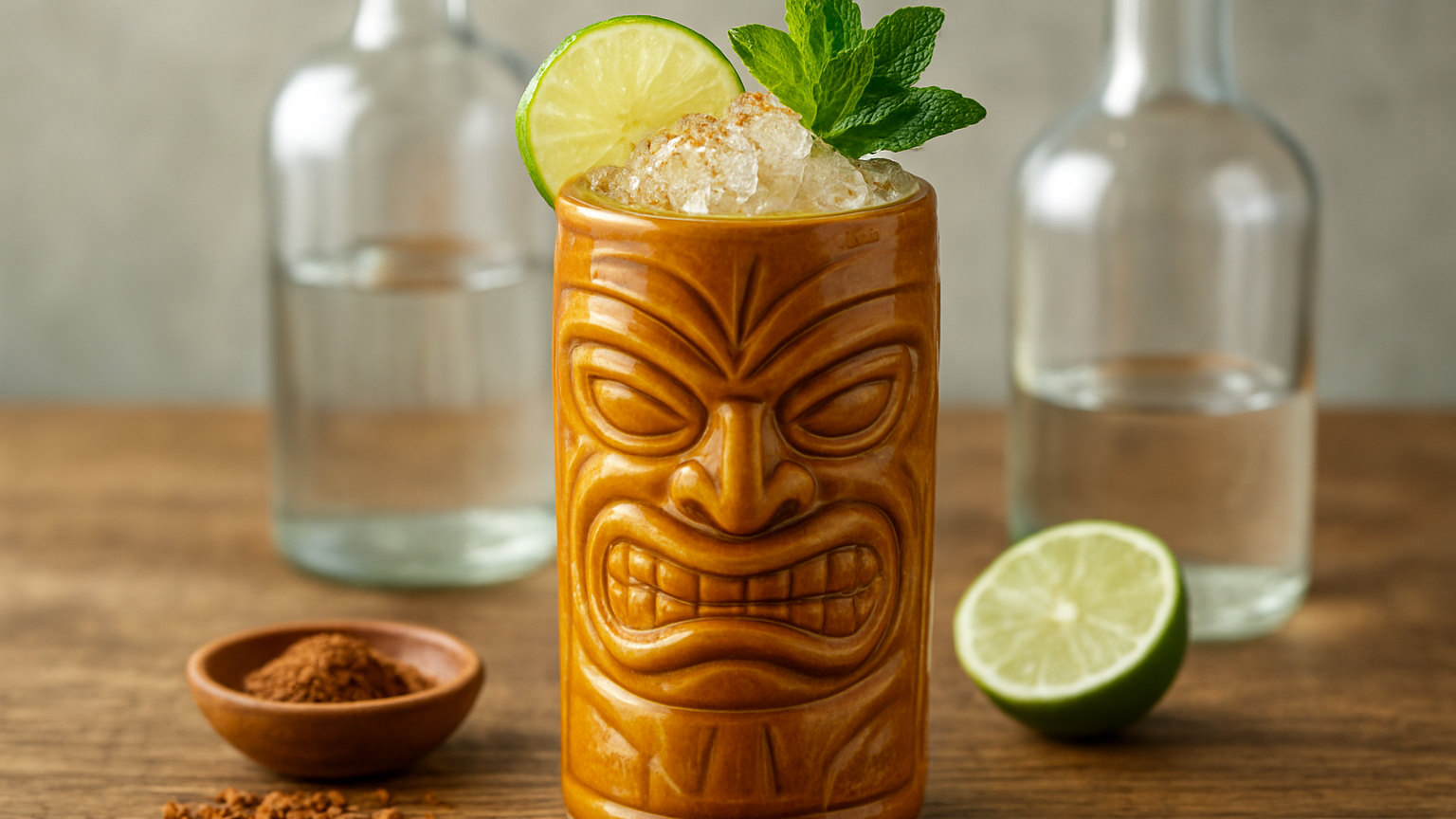
Tiki cocktails have a reputation for being fussy, sweet and unserious. The good ones are none of those things, and they follow a structure that becomes obvious once you have made two or three.
What is the underlying structure?
Almost every tiki drink is a rum sour with additions:
- Two or three rums, each contributing something different.
- Citrus, usually lime, sometimes grapefruit or orange.
- A sweetener with character: orgeat, falernum, honey, cinnamon syrup.
- A spice or bitter element: Angostura, absinthe, allspice dram.
- Crushed ice, in quantity.
Recognising that turns an intimidating recipe list into a familiar shape.
Why blend the rums?
Because each does a different job. A light rum supplies strength without interfering, a Jamaican supplies esters and fruit, an aged supplies depth, and an overproof supplies intensity.
Single-rum versions of these drinks taste noticeably flatter. The blend is the recipe rather than a substitution for not having the right bottle.
What is orgeat?
An almond syrup with orange flower water, and the defining ingredient of a mai tai. It gives a rich, nutty sweetness that nothing else replicates.
It contains almonds, so it is a genuine allergen risk and worth mentioning when serving to guests. Some commercial versions use artificial flavouring instead, which is worth checking either way.
What is falernum?
A Caribbean syrup or liqueur of lime, clove, ginger, almond and sometimes rum. It appears throughout the canon and contributes spice and citrus together.
It also usually contains almond, which is the same allergen consideration.
How do you make a mai tai?
The original is simple, and the sweet pineapple version bears no relation to it.
Thirty millilitres aged Jamaican rum, 30ml rhum agricole or a second aged rum, 30ml fresh lime, 15ml orange curaçao, 15ml orgeat. Shake with crushed ice, pour unstrained, garnish with the spent lime shell and mint.
That is around 2.7 units. No pineapple juice, no grenadine.
Why crushed ice?
Because these drinks are strong and need dilution as they are drunk, not all at once. Crushed ice chills fast and continues diluting, which is why the drink stays balanced rather than becoming harsh.
Crush cubes in a clean tea towel with a rolling pin if you have no machine. It takes a minute.
What about flamed garnishes?
Common in the style and worth treating carefully. Keep the bottle closed and well away, use a small quantity of overproof in a hollowed lime shell, and never pour spirit onto an existing flame.
Have a lid or a damp cloth to hand and do not do it near hair, paper or anything hanging above.
How strong are these drinks?
Often considerably more than they taste. A zombie contains three or four rums including overproof and can reach 4 to 5 units in one glass.
The sweetness and the crushed ice mask the strength, which is exactly why several bars historically limited customers to two.
What syrups are worth making?
Cinnamon syrup and honey syrup are both trivial and appear across the canon. Orgeat is more involved and worth buying unless you make a lot of mai tais.
Falernum can be made at home by steeping lime peel, clove, ginger and almond in rum, then sweetening. It takes a few days and costs far less than the bottled version.
Why did the style get its reputation?
Because the original recipes were guarded secrets and the imitations that spread used tinned juice and grenadine instead. The drinks people encountered bore little resemblance to what was being made in the original bars.
Recipes recovered from the 1930s and 1940s are dry, complex and balanced, which surprises people expecting something sweet.
What equipment helps?
A shaker, a jigger, and something to crush ice. Everything else in the style is achievable with what most kitchens already hold.
Which should you make first?
A mai tai, made properly. It demonstrates the whole structure in one drink and it is the clearest illustration of why blending rums matters.


