
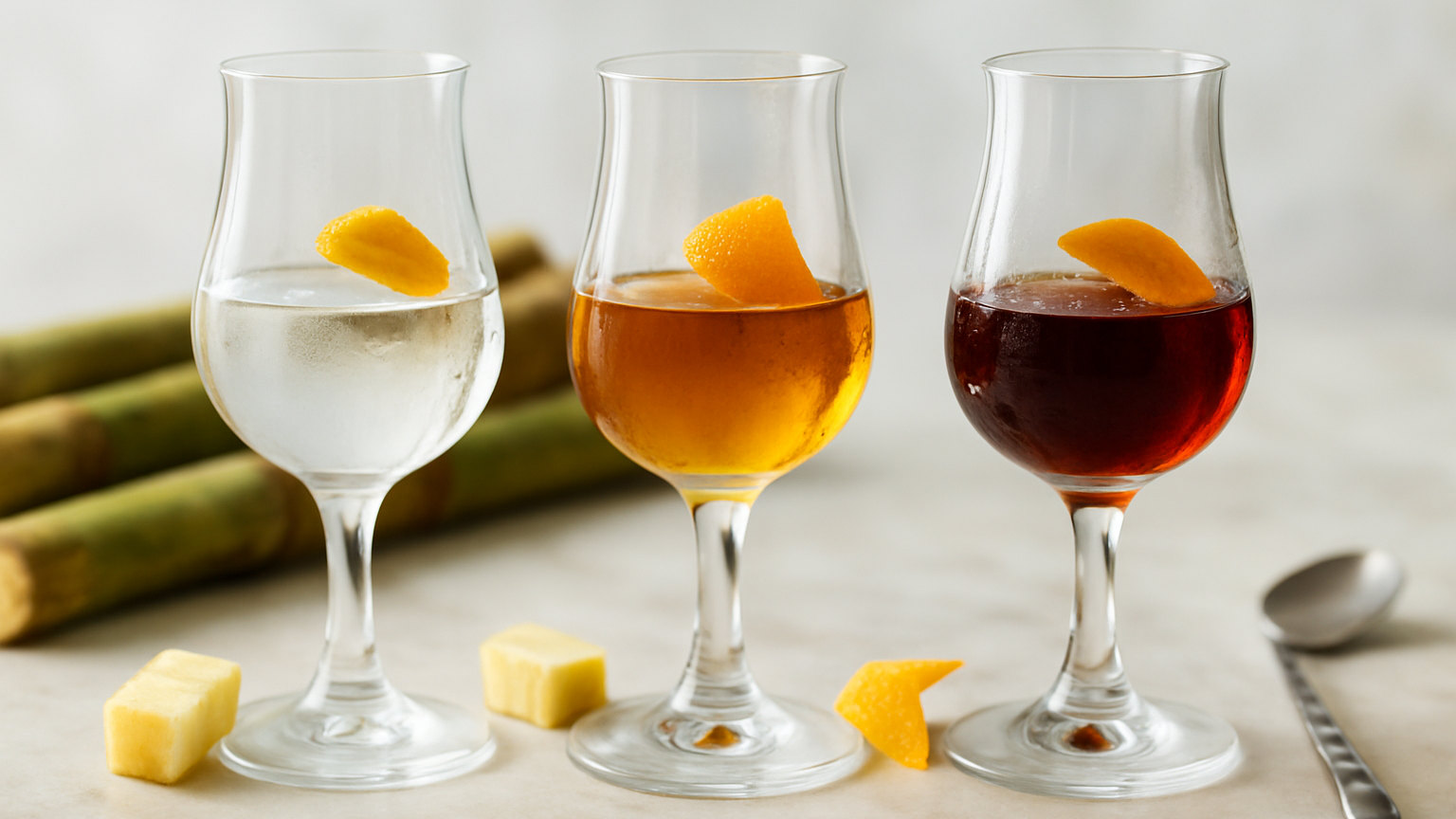
Rum is the least regulated of the major spirits. There is no single governing definition, rules vary between dozens of producing countries, and the terms on the label mean different things depending on who printed them.
What is rum made from?
Sugarcane, in one of two forms. Most rum is made from molasses, the thick residue left after sugar crystals have been extracted. A smaller proportion is made from fresh cane juice.
- Molasses rum. Richer, heavier, with more caramel and dried fruit character.
- Cane juice rum. Grassy, vegetal, brighter. Includes rhum agricole from the French islands.
Cane juice must be distilled within hours of pressing, since it ferments and spoils quickly. That is why agricole production is concentrated where the cane grows.
Why is colour a poor guide?
Because it can come from three quite different places: time in a barrel, added caramel colouring, or filtration removing colour that ageing put there.
A dark rum may be genuinely old, or a young rum with colouring added. A white rum may be unaged, or aged and then carbon filtered to strip the colour back out while keeping the flavour.
Filtered aged rum is common and produces a white rum with far more depth than an unaged one. None of this is visible from the bottle.
What about added sugar?
Widespread and largely undeclared. Many rums have sugar added after distillation, sometimes substantially, which softens the spirit and rounds the finish.
It is not inherently dishonest and it is rarely disclosed. If a rum tastes noticeably sweet for its age, this is usually why.
What do the common terms mean?
- White or light. Clear. Unaged, or aged and filtered.
- Gold. Some ageing, or colouring. Loosely defined.
- Dark or black. Heavier style, often with substantial colouring.
- Aged or añejo. A stated period in wood, with the meaning varying by country.
- Overproof. Above 57 per cent, sometimes far above.
- Spiced. Flavoured after distillation. Usually sweetened.
How do country styles differ?
- Spanish style. Cuba, Puerto Rico, Dominican Republic, Guatemala. Lighter, cleaner, column distilled.
- English style. Jamaica, Barbados, Guyana. Fuller, pot still influence, often with pronounced fruity esters.
- French style. Martinique, Guadeloupe. Cane juice, grassy, agricole.
These are tendencies rather than rules, and several producers work across styles.
What are Jamaican funk and esters?
Long fermentation and pot distillation produce high levels of esters, which give intense tropical fruit, banana and overripe notes. Heavily estered Jamaican rums are distinctive and divisive.
Some producers state ester content in grams per hectolitre of pure alcohol, which is a genuine specification rather than a marketing term.
Which should you buy first?
A decent white rum for daiquiris and mojitos, and an aged rum from Barbados or Jamaica for sipping and for drinks that want depth. Those two cover most of the rum canon.
A 50ml measure at 40 per cent is 2 units, the same as any other spirit, which is worth remembering with a category so often served in long sweet drinks.
What do the age statements mean?
Less than in other spirits, because the rules vary by country and some solera-aged rums carry a number describing the oldest fraction rather than the youngest.
Country of origin tells you more. Barbados, Jamaica and Martinique have the tightest regulation, so a label from those places carries more meaning per word.
Why is tropical ageing faster?
Heat drives the exchange between spirit and wood. Caribbean warehouses lose 6 to 10 per cent a year to evaporation against around 2 per cent in Scotland, and the wood influence accumulates proportionally.
A six-year-old tropical rum can show wood character comparable to a much older scotch, which is why rum age statements look low and the rum does not taste young.
Is rum sweetened?
Often, and it is rarely declared. Independent testing has found substantial added sugar in several well-known bottlings, which softens the spirit and rounds the finish.
It is legal in most producing countries. If a rum tastes noticeably sweeter than its age would suggest, this is usually the reason.


