
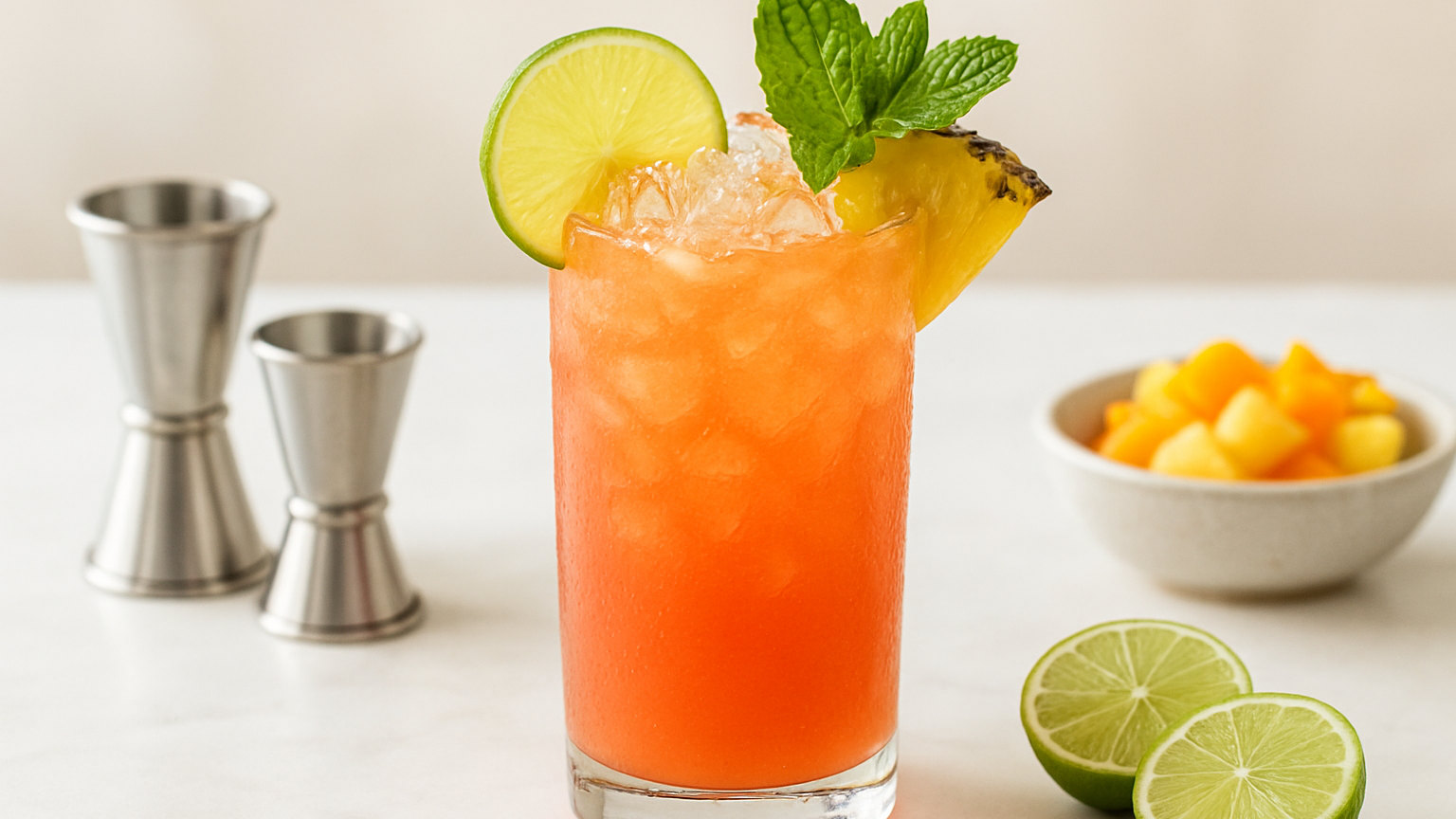
Rum punch is the oldest format in mixed drinks and it runs on a rhyme that has survived because it produces a balanced result at any scale. It is the most practical way to serve a crowd.
What is the ratio?
One part sour, two parts sweet, three parts strong, four parts weak. That is lime juice, syrup, rum and water or juice.
For a jug serving eight: 120ml lime juice, 240ml sugar syrup, 360ml rum, 480ml water or fruit juice, plus bitters and grated nutmeg.
How do you make it?
- Combine the lime, syrup, rum and juice in a large jug or bowl.
- Add several dashes of aromatic bitters.
- Refrigerate for an hour so the flavours settle.
- Add a large ice block just before serving.
- Grate nutmeg over the surface.
Why a large ice block?
Because surface area governs melting. A single large block melts far more slowly than the same mass of cubes, so the punch stays cold without becoming progressively watery.
Freeze water in a plastic container or a cake tin the day before. Adding fruit or juice to the block looks good and dilutes less.
Should glasses have ice too?
Yes, ordinary cubes. The block keeps the bowl cold; glass ice keeps each serving cold. The bowl is the part that must not dilute.
Which rum should you use?
A blend works best. Two thirds white or gold rum with one third aged Jamaican gives depth without expense.
A small float of overproof rum on top is traditional and it raises the strength considerably, so account for it rather than adding it by eye.
How strong is it?
Around 1.8 units per 200ml serving with the ratio above. That is sensible for a long event, and it climbs quickly if the rum is increased.
A punch bowl hides its strength completely, since nobody can see how much spirit went in and the fruit and sugar mask it entirely. Work out the units per serving before the event.
What should the weak part be?
Water is traditional and gives the cleanest result. Pineapple, orange or a mix of juices makes a fruitier punch and adds sugar, so reduce the syrup accordingly.
Cold tea is the historical option and it adds tannin and structure, which is worth trying.
Why nutmeg?
It is traditional across Caribbean punch and it works, adding warm aroma over the top of the citrus. Grate it fresh over the surface rather than stirring it in.
How much should you make?
Two to three servings per person for an afternoon. Make a second batch rather than one enormous bowl that stands warm and diluted all evening.
What should you tell people?
Roughly what is in it and roughly how strong. Anyone driving or pacing themselves has no way to judge a punch by looking at it.
What should you serve it in?
A large glass or ceramic bowl, or a jug that fits in the fridge. Avoid unlined metal, which can react with an acidic mixture over several hours.
When should you make it?
An hour or two ahead, refrigerated, with the ice block added at serving. That gives the flavours time to settle without the citrus dulling.
Squeeze the limes on the day, since juice loses its brightness within a few hours.
How do you scale it accurately?
Convert everything to millilitres and multiply, rather than scaling by bottles and handfuls. Write the quantities down before starting, since mental arithmetic while pouring is how a punch ends up stronger than intended.
Should there be a non-alcoholic version?
Yes, made with the same care. The same ratio without the rum, using extra juice and cold tea for structure, is a genuinely good drink.
Put it out alongside rather than keeping it back for anyone who asks.
How far ahead can you make it?
An hour or two for the best result. Longer than a day and the citrus dulls and the whole thing flattens, so make it on the day rather than the night before.


