
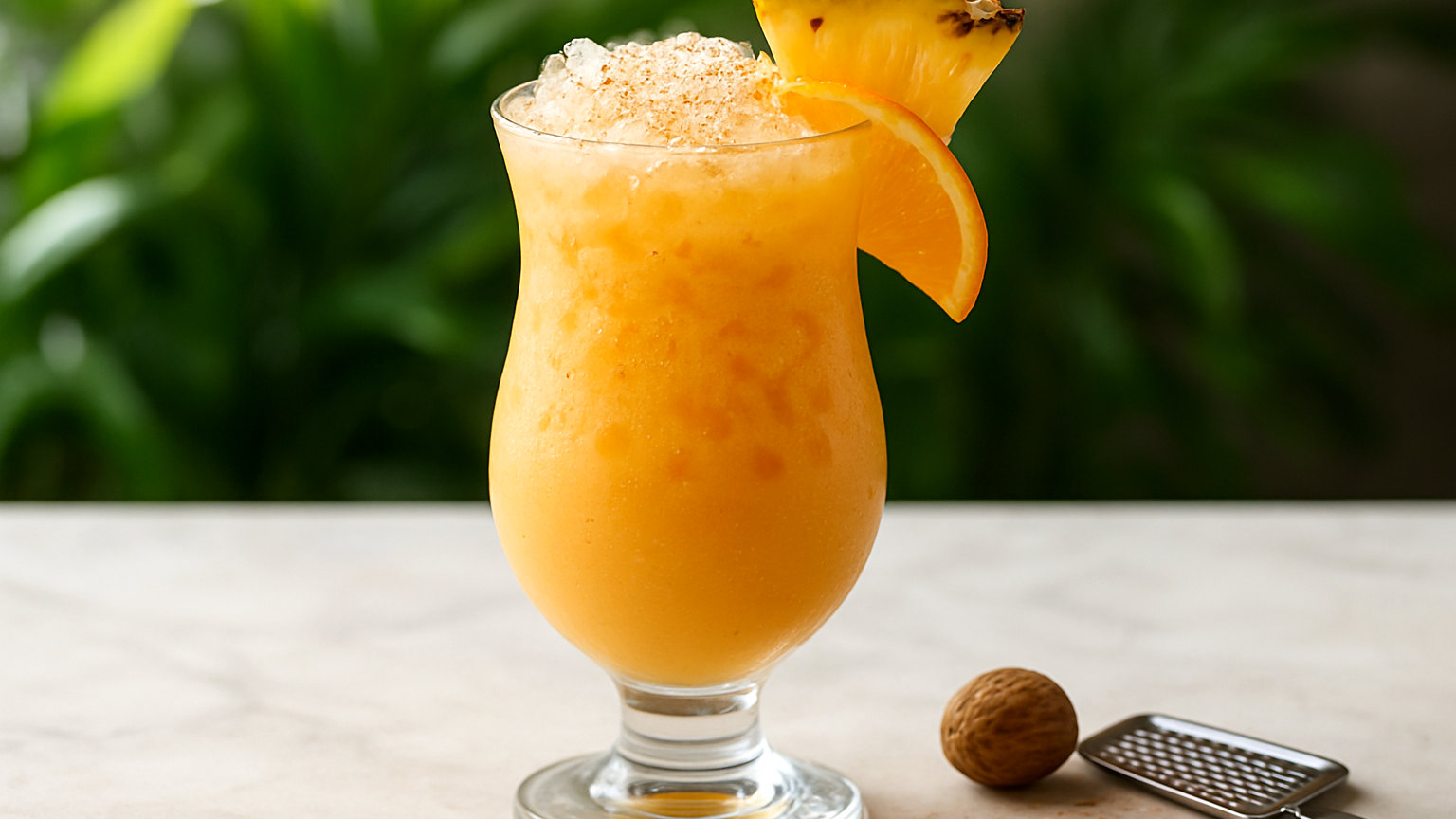
The painkiller is rum, pineapple juice, orange juice and cream of coconut, finished with freshly grated nutmeg. It comes from the British Virgin Islands and is essentially a piña colada with orange juice and more depth.
What is the recipe?
- 60ml dark rum
- 120ml pineapple juice
- 30ml orange juice
- 30ml cream of coconut
- Freshly grated nutmeg
Shake hard with ice for 12 seconds. Pour into a tall glass over crushed ice. Grate nutmeg generously over the surface.
Why does the nutmeg matter?
Because the drink is sweet, creamy and tropical, and nutmeg is the only thing in it that is not. The aroma reaches you before each sip and cuts through the richness.
Grate it fresh over the surface. Ground nutmeg from a jar has lost most of its aroma and sinks rather than sitting on top.
What is cream of coconut?
A sweetened coconut product, quite different from coconut milk or coconut cream, which are unsweetened. Substituting either will give a thin, unsweet drink.
If you only have unsweetened coconut cream, add around 15ml of sugar syrup to compensate.
Does it separate?
It can settle in the tin. Stir or shake it thoroughly before measuring, since the fat and sugar separate on standing.
Which rum should you use?
A dark or aged rum with molasses character. The drink was built around a specific Virgin Islands rum and the brand is trademarked along with the name.
Any good dark rum works. A light rum disappears entirely under the pineapple and coconut.
What ratio should you use?
Four parts pineapple to one part orange to one part coconut, with rum to taste. That is the standard, and the drink is often specified by strength as one, two, three or four measures of rum.
Two measures at 60ml is the usual serve.
Why pineapple and orange together?
Because pineapple brings acidity and body while orange brings sweetness and aroma. Pineapple alone is sharper and less rounded.
Fresh pineapple juice is noticeably better and it also foams when shaken, which improves the texture.
How strong is it?
Around 2.4 units at 60ml of rum, and closer to 4.8 at the four-measure strength. Check which version you are making.
How does it differ from a piña colada?
The orange juice and the nutmeg, and it is shaken rather than blended. The result is lighter and more aromatic.
Can you batch it?
Very well, since nothing is carbonated. Mix everything in a jug, keep it cold, shake or stir before pouring and grate nutmeg per glass.
What ruins it?
Ground nutmeg from a jar and a light rum. The first contributes almost no aroma and the second disappears entirely under the pineapple and coconut.
Why is the strength written as a number?
Because the drink is traditionally specified by how many measures of rum it contains, from one to four. A painkiller number two is the standard serve at 60ml.
Number four is around 4.8 units in one glass, which is worth knowing before ordering one.
Should you use fresh pineapple juice?
It is noticeably better. Fresh juice is sharper and less sweet than cartoned, and it foams when shaken, which gives the drink a lighter texture.
Cartoned works and you may want a squeeze of lime alongside it to compensate for the flatness.
Where does it come from?
A bar on Jost Van Dyke in the British Virgin Islands in the 1970s. The name and the specific rum are trademarked, which has led to disputes over who may use them.
Can you blend it?
Yes, and it becomes closer to a piña colada. Blending suppresses both sweetness and acidity, so taste after blending and expect to want a squeeze of lime.
What ratio should you settle on?
Four parts pineapple, one part orange, one part coconut, with rum to taste. That proportion is fixed and the rum measure is the variable.
What glass should you use?
A tall glass over crushed ice. The crushed ice chills a rich drink fast and keeps diluting as you go, which suits it.


