
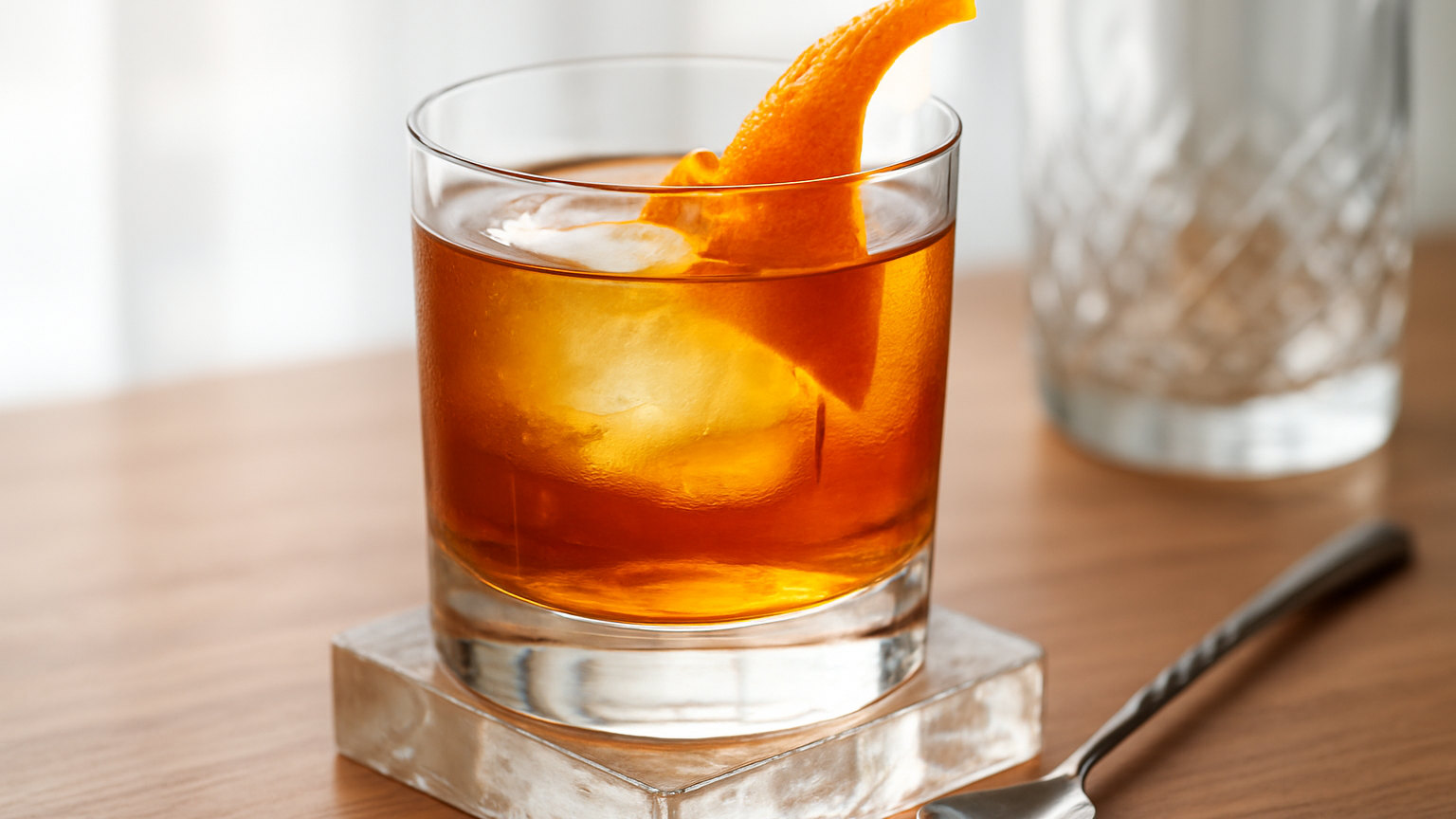
The Oaxaca old fashioned replaces whiskey with a split of reposado tequila and mezcal, and sugar with agave syrup. It was created in New York around 2007 and is now the most widely made modern agave classic.
What is the recipe?
- 45ml reposado tequila
- 15ml mezcal
- 5ml agave syrup
- 2 dashes mole or aromatic bitters
- A wide orange peel, flamed or expressed
Stir with plenty of ice for 30 seconds. Strain over a large cube in a rocks glass. Express the orange peel over the surface and drop it in.
Why split tequila and mezcal?
Because mezcal alone would be overwhelming at 60ml, and tequila alone lacks the smoke that makes the drink distinct.
Three parts tequila to one part mezcal gives smoke as a background note rather than the main event. That ratio is the recipe.
Why reposado?
Because the drink is a stirred spirit-forward cocktail and it needs the oak. A blanco makes a sharper, more vegetal version that works less well in this format.
Why agave syrup rather than sugar?
Because it comes from the same plant as the spirits and reinforces rather than competes. Sugar syrup works and gives a slightly flatter result.
Dilute the agave two parts to one part warm water before using it, since neat agave nectar is too thick to combine properly when stirred cold.
What are mole bitters?
Bitters flavoured with chocolate and chilli, made to echo the Mexican sauce. They suit agave spirits particularly well and they are what the original recipe specifies.
Aromatic bitters work as a substitute and give a warmer, less distinctive drink.
Should you flame the orange peel?
The original does. Holding a lit match between the peel and the glass and squeezing ignites the oils briefly, which caramelises them.
Take care with the flame, keep bottles well away, and note that expressing the peel without flaming gets you most of the aroma with none of the risk.
Why stir rather than shake?
Because there is no citrus juice or egg. Shaking would cloud and aerate a drink that should be clear and silky, and over-dilute it.
Stir 30 seconds with plenty of ice.
How strong is it?
Around 2.7 units after dilution. It is spirit-forward with almost nothing diluting it beyond the stir and the ice.
How does it compare to a standard old fashioned?
Structurally identical: spirit, sugar, bitters, citrus oil. The agave spirits make it drier, more vegetal and smokier than a bourbon version.
Can you batch it?
Very well. Mix everything, add around 20 per cent water for the stirring dilution, and keep it in the fridge. Express fresh peel per glass.
What ruins it?
Too much mezcal. Beyond a quarter of the base the smoke takes over and the drink stops being an old fashioned in character.
Which mezcal should you use?
A joven espadín, which is the everyday style. It is only a quarter of the base, so a very intense mezcal will still show through strongly.
How long should you stir it?
Thirty seconds with plenty of ice. The drink needs around 20 to 25 per cent dilution to open up, and that is what proper stirring delivers.
Why a large cube?
Because the drink has no mixer, so the ice does all the remaining dilution. A large cube melts slowly and keeps it cold without watering it down within minutes.
Can you use sugar syrup instead of agave?
Yes, and it gives a slightly flatter result. Agave reinforces the spirits because it comes from the same plant, which is why the recipe specifies it.
What ratio should you settle on?
Three parts reposado to one part mezcal, with 5ml of diluted agave and two dashes of bitters. Moving the mezcal above a quarter changes the drink substantially.
Why is it the most made modern agave classic?
Because it takes a format everyone already knows and swaps the spirit. Anyone who can make an old fashioned can make this, which is why it spread so widely.


