
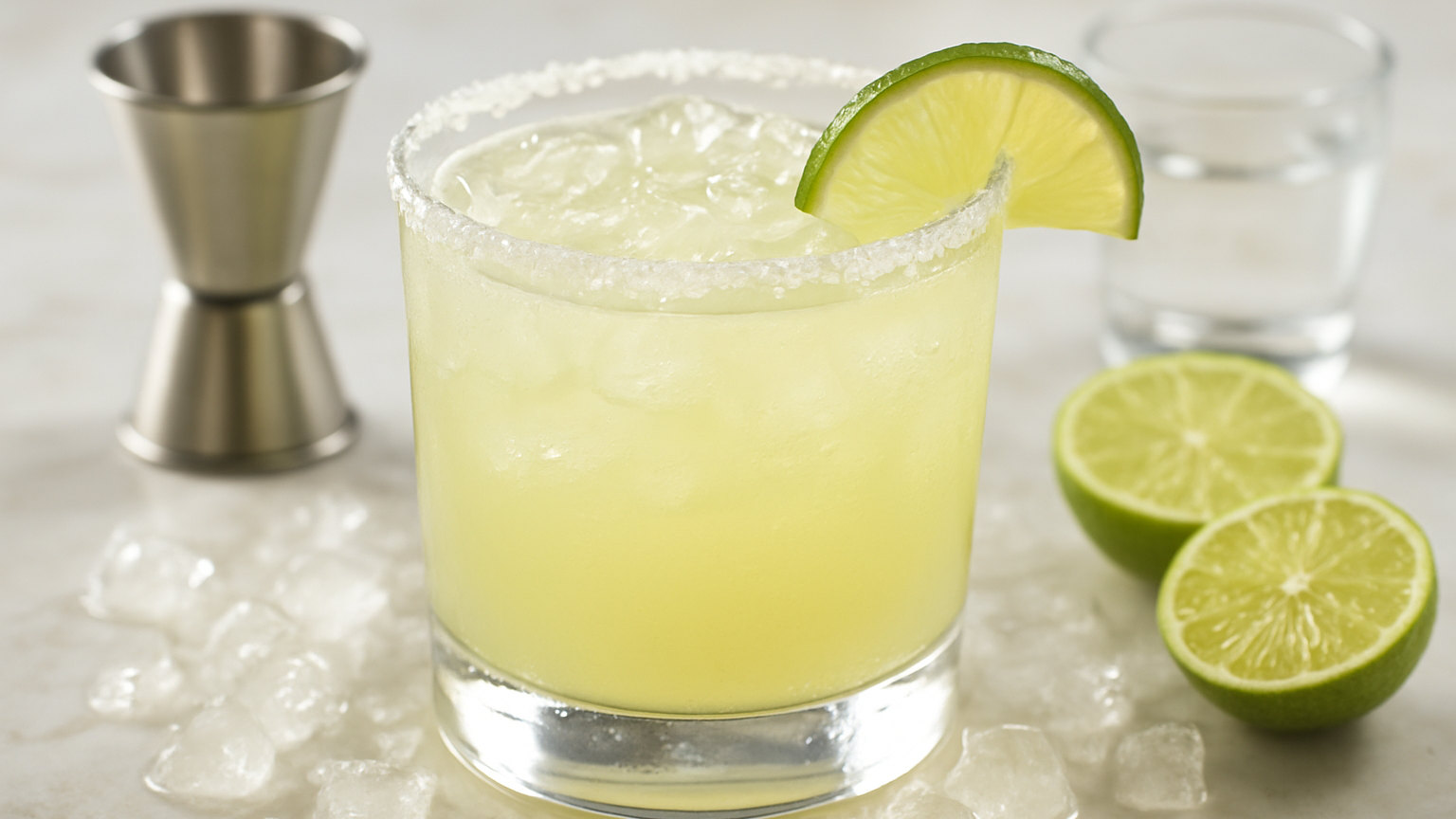
The margarita is among the most ordered cocktails anywhere and among the most frequently ruined. Nearly every disappointing one comes from the same source: a pre-made sweet and sour mix instead of fresh citrus.
What is the recipe?
- 50ml blanco tequila, 100 per cent agave
- 25ml orange liqueur
- 20ml fresh lime juice
- Optional 5ml agave syrup
Shake hard with ice for 12 to 15 seconds. Strain into a chilled glass, over ice or straight up. Salt half the rim and garnish with a lime wheel.
Which tequila should you use?
Blanco, and it must say 100 per cent agave on the label. If those words are absent, the bottle is a mixto containing up to 49 per cent other sugars, and that is the single biggest cause of a harsh margarita.
Blanco is right because the bright, peppery agave character is what makes the drink. Reposado gives a rounder, softer version that some prefer; añejo is expensive and generally worse here.
Which orange liqueur?
A drier curaçao style at 38 to 40 per cent gives the best balance. Cheaper triple secs at 20 to 25 per cent are sweeter and thinner, so they need more lime and less syrup.
That variation is why the same recipe tastes different in two bars using identical measures.
How do you salt the rim?
Rub a lime wedge around the outside of the rim only, then roll the outside through salt on a plate. Salting the inside drops salt into the drink, which becomes progressively saltier.
Salt half the rim so the drinker can choose. Use flaky or coarse salt rather than fine table salt, which is harsh and dissolves instantly.
Why does salt work?
It suppresses bitterness and enhances perceived sweetness and aroma, which is why it makes citrus drinks taste rounder. A pinch of saline solution in the drink itself achieves the same thing without a rim.
What if it tastes wrong?
Diagnose by symptom. Too sharp means more syrup or liqueur. Cloying means more lime. Harsh and thin usually means a mixto tequila. Flat and dull almost always means bottled lime.
How strong is it?
Around 2.6 units with these measures. Frozen versions served in large glasses can be considerably more, since the measures scale with the glass.
Should it be served on the rocks or up?
Either. On the rocks stays colder longer; straight up in a chilled glass tastes more concentrated. Both are correct and neither is more traditional.
Can you batch it?
Yes. Mix tequila and liqueur ahead and keep it cold, then add fresh lime and shake per serve. Lime dulls within a few hours of squeezing, so it should go in on the day.
What is a tommy’s margarita?
Tequila, lime and agave syrup with no orange liqueur. Around 60ml tequila, 30ml lime and 15ml diluted agave syrup. It is cleaner and more agave-forward, and many people prefer it once they have tried both.
What glass should you use?
A coupe or a rocks glass, chilled. The stemmed margarita glass is traditional and holds a great deal, which encourages measures scaling up with the glass rather than staying fixed.
Why do so many taste bad?
Bottled sweet and sour mix, mixto tequila and too little ice, in that order. All three are easy to fix and none requires any skill or extra cost.
Should you add agave syrup?
Only if the liqueur is dry or the limes are very sharp. A 40 per cent curaçao usually needs 5ml; a sweet 20 per cent triple sec needs none at all.
Taste before straining and adjust rather than following the measure blindly, since the liqueur is the variable that changes most between bottles.
Can you make it without a shaker?
Yes. A jam jar with a tight lid works perfectly well, and so does stirring hard in a glass with plenty of ice, though the result is less cold and less aerated.
A shaken margarita arrives frothier and colder, which is a genuine improvement rather than presentation.


