
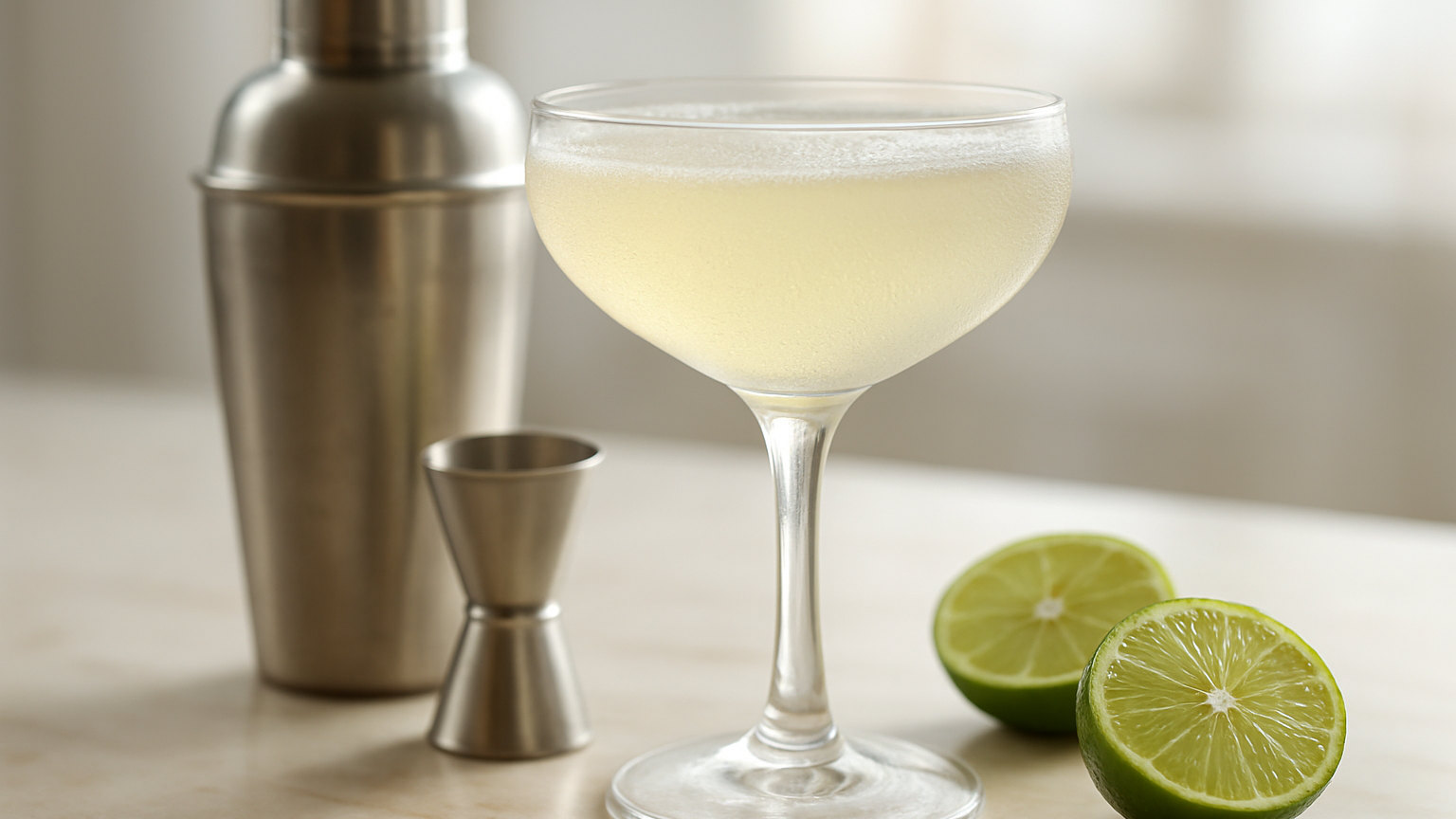
The daiquiri is rum, lime and sugar. It has no bitters, no vermouth and no mixer, which means every element is exposed. It is also the drink that most reliably reveals whether someone is using bottled lime juice.
What is the ratio?
60ml white rum, 25ml fresh lime juice, 15ml sugar syrup. Shake hard with ice and strain into a chilled coupe.
That is a sour in the classic 4:2:1 proportion, adjusted slightly. Some prefer 20ml lime and 20ml syrup for a rounder drink, and the balance is genuinely a matter of taste.
Why does fresh lime matter so much?
Because bottled lime juice is pasteurised and preserved, which changes it fundamentally. It tastes flat, slightly bitter and vaguely chemical, and in a three-ingredient drink there is nowhere for that to hide.
Fresh lime also loses brightness within a few hours of squeezing. Juice on the day, ideally within the hour, and do not prepare it the night before.
How much juice from one lime?
Around 25 to 30ml, so roughly one lime per drink. Rolling the lime firmly on the worktop before cutting increases the yield noticeably, and room temperature limes give more than cold ones.
What sugar syrup should you use?
Simple syrup at one part sugar to one part water is standard and easy. Rich syrup at two parts sugar to one water is sweeter per millilitre and gives a slightly fuller texture, so reduce the quantity if using it.
Make it by stirring caster sugar into warm water until dissolved. It keeps a couple of weeks in the fridge and a splash of neutral spirit extends that.
Which rum?
A decent white rum at 40 per cent or above. Spanish style whites are clean and let the lime lead; a Jamaican white brings funk and esters and makes a more assertive drink.
Blending two is common practice and worth trying, since a small proportion of a heavier rum adds depth without taking over.
How should you shake it?
Hard, for around twelve to fifteen seconds, with plenty of ice. The shake chills, dilutes and aerates, and all three are part of the recipe rather than incidental.
Use large cubes rather than crushed ice, since crushed melts too fast and over-dilutes. Strain through a fine sieve if you want it perfectly clear.
Why is the glass chilled?
Because a daiquiri is served without ice and warms quickly. A glass from the freezer buys several minutes, and the drink is noticeably better cold.
Five minutes in the freezer is enough if you have forgotten.
What about a frozen daiquiri?
A different drink using the same ingredients, blended with crushed ice. It needs more sugar and more lime than the shaken version, since cold suppresses both sweetness and acidity.
The strawberry version is a legitimate variation rather than a corruption, and it is usually made far too sweet.
How strong is it?
Around 2.4 units with 60ml of 40 per cent rum, once dilution is accounted for. It goes down easily for something that strong, which is worth noting when making a second.
What if it tastes wrong?
Diagnose by symptom. Too sharp means more syrup; cloying means more lime; thin and watery usually means over-dilution from crushed or wet ice; flat and dull almost always means bottled lime.
Adjusting one variable at a time is how you find your own balance, and most people settle somewhere slightly different from the standard.
What variations are worth making?
A hemingway daiquiri adds grapefruit and maraschino and drops the sugar. A daiquiri with half Jamaican rum gains funk and depth. Adding a few drops of Angostura is a small change that adds noticeable structure.
Why is it a good test of a bar?
Because there is nothing to hide behind. Three ingredients, no bitters, no mixer, and any shortcut in the lime or the shake shows immediately.
The same is true at home, which makes it a useful drink to practise on.


