
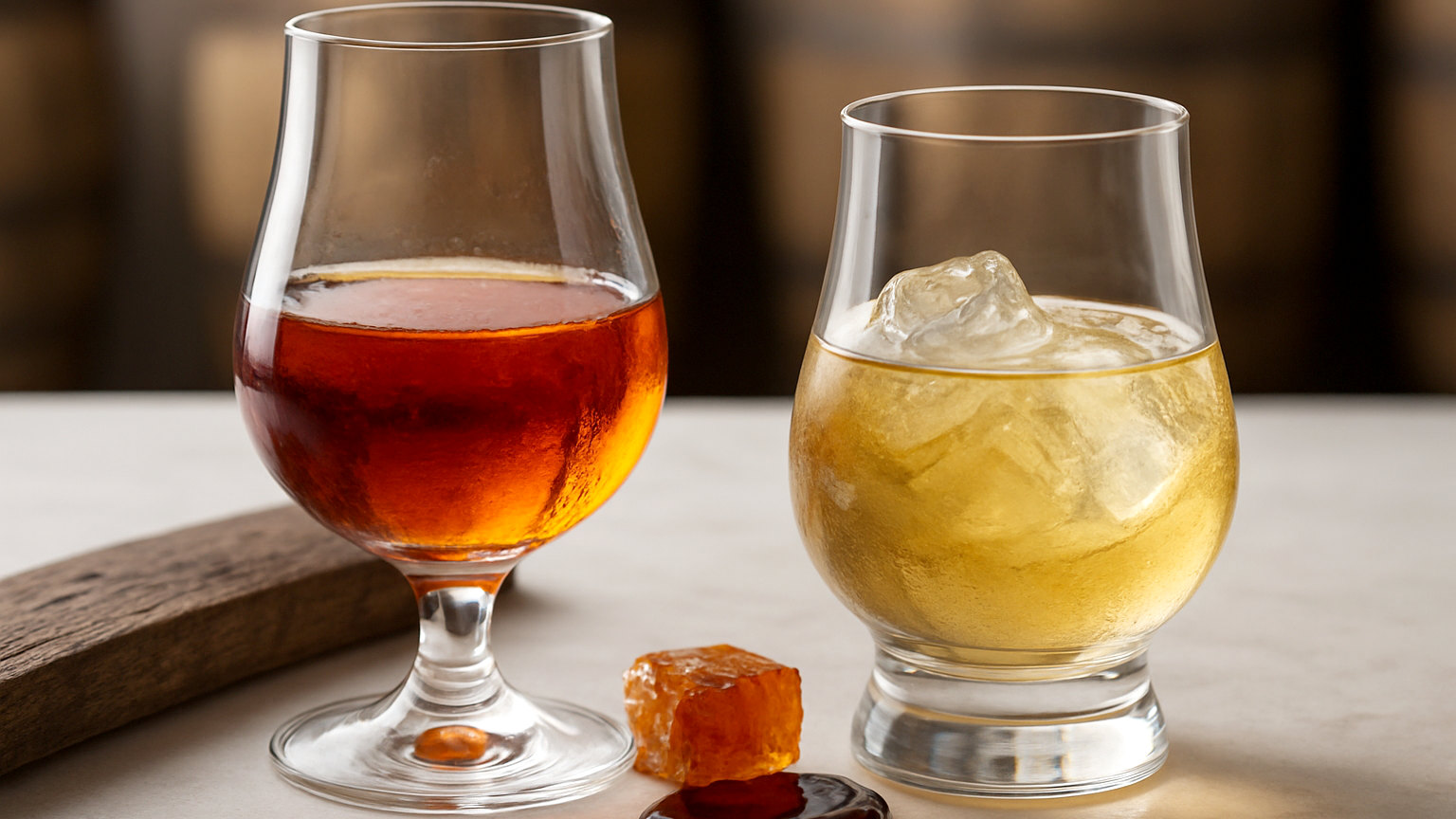
Rum ageing follows the same chemistry as whisky and operates under almost none of the same rules. Two factors make rum age statements harder to interpret than any other spirit category.
Why is tropical ageing faster?
Because heat drives the interaction between spirit and wood. Caribbean warehouses run consistently hot, pushing the spirit into and out of the wood far more aggressively than a cool Scottish warehouse does.
The evaporation rate reflects this. Scotland loses around 2 per cent a year to the angel’s share; the Caribbean commonly loses 6 to 10 per cent.
A six-year-old tropical rum can show wood influence comparable to a much older scotch. That is why rum age statements look low relative to whisky and the rum does not taste young.
What is continental ageing?
Rum shipped to Europe as new spirit and aged in a cool climate, often in Scotland or the Netherlands. It matures slowly, loses far less to evaporation, and tastes quite different from the same rum aged tropically.
Some bottlings state which, and many do not.
What does an age statement mean on rum?
It depends on the country, which is the central problem. In most jurisdictions it should indicate the youngest rum in the blend, as it does for whisky.
In some, particularly where solera systems are used, the number on the bottle may refer to the oldest component or to the age of the system rather than the contents.
That inconsistency means a rum age statement carries less information than the same number on a scotch label.
What is a solera?
A fractional blending system borrowed from sherry production. Barrels are arranged in tiers, a portion is drawn from the oldest tier for bottling, and each tier is topped up from the one above.
The result is a continuously blended spirit containing a spectrum of ages, with a small proportion very old and the majority considerably younger.
A solera labelled with a large number is describing the oldest fraction present, not the average. It is a legitimate technique and the labelling is frequently misleading.
What casks are used?
Mostly ex-bourbon, since they are abundant and inexpensive. Ex-sherry, ex-cognac, ex-port and new oak all appear, and finishing in a second cask type is common.
Because bourbon barrels dominate, a great deal of aged rum carries vanilla and caramel from the same source as scotch does.
Does ageing change added sugar?
No, and the two are easily confused. A rum tasting sweet and round for its age has often been sweetened after distillation rather than developed that way in wood.
Added sugar is legal in most producing countries and rarely declared. Independent testing has found substantial quantities in several well-known bottlings.
Which countries regulate most tightly?
Barbados, Jamaica and Martinique have the clearest rules, with Martinique’s AOC the strictest of all. Rum from those origins carries more meaning per word on the label.
How should you read a rum label?
Country of origin first, then strength, then whether the age statement is explained. A rum from a tightly regulated origin at 43 per cent or above tells you more than a large number on a bottle from somewhere with no rules at all.
Does rum change in the bottle?
Barely, like any spirit. Once out of wood it is essentially stable, so a sealed bottle will taste much the same in twenty years.
An opened bottle oxidises slowly over a year or more, particularly once past half empty.
What should you pay for?
Origin and strength before age. A rum from a tightly regulated country at 43 per cent or above tells you more than a large number on a bottle from somewhere with no rules at all.
Why is the category so inconsistent?
Because rum grew up across dozens of colonial jurisdictions with no shared framework, unlike scotch or cognac. Each producing country wrote its own rules or none at all.
Efforts to establish common standards continue and progress is slow, since producers with looser rules have little incentive to accept tighter ones.


