
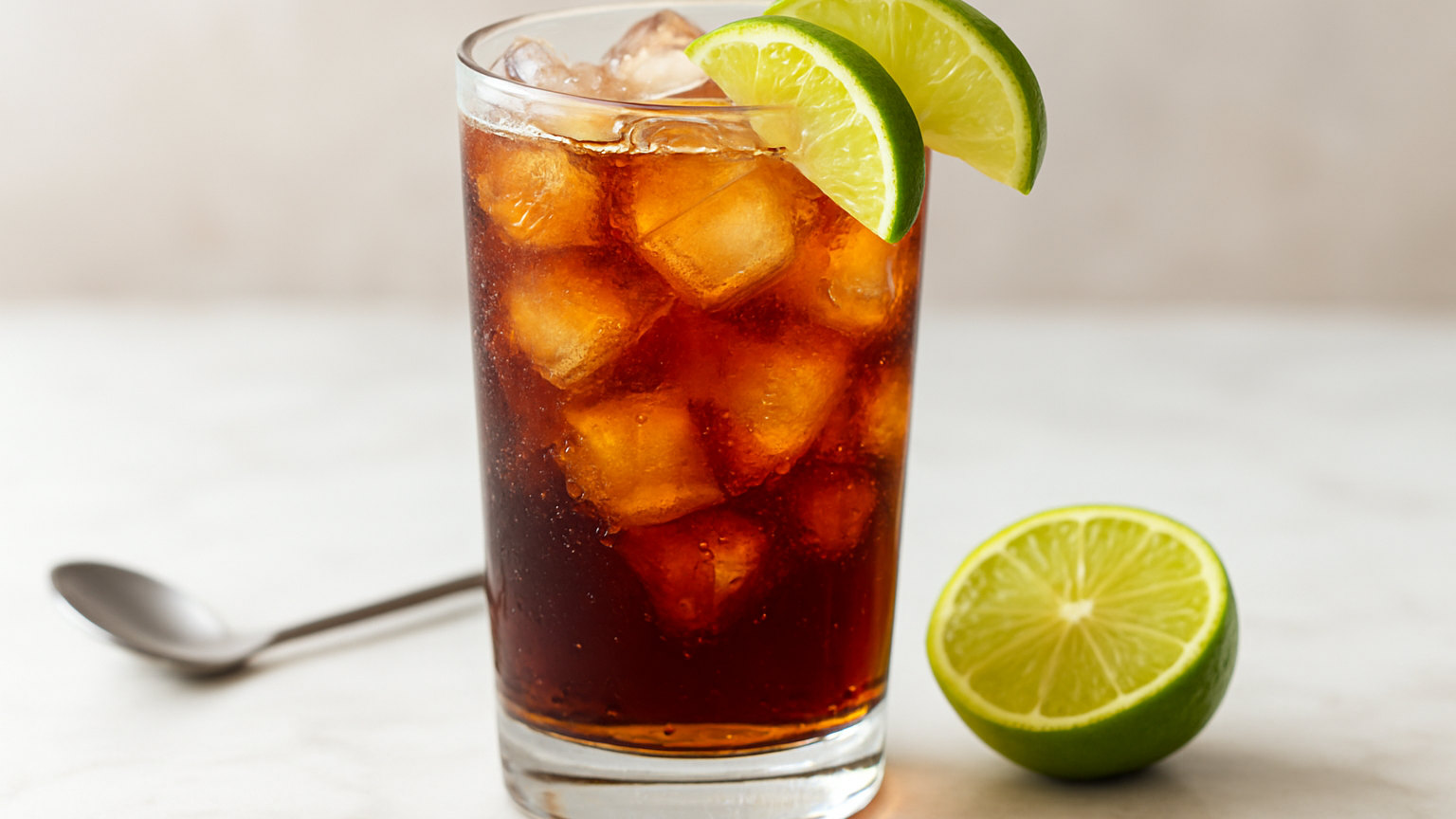
A cuba libre is rum, cola and lime over ice. The difference between it and a rum and coke is one ingredient, and that ingredient changes the drink far more than it sounds like it should.
What is the recipe?
- 50ml white or gold rum
- 15ml fresh lime juice
- Cola to top, around 120ml
- A lime wedge to garnish
Fill a tall glass with ice. Add the rum and lime, top with cola, and lift once gently with a bar spoon. Squeeze and drop in the lime wedge.
Why does the lime matter so much?
Because cola is sweet and one-dimensional on its own. Lime adds acidity and aromatic oils, which gives the drink structure and stops it tasting flat.
Fifteen millilitres of fresh juice plus a squeezed wedge is the difference between a proper cuba libre and a rum and coke with a garnish.
Does bottled lime work?
Poorly. Bottled juice is flat and slightly bitter, and in a three-ingredient drink there is nowhere for it to hide. Squeeze it fresh.
Which rum should you use?
A clean white rum is traditional and Cuban in origin. A gold or lightly aged rum adds caramel depth and makes a rounder drink.
Mid-range is right. Cola dominates, so an expensive aged rum is largely wasted, and a very cheap harsh rum will still show through.
Why does the ice matter?
Fill the glass. A packed glass reaches equilibrium quickly and then melts slowly, where three cubes have to melt almost entirely to chill the drink and water it down in the process.
How should you build it?
Ice first, then rum and lime, then cola poured slowly down the side of a tilted glass. One gentle lift from the bottom combines everything.
Hard stirring knocks the carbonation out immediately, which is the commonest fault in any drink topped with a fizzy mixer.
Does the cola matter?
More than people expect, since it is most of the volume. A cola made with cane sugar tastes noticeably different from one made with other sweeteners, and both are worth trying.
Use small bottles or cans and keep them cold, since a large bottle goes flat before it is finished.
How strong is it?
Around 2 units. It is long, cold and easy to drink, which is worth remembering across an evening.
Where does the name come from?
It dates from around the turn of the twentieth century in Cuba, and translates as free Cuba. The drink spread internationally as both rum and cola became widely available.
Can you batch it?
Mix the rum and lime ahead and keep it cold, then top each glass with cola. Anything carbonated goes flat within twenty minutes of being combined, so it cannot be fully batched.
What glass should you use?
A tall highball filled with ice. Filling it properly matters, since a half-empty glass of ice waters the drink down as it melts to chill the liquid.
How does it compare to a rum and coke?
The lime is the whole difference and it is not trivial. Acidity gives the drink structure and the peel oils add aroma, which turns a two-ingredient mixer into something balanced.
Anyone who finds rum and coke cloying should try it with 15ml of fresh lime before writing the combination off.
Should the rum be white or gold?
Either. White keeps it cleaner and lets the lime lead; gold adds caramel and vanilla that suit the cola.
Gold is generally the better choice if you are only having one, and white is more versatile across other drinks.
Is it worth calling a cocktail?
With the lime, yes. Three ingredients balanced against each other is the definition, and the acidity is doing genuine structural work rather than decorating.
How much lime is right?
Fifteen millilitres of juice plus a squeezed wedge dropped in. That is roughly half a lime, and it is enough to give structure without turning the drink sour.


