
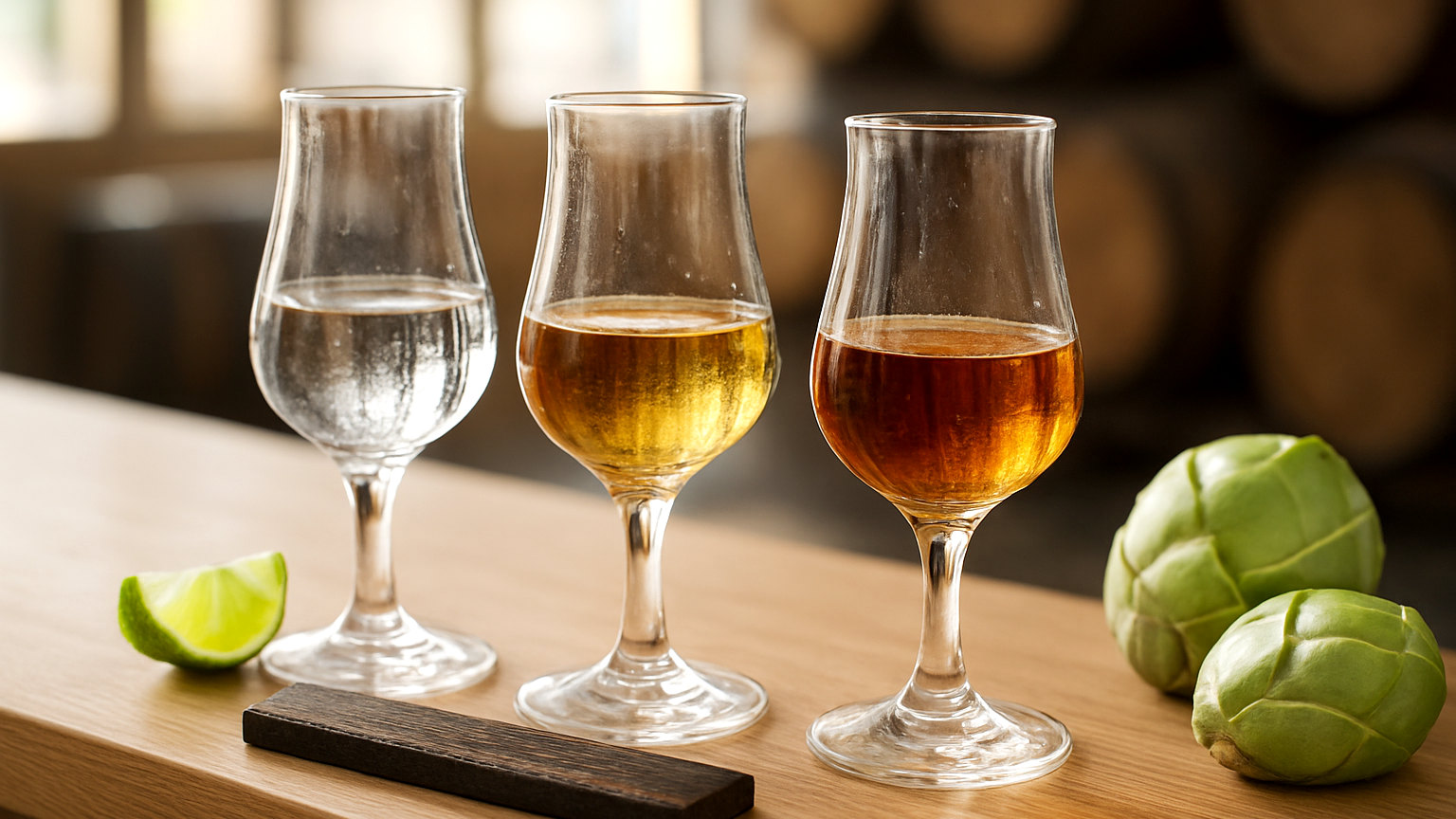
Tequila ageing categories are among the clearest labelling in spirits. Each is defined by a specific period in oak, and knowing what happens across those periods tells you which bottle suits which purpose.
What are the categories?
- Blanco or silver. Unaged, or up to two months in stainless steel or oak.
- Reposado. Two months to one year in oak.
- Añejo. One to three years in oak barrels of no more than 600 litres.
- Extra añejo. Over three years. Introduced as a category in 2006.
A fifth term, joven or gold, usually means blanco blended with aged tequila, or a mixto with colouring added.
What does ageing do?
The same as in any spirit: extraction of vanilla, caramel and oak from the wood, subtraction of harsher compounds, and slow oxidation.
What is distinctive about tequila is what is being covered. The bright, peppery, vegetal agave character is the whole point of the spirit, and oak progressively masks it.
That is why more ageing is not automatically better here in the way it is often assumed to be for whisky.
What does each taste like?
- Blanco. Pepper, citrus, cooked agave, herbal and bright.
- Reposado. Agave still clear, softened, with vanilla and light oak.
- Añejo. Oak forward, caramel, closer to a light whisky.
- Extra añejo. Heavily oaked, and agave often barely present.
Which should you use in cocktails?
Blanco, for nearly everything. Margaritas, palomas, tommy’s margaritas and anything with citrus all want the bright agave character, which is exactly what ageing removes.
Reposado works well where you want a rounder drink, particularly in an old fashioned style build or with pineapple. Añejo in a margarita is expensive and usually worse than blanco.
Which should you sip?
Any of them, depending on what you enjoy. A good blanco sipped neat is a genuine pleasure and it surprises people expecting harshness.
Reposado is the easiest introduction for someone used to whisky. Añejo and extra añejo suit that palate most directly and cost the most.
Does the barrel type matter?
Yes, and it is rarely stated. Most tequila is aged in ex-bourbon barrels, which contribute vanilla and caramel. Some producers use ex-wine, ex-sherry or new oak, which changes the result substantially.
Where a bottle names the cask, that is genuinely useful information.
Does age justify the price?
Sometimes, and less often than the pricing implies. Extra añejo carries a large premium and gives you a spirit where the defining ingredient is partly obscured.
Many people who taste across the range find they prefer blanco or reposado, having assumed the oldest would be best. It is worth trying before committing to a bottle.
What matters more than the category?
Whether it says 100 per cent agave. A blanco made entirely from agave beats an añejo mixto comfortably, and that check costs nothing at the shelf.
Does the category tell you about quality?
No, only about time in wood. A poorly made añejo is still poorly made, and the oak will not fix it.
Whether the bottle says 100 per cent agave matters far more than which category it falls into, and that check costs nothing at the shelf.
How should you taste across the range?
Side by side, in small measures at room temperature. Thirty millilitres of each of a blanco, reposado and añejo from one producer shows exactly what the barrel is doing, since the base spirit is constant.
Three 30ml pours at 40 per cent is around 3.6 units, so it is an evening rather than an afternoon exercise.
Is there a cristalino category?
Not officially. Cristalino is an aged tequila filtered to remove the colour, producing a clear spirit with oak character retained.
It is a marketing category rather than a regulated one, and the filtration removes some flavour along with the colour.
Which is the best value?
Blanco, comfortably. It carries the lowest premium, works in nearly every cocktail, and shows the distillery’s spirit without oak covering it.
If a producer makes a poor blanco, ageing it will not rescue the result, so the blanco is also the fairest test of what a distillery can actually do.


