
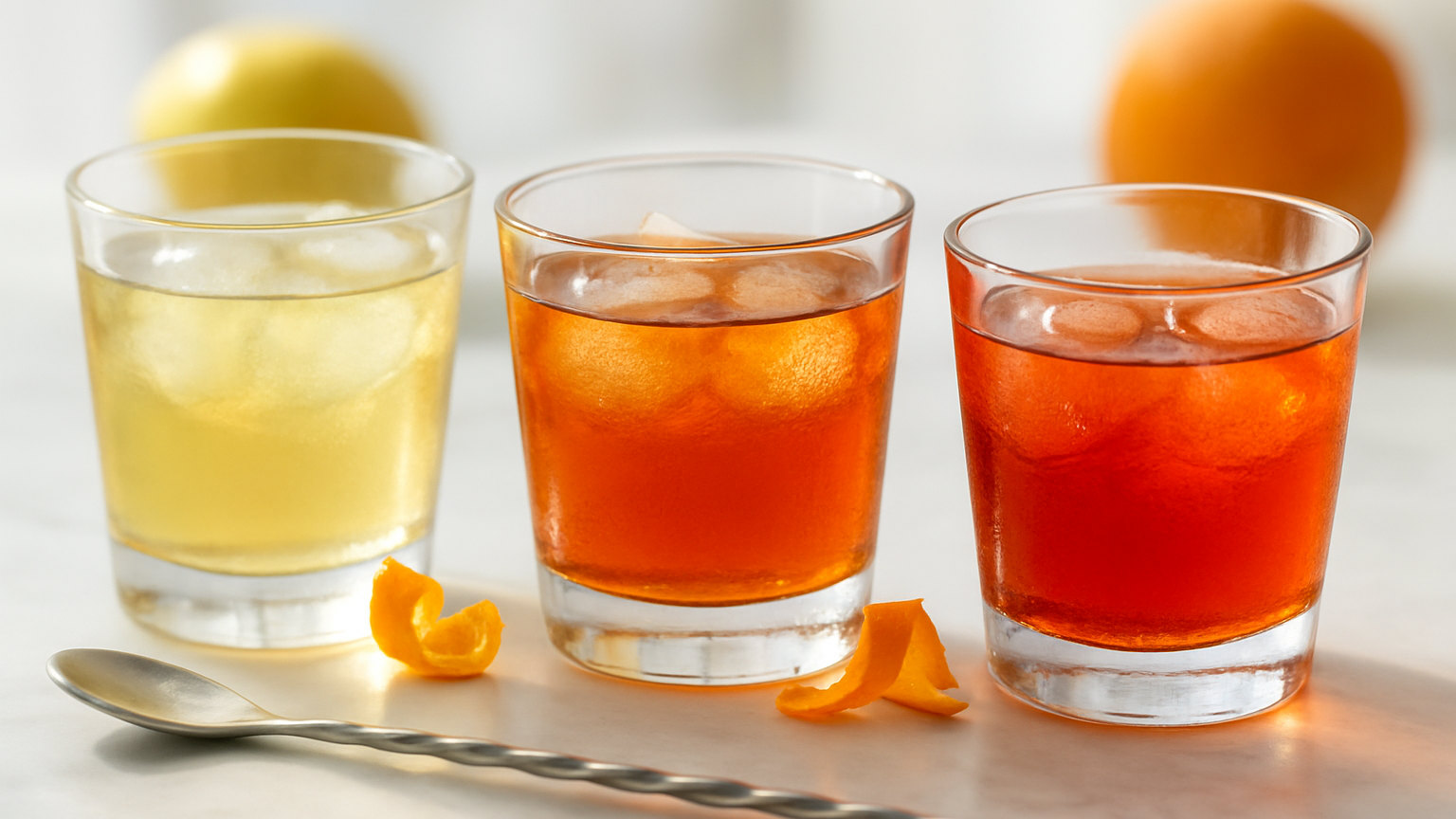
Orange liqueur appears in more classic cocktails than almost any other modifier, and the category is unusually inconsistent. Two bottles both labelled triple sec can differ by 20 percentage points of alcohol and a great deal of sugar.
What is triple sec?
An orange liqueur made from the dried peel of bitter oranges, distilled and sweetened. The name means triple dry, and the origin of the term is disputed.
There is no legal definition beyond the general liqueur rules, which is why the category varies so much. Strength ranges from around 15 per cent at the cheap end to 40 per cent for premium bottlings.
What is curaçao?
Historically the same thing, made with the peel of the laraha, a bitter citrus grown on the island of Curaçao. The terms are now used loosely and largely interchangeably.
Curaçao is often the older-style term, applied to drier, stronger and sometimes barrel-aged expressions. Blue curaçao is the same liqueur with colouring.
What about cognac-based orange liqueurs?
A distinct style, using a brandy base rather than neutral spirit. They are richer, rounder and usually around 40 per cent, and they behave differently in a drink.
In a margarita they give a fuller, softer result. In a sidecar they are traditional. They cost considerably more.
Why does the variation matter?
Because the same recipe with different bottles produces different drinks. A margarita made with a 40 per cent dry curaçao needs a little syrup; the same recipe with a 20 per cent sweet triple sec needs more lime.
That is why margaritas vary so much between bars using identical proportions. The liqueur is doing different work.
How should you choose?
- For margaritas and sidecars: a drier curaçao style at 38 to 40 per cent.
- For punches and long drinks: a cheaper sweeter triple sec is fine.
- For sipping or for a cosmopolitan: mid range works.
One bottle of a decent 38 to 40 per cent orange liqueur covers nearly every recipe, adjusting the syrup as needed.
Which drinks use it?
- Margarita. With tequila and lime.
- Sidecar. With cognac and lemon.
- Cosmopolitan. With vodka, lime and cranberry.
- Mai tai. Orange curaçao is in the original.
- White lady. With gin and lemon.
- Corpse reviver number two. Equal parts with gin, Lillet and lemon.
Can you make it?
An approximation, yes. Dried bitter orange peel steeped in vodka for two to three weeks, strained and sweetened with syrup, gives something usable.
It will be coloured rather than clear, since home infusion cannot replicate distillation. The flavour is closer than the appearance.
How strong is a drink made with it?
A margarita with 50ml of 40 per cent tequila and 25ml of 40 per cent liqueur is around 2.6 units. Using a 20 per cent triple sec instead brings that down to roughly 2.2.
That is a meaningful difference across an evening and it is invisible from the glass.
How long does it keep?
Years. High sugar and reasonable strength make it stable, and it is one of the safer bottles to buy if you make cocktails occasionally.
What should you check on the label?
The strength, first. That single number tells you more about how the bottle will behave in a drink than the brand or the category name does.
Anything at 38 to 40 per cent will be drier and more assertive; anything at 20 to 25 will be sweeter and will need less added syrup in a cocktail.
Does colour tell you anything?
Only that colouring was added. Blue curaçao is an ordinary orange liqueur with dye, and it tastes essentially the same as the clear version.
Barrel-aged orange liqueurs carry genuine colour from wood, which is a different matter and usually stated.
Which single bottle should a home bar hold?
A dry curaçao style at around 40 per cent. It covers margaritas, sidecars, white ladies and mai tais, and you can always add syrup where a sweeter liqueur was assumed.


