
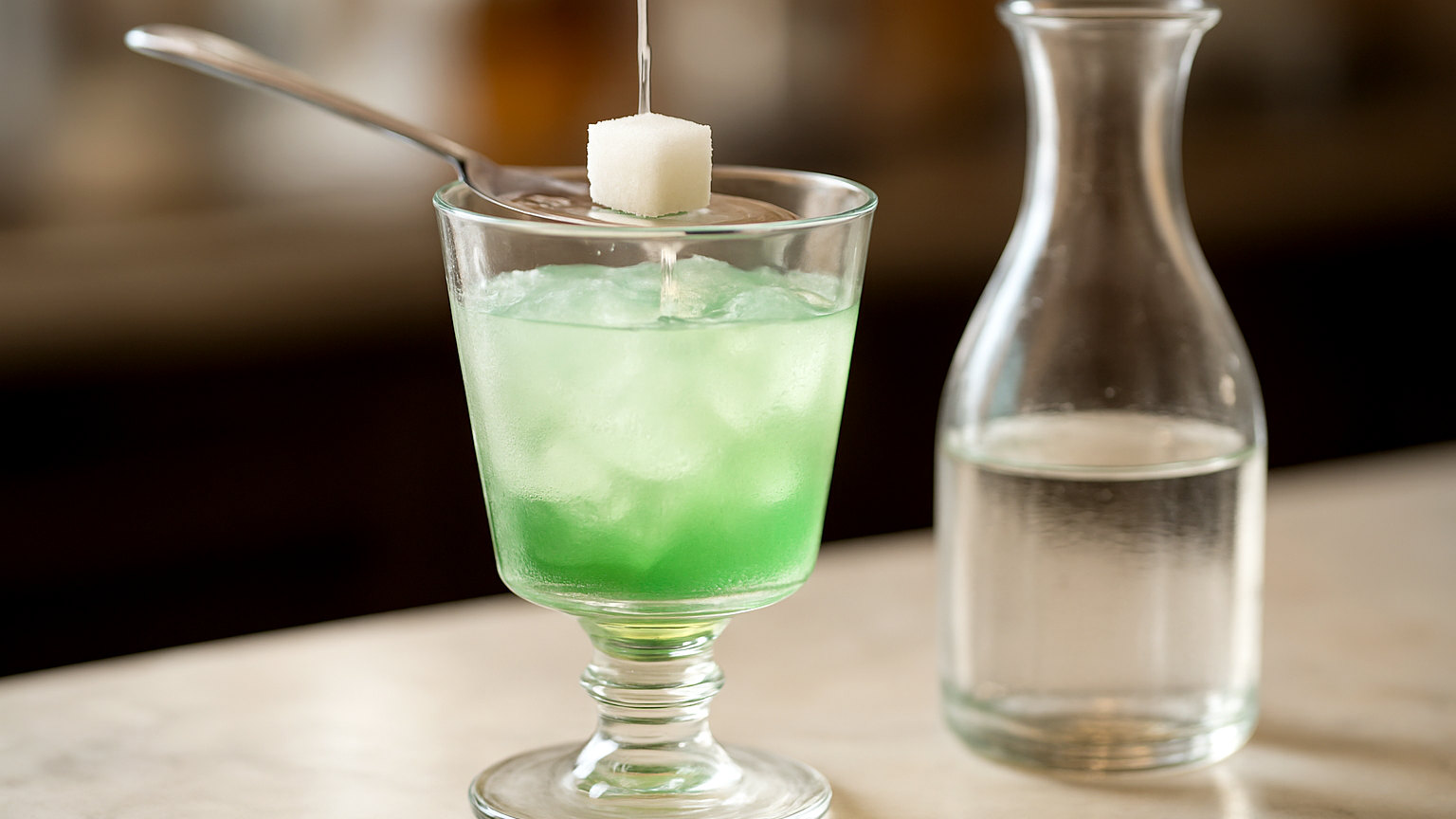
Few drinks carry as much mythology as absinthe. Almost all of it is wrong, and the reality is a high-strength herbal spirit with a specific serving ritual and a genuine reason to respect the measures.
What is it?
A distilled spirit flavoured principally with grand wormwood, green anise and fennel, usually with additional herbs. It is not sweetened, which technically makes it a spirit rather than a liqueur.
Strength is typically 45 to 74 per cent, with many traditional bottlings around 68. That is roughly double a standard spirit and it is the single most important practical fact about it.
Why was it banned?
It was prohibited across much of Europe and the United States in the early twentieth century, following a campaign that blamed it for madness, violence and social decay.
The evidence was thin. Absinthe was cheap, extremely strong and drunk in quantity during a period of widespread alcohol problems, and the wine industry had a commercial interest in the campaign against it.
Bans were lifted across most countries from the 1990s onwards, and it has been legal in the UK throughout, since the UK never banned it.
What about thujone?
Thujone is a compound in wormwood, and it was blamed for the supposed hallucinogenic effects. Modern analysis of pre-ban bottles found thujone at levels far too low to cause any such thing.
Current EU limits cap thujone in spirits, and traditionally made absinthe sits comfortably beneath them. Absinthe does not cause hallucinations. What it causes, at 68 per cent, is intoxication.
What is the louche?
The cloudy effect when water is added. Anise oils dissolve readily in strong alcohol and much less so once diluted, so they come out of solution as a fine emulsion.
It is the same mechanism that makes limoncello cloudy, and it is a genuine indicator of naturally distilled anise rather than added flavouring.
How should you serve it?
Diluted, three to five parts cold water to one part absinthe, added slowly.
- Pour 25 to 30ml into a glass.
- Rest a slotted spoon across the rim, with a sugar cube if you want it sweetened.
- Drip iced water slowly over the sugar.
- Watch the louche develop and stop when the balance suits you.
Sugar is optional and was traditional because early absinthe was often harsh. A good modern bottling rarely needs it.
What about burning the sugar?
A modern invention with no historical basis, popularised in the 1990s. It caramelises the sugar, drives off some alcohol and adds nothing worth having.
It also involves setting fire to a high-strength spirit at close quarters, which is a genuine risk with something at 68 per cent. The traditional method involves no flame at all.
How strong is a serve?
A 25ml measure at 68 per cent is 1.7 units, which is more than a standard 25ml spirit measure by a considerable margin.
Diluted with water it drinks like a long drink, which disguises that. Two or three serves across an evening is a substantial amount of alcohol.
Which cocktails use it?
Usually in tiny quantities as a rinse or a few dashes rather than a measure.
- Sazerac. A rinse of the glass, discarded.
- Corpse reviver number two. A rinse or a dash.
- Death in the afternoon. Absinthe topped with champagne.
- Improved cocktails. A dash alongside bitters.
What is pastis?
A related French anise spirit, sweetened, usually around 40 to 45 per cent, and made by maceration rather than distillation. It louches the same way and is a gentler introduction to the flavour.
How can you identify a good bottle?
Naturally coloured absinthe is a soft green from chlorophyll and fades to amber with age and light. A vivid, unchanging green usually indicates artificial colouring.
A proper louche when water is added is the other indicator, since it demonstrates naturally distilled anise oils rather than added flavouring.
What glass should you use?
A reservoir glass if you have one, with a bulb at the base marking the measure. Any small tumbler works, and the reservoir simply makes the ratio easy to judge by eye.


