
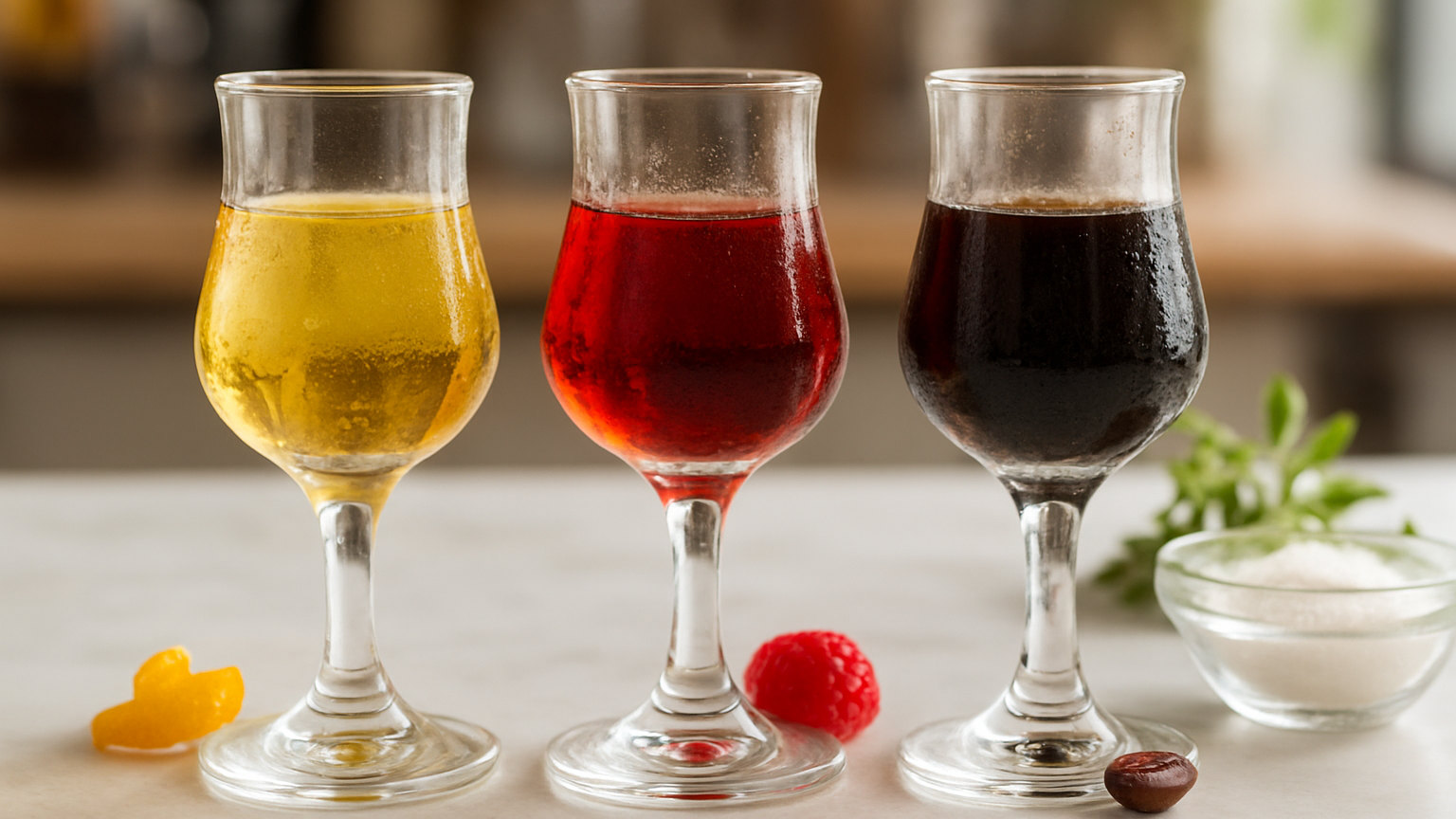
Liqueur covers an enormous range of products, from bone-dry orange curaçao to thick cream liqueurs. What holds the category together is a legal definition built around sugar rather than flavour.
What is the legal definition?
In the UK and EU, a liqueur is a spirit drink with a minimum sugar content and a minimum alcoholic strength.
- Minimum 100 grams of sugar per litre for most liqueurs.
- Minimum 70 grams per litre for cherry liqueurs made on a fruit spirit base.
- Minimum 80 grams per litre for gentian and similar bitter liqueurs.
- Minimum 15 per cent alcohol.
That is a low bar on strength and a meaningful one on sugar. It is why a dry aromatised spirit is not a liqueur and a sweetened one is.
How does a liqueur differ from a spirit?
A spirit takes its character from distillation. A liqueur takes a finished spirit and adds flavour and sugar afterwards.
Gin is a useful boundary case. It is flavoured, and it is not sweetened, so it remains a spirit. Sloe gin is sweetened heavily and is legally a liqueur despite the name.
What about bitters?
Cocktail bitters are usually far too strong and too concentrated to be drunk, and they are sold as flavourings rather than as liqueurs. Bitter liqueurs such as amaro are drinkable and sweetened, and sit clearly in this category.
How is flavour extracted?
- Maceration. Steeping ingredients in spirit at room temperature. Simple and the usual home method.
- Percolation. Passing spirit repeatedly through the material.
- Distillation. Redistilling the infusion, giving a clear result.
- Essence and concentrate. Used industrially and the cheapest route.
Maceration is what almost every home liqueur uses, and it is why nearly all of them are coloured rather than clear.
Why is making your own so much cheaper?
Because the ingredients are inexpensive and the retail price reflects branding, duty and distribution rather than materials.
A litre of homemade limoncello uses a bottle of vodka, six lemons and some sugar. Coffee liqueur uses coffee, sugar and rum. In both cases the cost is a fraction of the shop equivalent and the result is usually fresher.
What does the sugar do?
Three things. It sweetens, obviously. It adds body and viscosity, which is why liqueurs feel heavier than spirits. And it preserves, since sugar and alcohol together inhibit spoilage.
That preservative effect is why most homemade liqueurs keep for a year or more without refrigeration. The exception is anything containing dairy or fresh juice, which is covered separately.
What strength should a homemade one be?
Most sit between 20 and 30 per cent once sugar and water are accounted for. Starting with a 40 per cent spirit and adding syrup typically lands somewhere in that range.
A 50ml measure of a 25 per cent liqueur is 1.25 units, which is less than a spirit measure and easier to drink more of given the sweetness.
What should you make first?
Limoncello or coffee liqueur. Both are forgiving, both use ingredients already in most kitchens, and both are noticeably better homemade than bought.
How should you store one?
Upright, out of direct light, at stable room temperature. Light fades colour quickly, particularly in fruit liqueurs, which turn from deep red to brown within months on a windowsill.
Laying bottles down puts strong alcohol against the cork and degrades it. The only liqueurs needing refrigeration are those containing dairy or fresh juice.
Are liqueurs only for cocktails?
No, and many are better on their own. Limoncello from the freezer, amaro after dinner and nocino in small measures are all traditional serves in their own right.
They also work in cooking, particularly in desserts, where a spoonful of fruit or coffee liqueur does more than an equivalent quantity of spirit would.
What equipment do you need to make one?
Very little. A large sealable jar, a funnel, muslin and some bottles covers every recipe in this section. Nothing needs a still, since maceration involves no distillation and is entirely legal at home.
That distinction matters. Infusing bought spirit is fine; distilling your own is an offence in the UK without a licence.


