
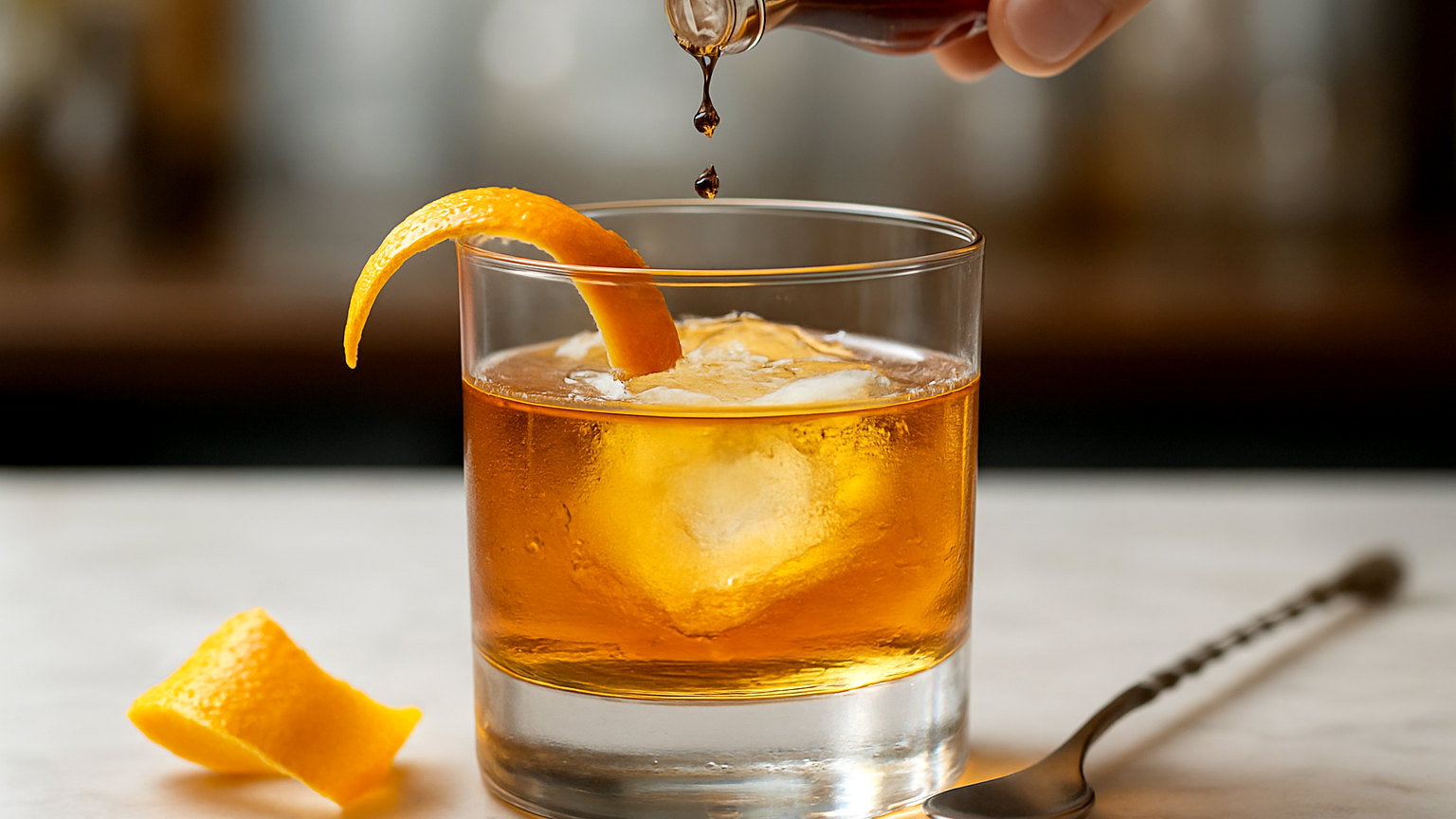
Bitters are the smallest ingredient in most cocktails and one of the most consequential. A few dashes amounts to well under a millilitre, and removing it from an old fashioned makes the drink flat and obviously incomplete.
What are they?
High-strength alcohol infused with bittering agents and aromatics, concentrated to the point where they are used in dashes rather than measures.
The bittering agents are usually roots and barks: gentian, cinchona, quassia, wormwood. Aromatics vary enormously and include citrus peel, spices, herbs and flowers.
Most sit between 35 and 45 per cent alcohol, and some considerably higher. They are sold as flavourings rather than as drinks.
Why do such small quantities matter?
Because bitterness is perceptible at very low concentrations and because the aromatics work on smell rather than taste.
Bitters also bridge. A cocktail with sweet and sour components can taste like two separate things sitting side by side, and bitters give the palate something that connects them. That is why the effect is out of proportion to the volume.
How much is a dash?
Roughly 0.6 to 1ml from a standard dasher bottle, depending on the bottle and how hard you shake it. Consistency matters more than precision, so use the same bottle the same way.
What are the main styles?
- Aromatic. Angostura style. Warm spice, clove, cinnamon. The default.
- Orange. Citrus led, the second bottle most bars buy.
- Creole or Peychaud style. Anise and cherry, lighter and floral.
- Celery, cardamom, chocolate, grapefruit. Specialist, each unlocking a few drinks.
Which should a home bar hold?
Aromatic and orange cover the overwhelming majority of classic recipes. A Peychaud style bottle is the third, mainly for the sazerac.
Beyond that, buy one only when a drink you actually make calls for it. Specialist bitters last years and get used a few times a year.
Which drinks need them?
- Old fashioned. Aromatic, two to three dashes.
- Manhattan. Aromatic, sometimes with orange.
- Sazerac. Peychaud style.
- Champagne cocktail. Aromatic, soaked into a sugar cube.
- Martini. Orange bitters, in older recipes.
- Pink gin. Aromatic, in the historical sense of the drink.
Are they useful outside cocktails?
Yes. A dash in soda water makes a decent low-alcohol drink, and bitters work in cooking, particularly in glazes, marinades and desserts where a little bitterness balances sweetness.
How long do they keep?
Effectively indefinitely. High alcohol and concentrated botanicals make them extremely stable, and a bottle bought today will still be good in a decade.
Keep them upright and out of direct light. The dasher insert can clog with sediment, and rinsing it occasionally solves that.
Do they contribute meaningful alcohol?
Almost none. Three dashes of a 44 per cent bitters is around 0.1 units, which is negligible against the 2 to 3 units in the drink itself.
They are not suitable for anyone avoiding alcohol entirely, since the concentration is high even if the quantity is small.
Why are they called bitters?
Because they descend from patent medicines sold as digestive tonics in the nineteenth century, most of which were bitter herbal preparations in alcohol.
Several surviving brands began that way, and the medicinal claims were what allowed them to be sold during American prohibition as a flavouring rather than a drink.
Can you use too much?
Easily. Bitterness accumulates and cannot be removed, so add dashes one at a time and taste. A drink with six dashes where two were intended tastes medicinal and cannot be rescued.
Does the brand matter?
For aromatic bitters, less than people assume, since most classic recipes were written around the same style. For orange bitters there is genuine variation, and switching brands changes a martini noticeably.
Buying one of each and using them consistently matters more than which you choose.
What is the difference from amaro?
Concentration and sweetness. Bitters are used in dashes and are barely sweetened; amaro is drunk in measures and is heavily sweetened. Both use the same bittering agents.
Can you substitute one for another?
Aromatic and orange are not interchangeable, and using one where the recipe calls for the other changes the drink noticeably rather than slightly.


