
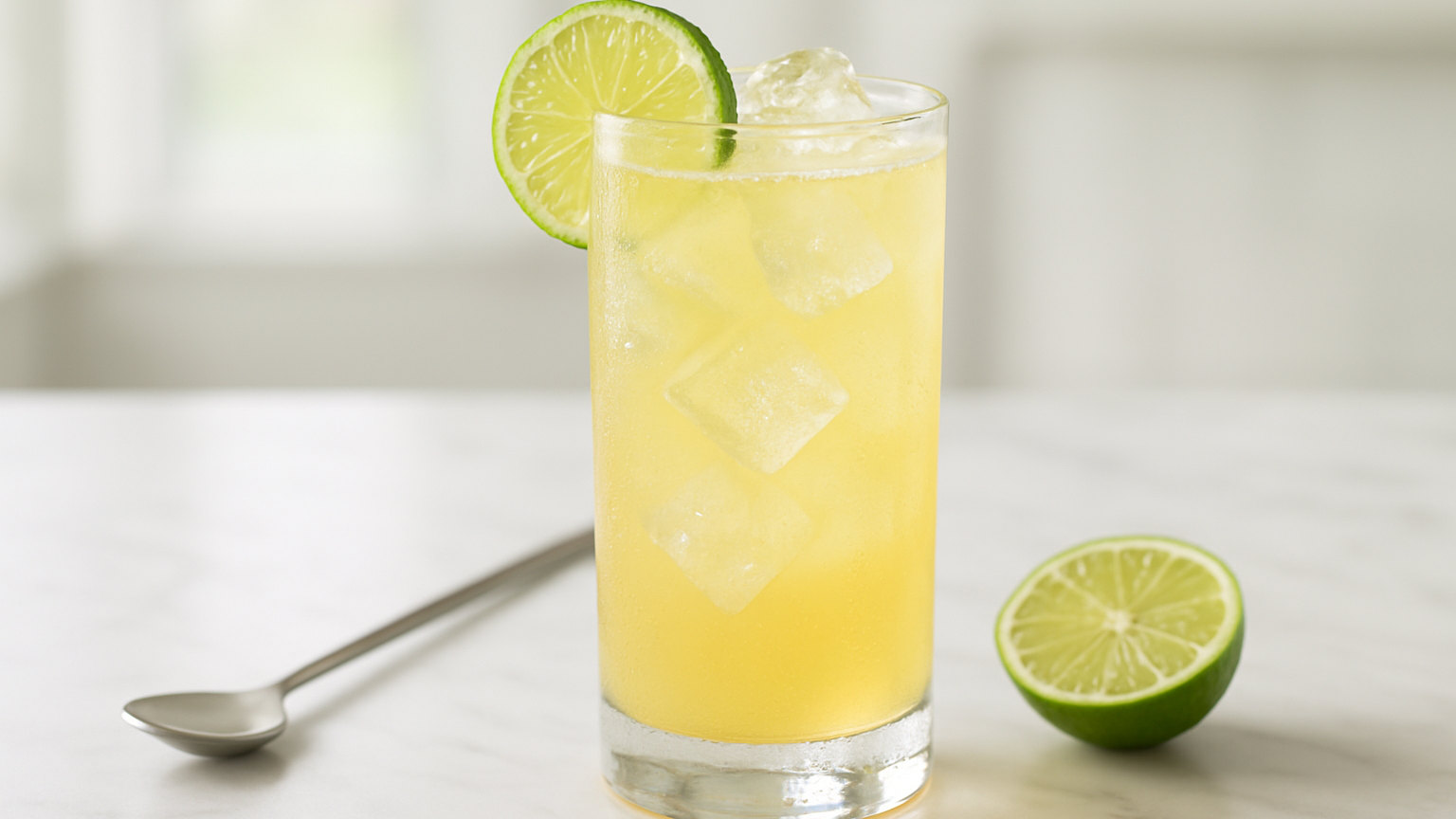
A snowball is advocaat topped with lemonade and sharpened with lime. It is strongly associated with Christmas in Britain and it is genuinely good when made with enough lime, which most versions are not.
What is the recipe?
- 50ml advocaat
- 15ml lime cordial, or fresh lime juice
- Lemonade to top, around 120ml
- A maraschino cherry and a lemon slice
Pour the advocaat and lime into a tall glass with ice. Top with lemonade and stir briefly to combine. Garnish and serve.
What is advocaat?
A Dutch liqueur made from egg yolks, sugar and brandy or neutral spirit, typically around 15 to 18 per cent. It is thick, pale yellow and closer to a custard than to any other liqueur.
The egg yolks are what give it the texture, and it is the reason the drink foams when stirred with lemonade.
Does it contain raw egg?
Commercial advocaat is pasteurised and shelf stable, so it does not carry the raw egg considerations that an egg white cocktail does.
It does contain egg, which matters for anyone with an egg allergy and is worth mentioning when serving.
Why does the lime matter?
Because advocaat and lemonade are both sweet, and without acidity the drink is cloying. Lime is what makes it drinkable.
Fifteen millilitres of cordial is standard. Fresh lime juice works and is sharper, in which case reduce it slightly to around 10ml.
Why does it foam?
Because the proteins in the egg yolk aerate when the lemonade is added and stirred. The result is a pale, frothy head that sits on top.
Stir briefly rather than vigorously. Over-stirring knocks the carbonation out and the foam collapses with it.
How do you stop it separating?
Combine the advocaat and lime first, then add the lemonade. Pouring lemonade onto neat advocaat causes it to clump rather than blending.
Everything should be cold, which also helps.
How strong is it?
Around 0.9 units. Advocaat is low in strength and the drink is heavily lengthened, which makes it one of the lightest cocktails in common use.
Why is it a Christmas drink?
Largely a matter of British habit rather than anything inherent. Advocaat was heavily marketed in the 1970s and became fixed in the seasonal drinks cabinet, where it has largely stayed.
There is nothing about it that stops working in July.
How should you store advocaat?
Refrigerate once opened and use within a few months, since it contains egg. Manufacturers state their own guidance and it is worth following.
An advocaat that has darkened, separated permanently or smells sour should be discarded.
What are the variations?
- With soda instead of lemonade. Considerably less sweet.
- Fluffy duck. With cream and orange liqueur.
- Advocaat with cherry brandy. A common Dutch serve.
- Neat over ice. Traditional in the Netherlands, eaten with a spoon.
Can you batch it?
Mix the advocaat and lime ahead and keep it cold. Add lemonade per glass, since the foam and the carbonation both go quickly.
What ruins it?
Leaving out the lime, which makes it cloying, and over-stirring, which collapses the foam and flattens the lemonade.
How should you serve it?
Cold, over plenty of ice, in a tall glass. Advocaat is thick and it benefits from being properly chilled before it goes anywhere near lemonade.
What ratio should you settle on?
Roughly one part advocaat to two and a half parts lemonade, with 15ml of lime. Increase the lime if your lemonade is particularly sweet.
Can you make it without advocaat?
Not really, since the egg-based texture is the drink. Nothing else on the shelf behaves the same way or produces the same foam.
It is a single-purpose bottle, which is part of why it tends to appear once a year.
How strong is advocaat?
Around 15 to 18 per cent, which is low for a liqueur. That is why the finished drink comes in under a unit despite a 50ml measure.


