
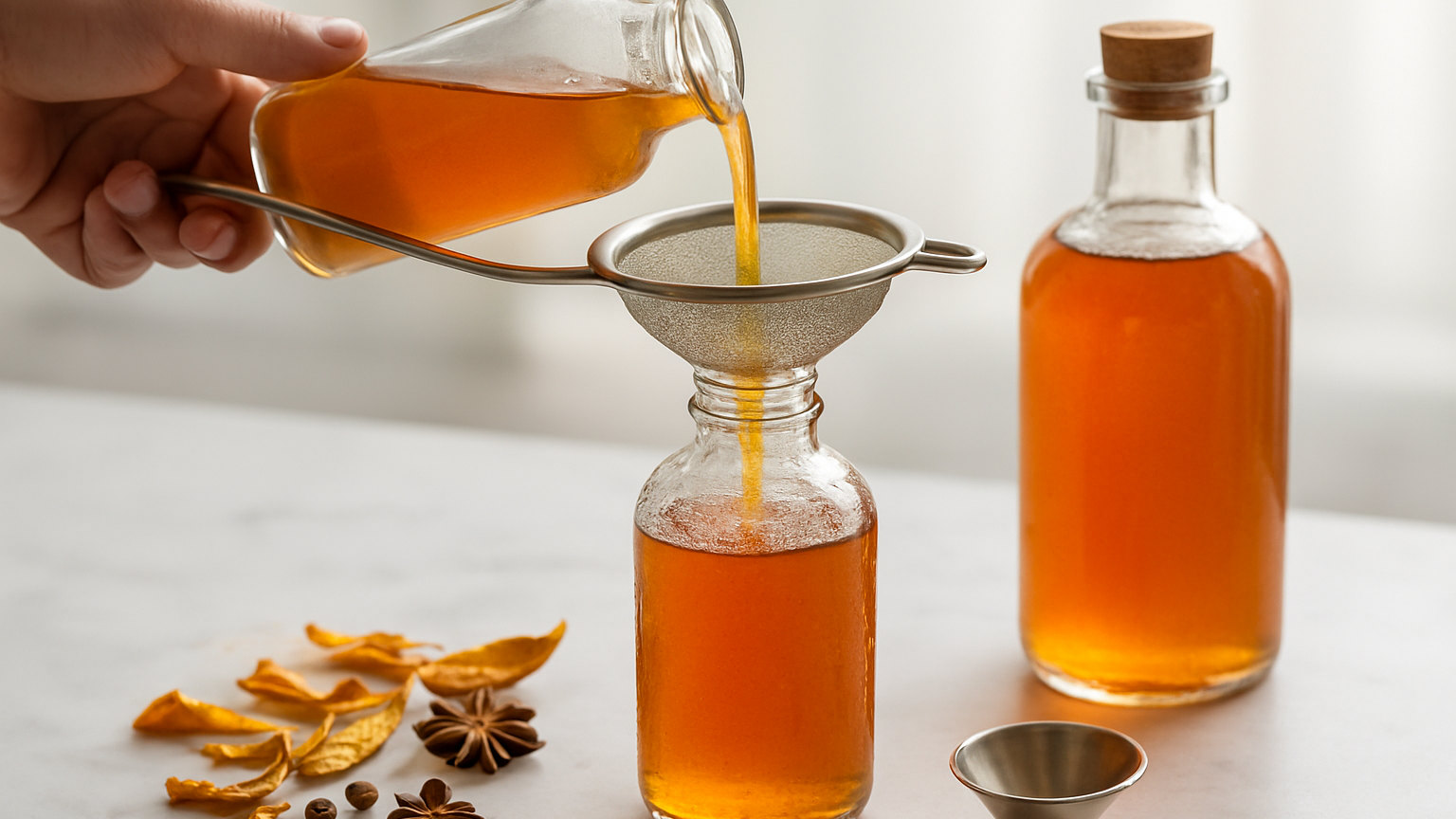
A homemade liqueur can be spoiled at the last stage by poor filtering, an unsterilised bottle or a label that says nothing useful. None of it is difficult and all of it is easy to skip.
How do you sterilise bottles?
Wash thoroughly in hot soapy water, rinse, then either:
- Place in an oven at 140 degrees for 15 minutes, or
- Run through a dishwasher on a hot cycle, or
- Use sterilising solution of the kind sold for brewing or baby bottles.
Let bottles cool before filling, and never pour a cold liquid into a hot glass bottle. Sterilise lids and corks separately, since oven heat will damage most of them.
How should you filter?
In stages. A coarse sieve first to remove fruit and spices, then muslin, then paper if you want it clear.
Paper filtering is slow, often several hours for a litre, and it is what produces a bright result. Do not squeeze the muslin, since forcing solids through is what makes a liqueur cloudy.
Does clarity matter?
Only cosmetically for most. Cloudiness from oils, as in limoncello, is normal and desirable. Cloudiness from fruit pulp settles into sediment and looks less appealing over time.
What should a label say?
- What it is.
- The date it was bottled.
- Approximate strength.
- Any allergens, particularly nuts or dairy.
- Storage instructions, if refrigeration is needed.
- A use-by date, for anything containing dairy or fresh juice.
This matters most for gifts. A bottle handed over without a label gives the recipient no way to know it contains hazelnuts or needs refrigerating.
How long does each type keep?
- Fruit liqueurs, strained. A year or more, improving for the first six months.
- Citrus liqueurs. A year, best in the first six months.
- Spice and herbal. A year or more.
- Nut liqueurs. A year, limited by the oil going stale.
- Nocino. Several years, improving.
- Coffee. Three to six months, fading rather than spoiling.
- Cream liqueurs. Two weeks, refrigerated. Genuinely perishable.
Why do most keep so well?
Because sugar and alcohol together inhibit microbial growth. Above around 20 per cent alcohol with substantial sugar, very little can survive.
That protection does not extend to dairy, and it is reduced in anything containing fresh juice or a lot of water. Those are the two categories to treat carefully.
How should they be stored?
Upright, out of direct light, at stable room temperature. Light degrades colour quickly, particularly in fruit liqueurs, which fade from deep red to brown within months on a sunny windowsill.
Laying bottles down puts high-strength alcohol against the cork and degrades it. A cupboard away from the cooker is ideal.
What size bottles work best?
Smaller than instinct suggests. A 250 or 350ml bottle is finished before it fades, and it makes a better gift than a litre nobody gets through.
Swing-top and screw-cap bottles are more practical than corks for anything kept a long time, since corks dry out and shrink.
What should you check before giving one away?
That it is labelled, that any allergen is stated, and that anyone receiving a dairy-based one knows it must go in the fridge immediately.
What equipment is worth having?
A funnel, muslin, coffee filter papers, a large jug and a set of small bottles. None of it is expensive and all of it makes the final stage considerably less messy.
Should you keep notes?
Yes, and it is the difference between repeating a good batch and guessing. Record quantities, steeping times and any adjustment made at the end.
Most liqueurs are made once a year at most, and nobody remembers accurately twelve months later.
What about corks and seals?
Swing-top and screw-cap bottles are more reliable than corks for anything kept over a year, since corks dry, shrink and let air in.
If using corks, store upright and check them occasionally rather than assuming they will hold.
How do you deal with sediment that appears later?
Decant carefully off the top, leaving the last centimetre behind, or filter once more through paper. Sediment in a fruit liqueur is normal and cosmetic rather than a sign of spoilage.
Anything cloudy that also smells sour or fizzes slightly is a different matter and should be discarded.


