
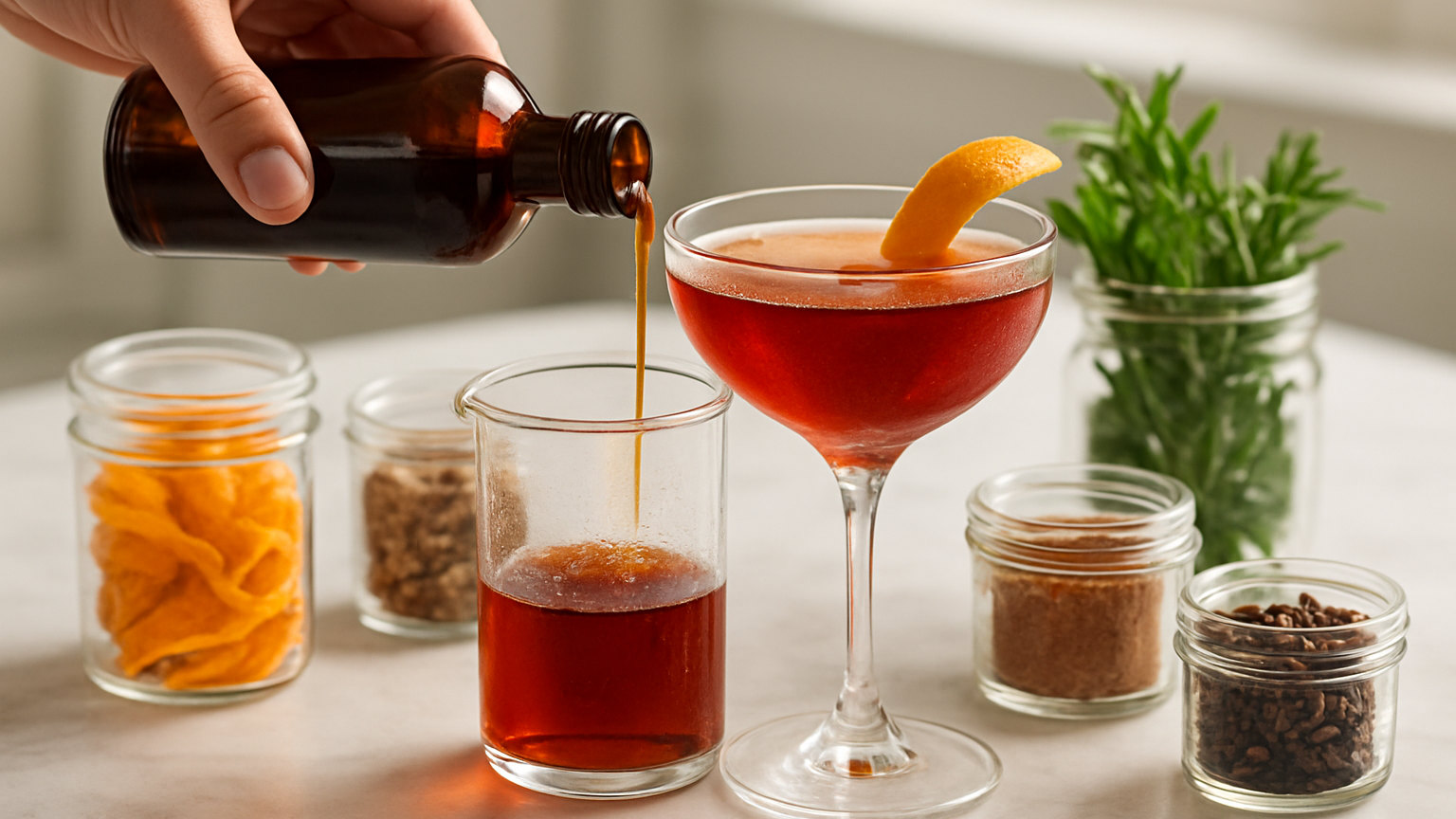
Making bitters at home is straightforward in principle and fiddly in practice. The method that works reliably is not a single jar of everything together, and understanding why saves a great deal of wasted material.
Why infuse separately?
Because extraction rates differ enormously. Clove and cinnamon give up their character within a day or two; gentian root and dried orange peel take weeks.
Putting everything in one jar means the fast ingredients dominate long before the slow ones have started. Separate infusions let each run to its own timescale, and blending at the end gives complete control over the balance.
What spirit should you use?
The strongest neutral spirit you can obtain. Higher alcohol extracts more efficiently, particularly from woody roots and barks.
In the UK, overproof vodka or an overproof rum at 55 to 60 per cent is usually the practical ceiling. A standard 40 per cent vodka works and extracts more slowly and less completely.
What bittering agents can you use?
- Gentian root. The workhorse. Clean, intense, straightforwardly bitter.
- Quassia bark. Very bitter, slightly woody.
- Wormwood. Bitter and herbal. Use sparingly.
- Dandelion and burdock root. Earthy, gentler.
- Dried bitter orange peel. Bitter and aromatic together.
Cinchona bark is used commercially and should be treated with care at home, since quinine is genuinely toxic in quantity. Gentian achieves a comparable bitterness with none of that concern and is the sensible choice.
What aromatics work?
Almost anything: cinnamon, clove, allspice, cardamom, star anise, coriander seed, fennel, ginger, citrus peel, dried cherry, cocoa nib, black pepper, vanilla.
Use whole rather than ground throughout. Ground spice clouds the result and is very difficult to filter out properly.
What is the method?
- Fill small jars, one ingredient each, covering with spirit.
- Label everything with contents and date.
- Shake daily and taste from day three onwards using a dropper.
- Strain each when it tastes right. Spices take days, roots take two to four weeks.
- Filter through muslin, then paper.
- Blend drop by drop, keeping notes.
- Rest the finished blend two weeks before judging it.
How should you blend?
Start with the aromatic components and build the base flavour, then add the bittering infusion last and in small increments. Bitterness is easy to add and impossible to remove.
Work in small volumes, around 10ml, with a pipette. Scale up only once you have a ratio you like.
Should you add sugar?
A very small quantity of rich syrup rounds the edges and helps the components integrate. Around 2 to 5ml per 100ml is plenty.
Bitters are not meant to be sweet. Anything more and you are making an amaro instead, which is a legitimate thing to make and a different one.
Is there a simpler starting point?
Orange bitters. Dried bitter orange peel, cardamom, coriander seed, caraway and a little gentian, each infused separately, blended and rested.
It uses few ingredients, the balance is forgiving, and orange bitters is the second bottle most bars want anyway.
How long do homemade bitters keep?
Years. High alcohol and concentrated botanicals make them very stable, and they continue to integrate for the first few months.
Bottle in small dasher bottles with a dropper or a dasher insert, and label clearly, since several will look identical.
Where do you buy the ingredients?
Herbalists and specialist online suppliers carry gentian, quassia, wormwood and dried bitter orange peel. Ordinary supermarkets cover the spices.
Buy small quantities. Twenty-five grams of gentian root will make bitters for years, since it is used in very small amounts.
How much does it cost?
Very little per bottle. The spirit is the main expense, and a small quantity of roots and spices makes many batches.
The real cost is time, since the slow infusions take weeks and the blending stage rewards patience.
What should you avoid?
Cinchona bark in any quantity, since quinine is genuinely toxic beyond small doses and the commercial limits exist for good reason. Gentian gives comparable bitterness with none of that concern.
Also avoid guessing with unfamiliar botanicals. Stick to material sold for culinary or herbal use rather than foraging anything you cannot identify with certainty.


