
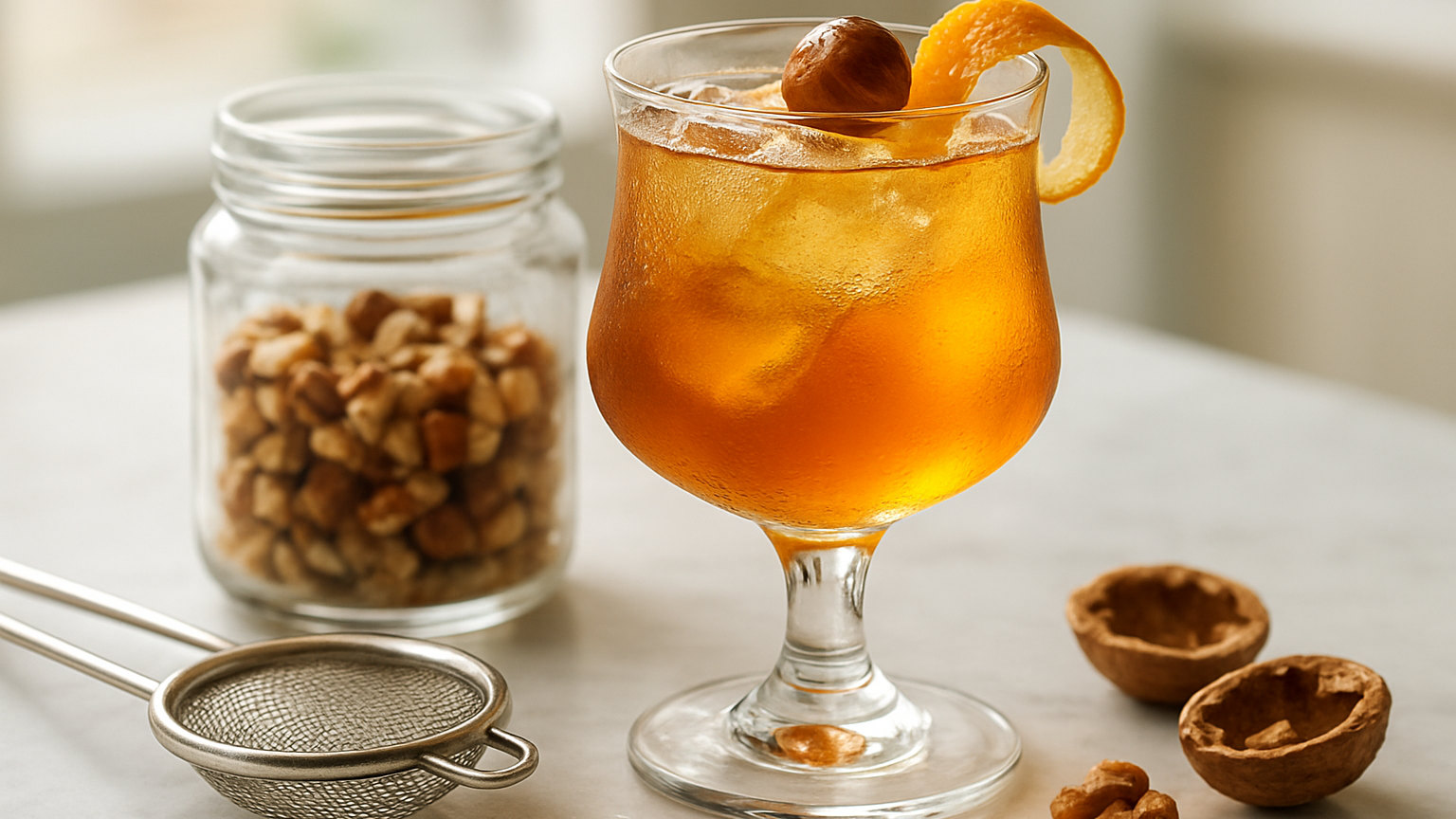
Nut liqueurs are among the more rewarding home infusions, particularly nocino, which uses green walnuts picked before the shell has formed. Two practical points are worth settling before starting.
What about allergens?
Nut allergies are common and can be severe. Any homemade nut liqueur carries no label, so anyone giving one away should say clearly what is in it.
That applies to the finished bottle and to anything made with it. A cocktail containing hazelnut or almond liqueur should be flagged when serving to guests.
What is nocino?
An Italian liqueur made from green walnuts, picked in June while the whole fruit is still soft enough to cut through. It is dark, bittersweet and spiced.
Traditionally the walnuts are picked around the feast of San Giovanni in late June, which is a reasonable guide to timing in the UK too.
Why do they stain?
Green walnut husks contain juglone, which oxidises on contact with air and skin and produces a deep brown stain that lasts a week or more.
Wear gloves, use a board you do not mind marking, and expect the knife to discolour. Juglone also irritates some people’s skin, so gloves serve two purposes.
How do you make nocino?
- Quarter 25 to 30 green walnuts, wearing gloves.
- Combine with 1 litre of vodka, 500g sugar, a cinnamon stick, four cloves, a strip of lemon peel and a split vanilla pod.
- Seal in a large sterilised jar.
- Leave in a sunny spot for 40 days, shaking every few days.
- Strain through muslin, bottle, and rest at least three months.
It is harsh at first and improves markedly with time. A year is not excessive, and most people find it considerably better in its second winter.
What about hazelnut liqueur?
Toast 200g of shelled hazelnuts until fragrant, cool, chop roughly, and steep in 750ml vodka for two to three weeks. Strain, then sweeten with syrup and a little vanilla.
Toasting matters. Raw nuts give a flat, slightly green result, and toasting develops the character the liqueur depends on.
Can you make an almond liqueur?
Yes, using sweet almonds, which are the ordinary edible kind. Toast, chop and steep as above.
Do not use bitter almonds or apricot kernels, which are sometimes suggested for a stronger almond flavour. They contain amygdalin, which releases cyanide when metabolised, and the quantities involved are not trivial.
Commercial amaretto derives its almond character from apricot kernels processed industrially under controlled conditions. That is not something to attempt at home, and sweet almonds with a little almond extract achieve a good result safely.
How do you strain nut infusions?
Through muslin, twice, then paper if you want it clear. Nut oils create a haze and some settling is normal.
The oil can also turn rancid over time, which is the main limit on shelf life. Straining thoroughly extends it considerably.
How long do they keep?
Nocino keeps for years and improves. Nut oil liqueurs such as hazelnut are better within a year, since the oil eventually goes stale.
Store both upright, out of light, at room temperature.
How should you use them?
Neat after dinner in small measures, in coffee, or in stirred cocktails in place of some of the sweetener. At around 25 per cent, a 40ml measure is 1 unit.
When should green walnuts be picked?
In June in the UK, while the whole fruit is soft enough to cut through with a knife. Once the shell has hardened inside, they are no longer suitable.
Test one before picking a quantity. If the knife meets resistance, you are too late for that year.
Should the nuts be shelled?
For hazelnuts and almonds, yes, and toasted before steeping. Green walnuts are the exception, since the whole immature fruit is used before the shell has formed inside.
How should you serve them?
In small measures after dinner, at room temperature. Nocino in particular is a winter drink and it suits being served slightly warm rather than chilled.
Do they work in cocktails?
Yes, in place of some of the sweetener in stirred drinks. Five to ten millilitres in an old fashioned adds depth without announcing itself.


