
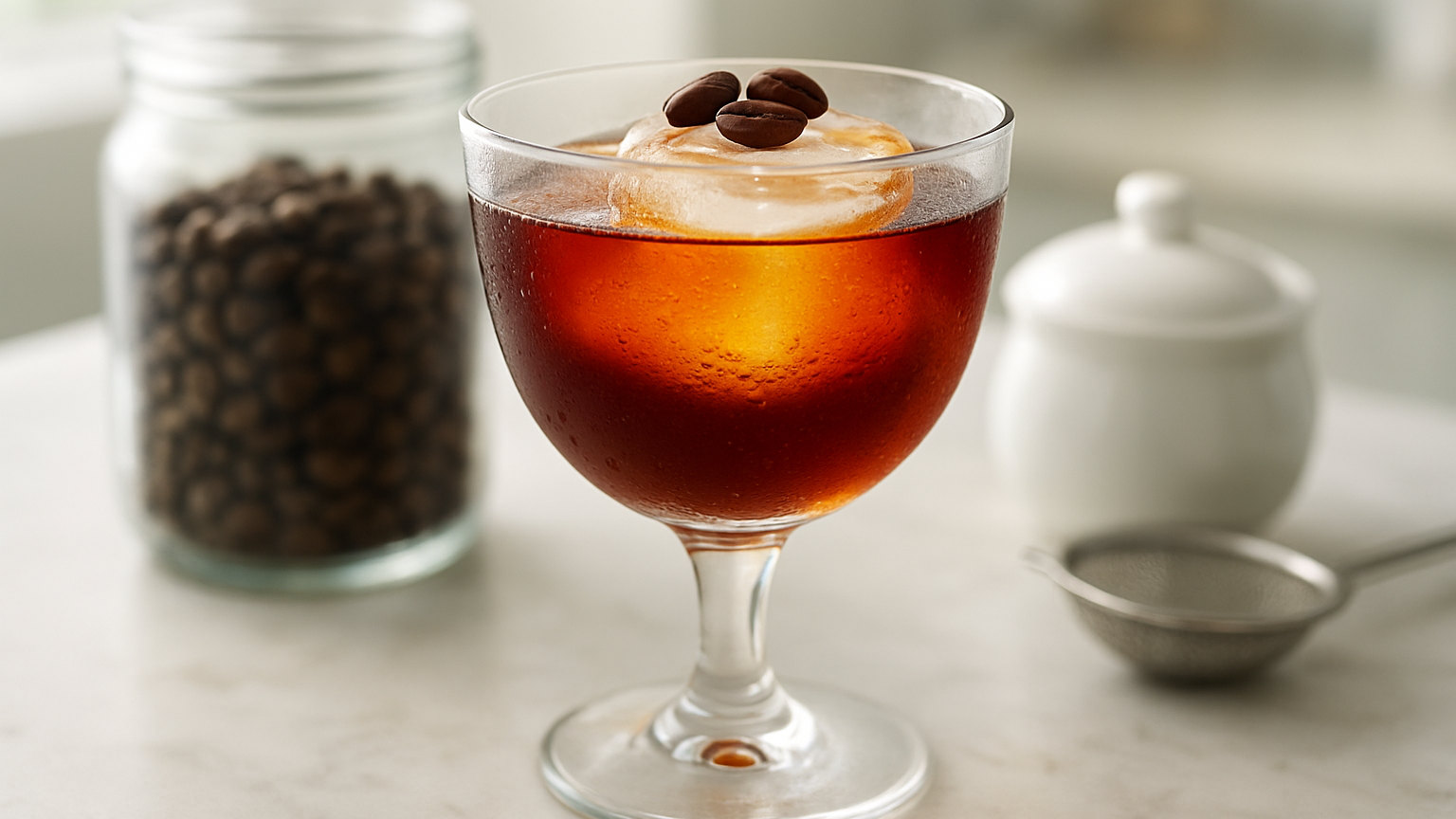
Commercial coffee liqueur is generally very sweet, which is why an espresso martini made with it often needs no additional sugar. A homemade version lets you control that, and it costs a fraction as much.
What do you need?
- 100g coarsely ground coffee.
- 700ml water for cold brewing.
- 350g demerara or soft brown sugar.
- 350ml rum or vodka at 40 per cent.
- One vanilla pod, split.
Which coffee should you use?
A medium or dark roast with chocolate and nut character rather than a bright fruity one, since acidity that reads as pleasant in a cup can taste sharp against sugar and alcohol.
Grind coarsely, as you would for a cafetière. Fine grounds pass through the filter and make the liqueur gritty and muddy.
Should you use cold brew or espresso?
Cold brew, for a made batch. It is lower in acidity, extracts smoothly and produces a cleaner result across a large quantity.
Espresso works if you want something quicker, and it oxidises fast, so use it immediately and expect a shorter shelf life.
How do you make it?
- Combine the coffee and water and leave at room temperature for 12 to 18 hours.
- Strain through a fine sieve, then again through muslin or a paper filter.
- Warm the coffee gently with the sugar until dissolved. Do not boil.
- Cool completely.
- Add the spirit and the split vanilla pod.
- Bottle and rest two weeks, removing the vanilla after about five days.
Which spirit works best?
Rum, traditionally, and it suits coffee well. A gold or lightly aged rum adds depth; white rum keeps it cleaner.
Vodka gives a more neutral result where the coffee leads entirely. Bourbon makes a rich version that works well in stirred drinks.
How sweet should it be?
The quantity above gives something noticeably less sweet than commercial versions, which suits cocktails better. Increase to 450g if you want it closer to what you are used to.
Add sugar in stages and taste. It cannot be removed once in.
What strength is the result?
Around 18 to 20 per cent with these proportions. A 30ml measure is around 0.6 units, which is worth knowing since coffee liqueur is usually one component among several.
How do you use it?
- Espresso martini. With vodka and fresh espresso.
- White russian. With vodka and cream.
- Over ice with a strip of orange peel.
- In an old fashioned in place of some of the sugar.
- Over ice cream, where it is genuinely good.
How long does it keep?
Three to six months, which is shorter than most liqueurs because coffee flavour fades. It does not spoil, and it becomes progressively duller.
Keep it in the fridge and make smaller batches more often rather than one large one.
Does it separate?
A little sediment settling is normal, particularly if the filtering was quick. Shake gently before use, or filter once more through paper if it bothers you.
Why is the homemade version better in cocktails?
Because you control the sugar. Commercial coffee liqueur is sweet enough that an espresso martini made with it needs no additional syrup, which limits how the drink can be balanced.
A less sweet homemade version lets you add sugar deliberately rather than working around what is already there.
Can you make a decaffeinated version?
Yes, using decaffeinated beans with exactly the same method. The flavour is slightly flatter and it is a reasonable option for anything drunk late.
What ratio of coffee to water?
Roughly 1 to 7 by weight for cold brew, which is stronger than a drinking cold brew. The liqueur will be diluted by sugar and spirit, so a weak brew gives a thin result.
Should you filter twice?
Yes. A sieve removes the grounds and muslin or paper removes the fines that make the liqueur muddy and cause sediment later.
Does the sugar type matter?
Demerara or soft brown adds molasses depth that suits coffee, where white sugar gives a cleaner, sharper result. Either works and the brown version is the more traditional.


