
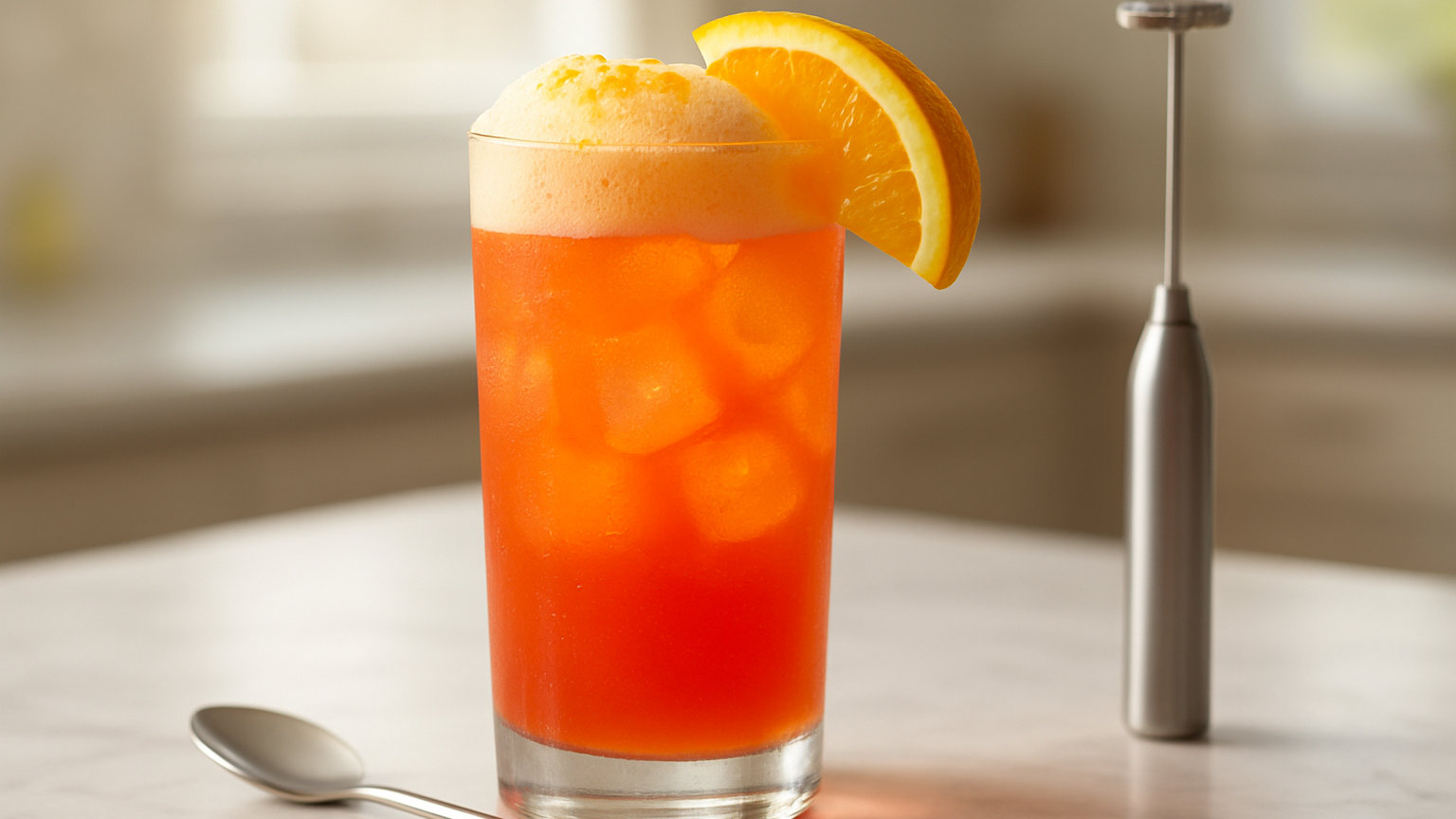
A garibaldi is bitter aperitivo and orange juice. It has two ingredients and one technique, and that technique is the difference between a forgettable drink and one that bars have built reputations on.
What is the recipe?
- 50ml red bitter aperitivo liqueur
- 120ml fresh orange juice, aerated
- An orange slice
Pour the bitter into a tall glass filled with ice. Aerate the orange juice, either with a stick blender for a few seconds or by shaking it hard, and pour it over. Garnish and serve.
What does fluffing the juice mean?
Aerating it so it becomes light and foamy rather than flat. A few seconds with a stick blender, or a hard shake in a sealed container, incorporates air into the juice.
The result has a thick, almost creamy texture and a pale foam on top. It changes the mouthfeel completely and softens the bitterness of the liqueur.
Does it really make a difference?
Substantially, and it is easy to demonstrate. Make one with flat juice and one with aerated juice and the difference in texture is immediate.
This is the whole reason the drink was revived, having previously been a fairly unremarkable two-ingredient mix.
Does the juice need to be fresh?
Yes, more than in almost any other drink. Fresh orange juice aerates properly and holds the foam; cartoned juice has been pasteurised and produces a thinner, shorter-lived result.
It is also two thirds of the drink, so the flavour difference is unmissable.
Why does the aeration soften the bitterness?
Because texture affects perception. The foam coats the palate and slows the delivery of the bitter compounds, which reads as rounder and less sharp.
It is the same reason a creamy drink tastes less acidic than a thin one with the same acidity.
What ratio should you use?
Roughly one part bitter to two and a half parts juice. More juice makes it gentler and more breakfast-like; less makes it a genuinely bitter drink.
How strong is it?
Around 1.2 units with a 25 per cent bitter liqueur, or 0.6 with an 11 per cent orange aperitivo. Check which you are using, since the difference is large.
Where does the name come from?
Giuseppe Garibaldi, on the basis that the drink combines something from the north of Italy with something from the south, mirroring the unification.
Whether that was the original reasoning or applied later is unclear, and it is the story usually told.
What if you have no blender?
Shake the juice hard in a sealed jar or shaker without ice for fifteen seconds. It is not quite as effective and it gets most of the way there.
A milk frother wand also works well.
Can you batch it?
The bitter can be pre-measured. The juice must be aerated per serve, since foam collapses within a few minutes.
For a group, squeeze the juice ahead and aerate in batches as you pour.
When should you drink it?
Before food or at brunch. At around 1.2 units it is light enough for daytime, and the orange juice makes it one of the few bitter drinks that works in the morning.
Why did it become fashionable again?
Because a New York bar in the 2010s made the aeration the point rather than an afterthought, and demonstrated how much difference the texture makes.
Before that it was simply bitter liqueur and juice, and largely ignored.
What glass should you use?
A tall glass filled with ice, so the foam sits visibly on top of the red liqueur below. The contrast is part of the appeal.
Does the bitter liqueur choice matter?
Considerably, since it is a third of the drink. A full red bitter at 25 per cent gives a proper bitter drink; a lighter orange aperitivo at 11 per cent gives something much gentler and half the strength.
How much juice do you need?
Around 120ml per drink, which is two to three oranges depending on size. Squeeze it on the day, since juice dulls within a few hours and aerates less well once it has.


