
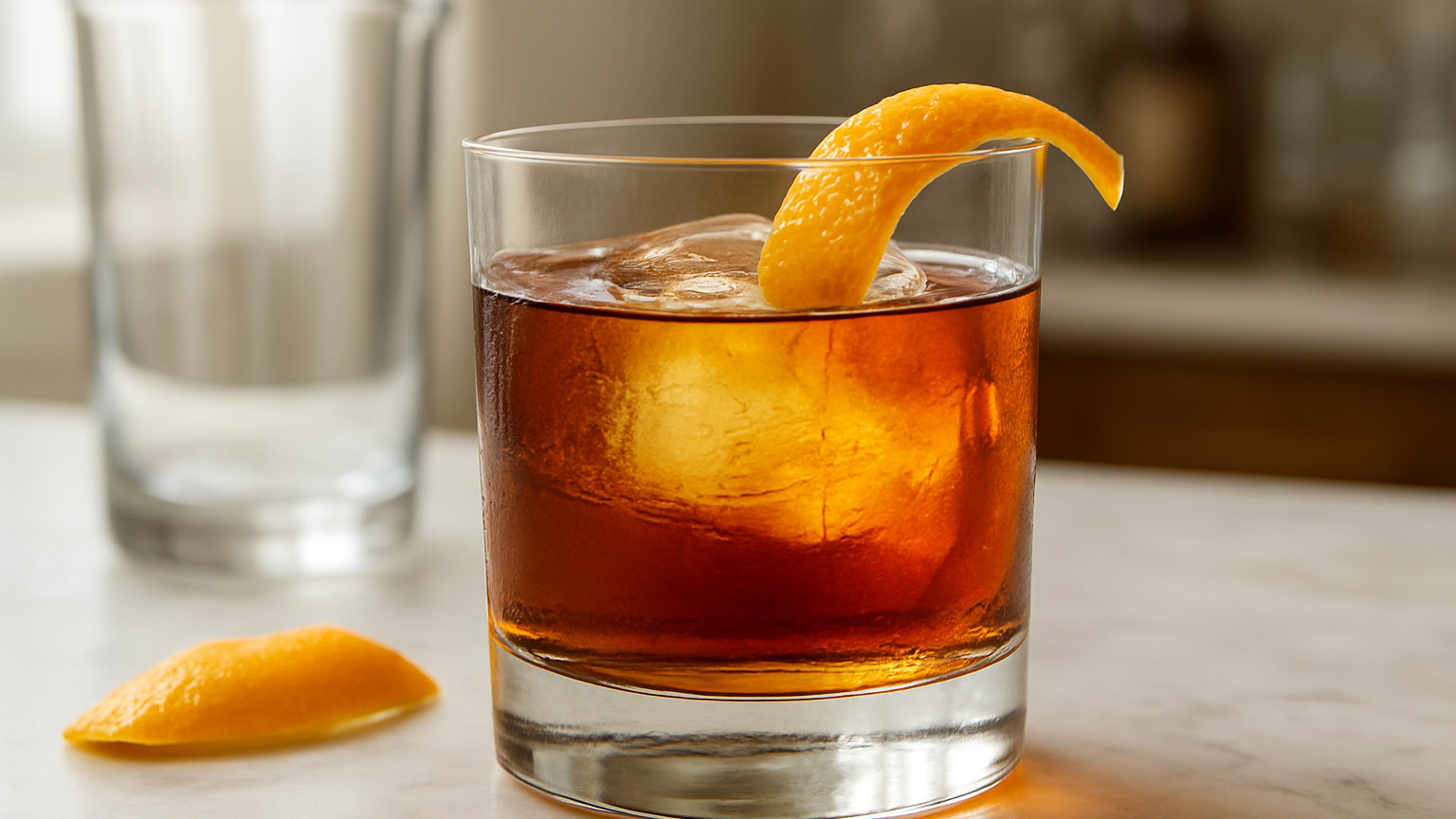
A french connection is cognac and amaretto over ice. It belongs to a small family of two-ingredient drinks built on a spirit and a sweet liqueur, and it is the richest of them.
What is the recipe?
- 40ml cognac
- 25ml amaretto
Stir with ice for 20 seconds and strain over a large cube in a rocks glass. An orange twist is optional and suits it well.
What ratio should you use?
Equal parts is the classic specification and it is noticeably sweet. Around 40:25 in favour of the cognac gives a better balance for most modern palates.
Start there and adjust. Anyone who finds it cloying should push the cognac up rather than reducing the amaretto to nothing, since the almond is the point.
How does it differ from a godfather?
The base spirit. A godfather uses Scotch and a french connection uses cognac, with everything else identical.
Cognac is fruitier and rounder, so this version is softer and more dessert-like. Scotch is drier and maltier, which contrasts more with the amaretto.
And a godmother?
Vodka and amaretto, which is the cleanest of the three and lets the almond dominate entirely.
Which cognac should you use?
A decent VS or VSOP. Amaretto is sweet and assertive, so an expensive XO is largely wasted and a very cheap brandy shows through as harshness.
Armagnac works well and gives a slightly rustic, drier version.
What is the allergen point?
Amaretto tastes of almond, and most commercial versions derive that flavour from apricot kernels processed industrially rather than from almonds. Some do contain almond.
Labelling varies, so anyone serving a guest with a nut allergy should check the specific bottle rather than assume either way.
Should it be stirred or built?
Either. Stirring with ice and straining over a fresh large cube gives better control of the dilution; building in the glass is simpler and how it is usually served.
Do not shake it, since there is nothing to emulsify and it would cloud a drink that should be clear.
When should you drink it?
After dinner. It is sweet, warming and rich, which suits it to the end of an evening rather than the start.
It works in the same role a neat brandy would, with the amaretto softening the edges.
How strong is it?
Around 2.2 units. It tastes smooth and sweet, which disguises a full measure of spirit plus a liqueur.
Can you batch it?
Easily, since nothing in it is perishable. Mix at your preferred ratio in a bottle and keep it in the fridge, then pour over a large cube.
It keeps indefinitely and improves slightly as the two integrate over the first few days.
What ruins it?
Too much amaretto and small ice. The first makes it syrupy; the second waters it down within minutes.
Where does the name come from?
The 1971 film, along with several other two-ingredient drinks of the period that took names from cinema.
Is it worth making at home?
Yes, and it is among the easiest cocktails there is. Two bottles, neither perishable, and no equipment beyond a glass and a spoon.
Should you garnish it?
An orange twist suits it, since the citrus oil cuts the sweetness. Express it over the surface and drop it in.
How does it compare to a brandy alexander?
Considerably drier and simpler. A brandy alexander adds cream and chocolate liqueur, which makes it a dessert drink; this stays closer to a spirit.
What ratio should you settle on?
Start at 40ml cognac to 25ml amaretto and adjust from there. Equal parts is the classic specification and it is noticeably sweeter than most people now want.
Does armagnac work?
Well, and it gives a drier, more rustic version. Any decent grape brandy does the job, and cognac is the smoothest of them against a sweet liqueur.
How strong is amaretto?
Typically 21 to 28 per cent, which varies enough between bottles to affect the balance. A stronger amaretto needs slightly less to reach the same sweetness.


