
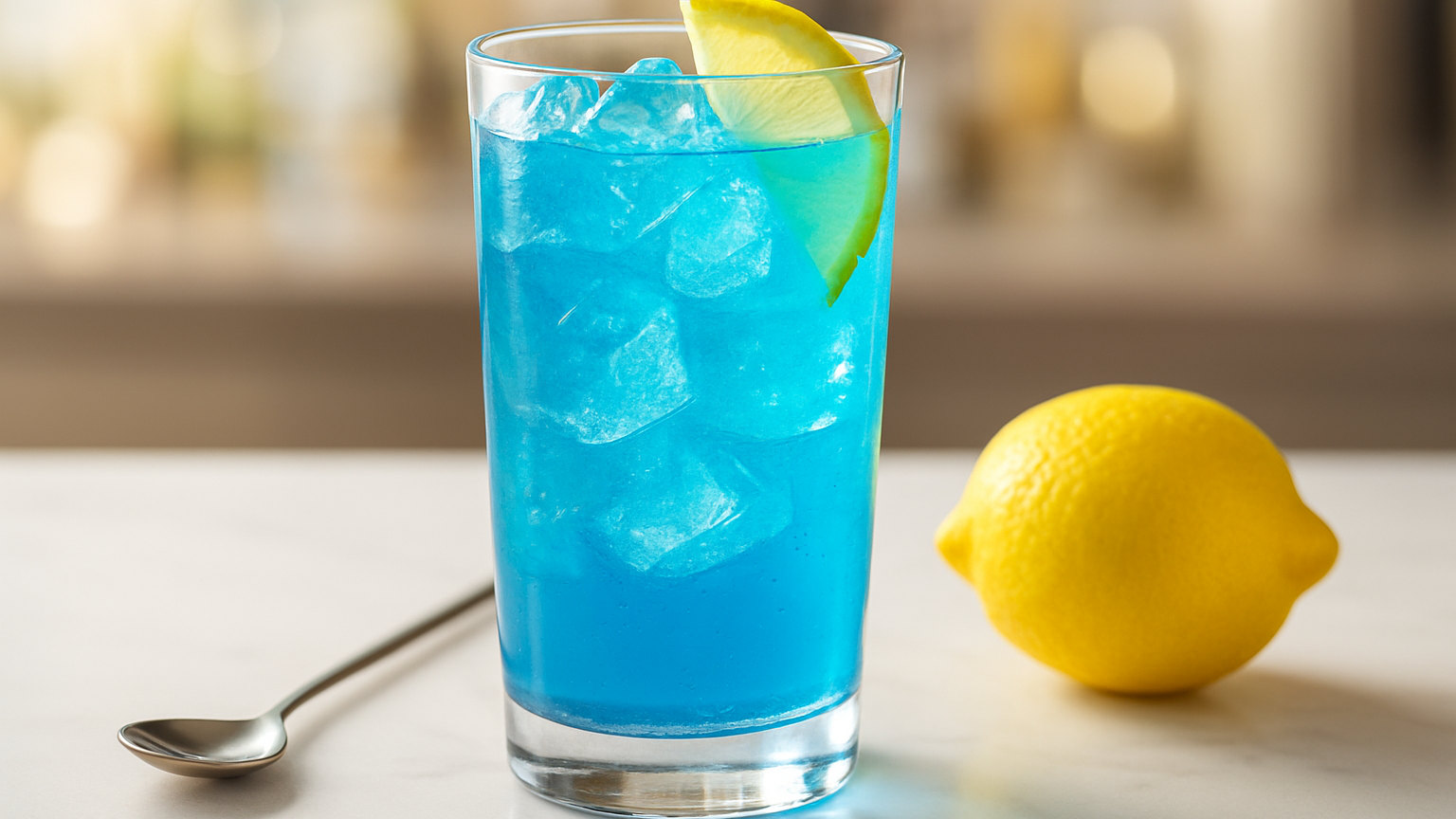
A blue lagoon is vodka, blue curaçao and lemonade. It is bright blue, unmistakable and usually made too sweet, and the liqueur it depends on is not what most people assume it is.
What is the recipe?
- 40ml vodka
- 25ml blue curaçao
- 15ml fresh lemon juice
- Lemonade to top, around 100ml
- A lemon slice and a cherry
Fill a tall glass with ice. Add the vodka, curaçao and lemon juice and stir briefly. Top with lemonade and lift once gently.
What is blue curaçao?
An orange liqueur with blue colouring added. It is made from the dried peel of bitter oranges, exactly as any other curaçao, and the colour is cosmetic.
Clear, orange and blue curaçao all taste essentially the same. Anyone expecting a distinct blue flavour is expecting something that does not exist.
Why is it coloured at all?
Visual appeal, dating from the mid twentieth century when brightly coloured drinks became fashionable. It has no functional purpose.
Why add fresh lemon?
Because vodka contributes no acidity, curaçao is sweet and lemonade is sweeter. Without fresh lemon juice the drink tastes like a soft drink with alcohol in it.
Fifteen millilitres is the difference between a cocktail and a mixer, and it is the most common omission.
Should you use lemonade or soda?
Lemonade is traditional and sweeter. Soda water gives a drier, sharper drink and lets the curaçao show more clearly.
If you use soda, add 10ml of sugar syrup to compensate, or accept a considerably drier drink.
How strong is it?
Around 2 units. The colour and sweetness disguise it entirely, which is worth remembering.
What glass should you use?
A tall clear glass filled with ice, since the colour is most of the appeal and an opaque glass wastes it.
What are the related drinks?
- Blue hawaiian. Rum, blue curaçao, pineapple and coconut cream.
- Blue hawaii. Rum and vodka with blue curaçao and pineapple.
- Blue margarita. Tequila with blue curaçao in place of triple sec.
- Swimming pool. Blue curaçao with cream and pineapple.
All of these are conventional drinks with blue curaçao substituted for a clear orange liqueur, which changes the colour and very little else.
Can you make it less sweet?
Reduce the curaçao to 20ml, increase the lemon to 20ml and use soda instead of lemonade. That produces something noticeably drier and closer to a proper sour.
Can you batch it?
Mix the vodka, curaçao and lemon ahead and keep it cold. Add lemonade per glass, since carbonation goes within twenty minutes.
What ruins it?
Skipping the lemon juice. Without it the drink is vodka, sugar and food colouring, which is exactly the reputation it has.
Is it worth making?
With enough lemon, yes. It is a straightforward vodka sour lengthened with lemonade, and the colour is the only thing separating it from several other drinks.
Made without the lemon it deserves its reputation entirely.
What ratio should you settle on?
Roughly 40ml vodka to 25ml curaçao with 15ml lemon, topped with lemonade. Reducing the curaçao and increasing the lemon is the direction to move in if it tastes too sweet.
Does the brand of curaçao matter?
For flavour, moderately. A drier curaçao at 38 to 40 per cent gives a better drink than a cheap sweet one at 20 per cent, and both are coloured the same way.
How do you build it properly?
Ice first, filling the glass, then vodka, curaçao and lemon stirred briefly, then lemonade poured slowly down the side. One gentle lift is all it needs.
Hard stirring after the lemonade goes in loses the carbonation.
How strong is blue curaçao?
Anywhere from 20 to 40 per cent, which is a wide range. Check the bottle, since a 40 per cent curaçao makes a noticeably stronger drink than a 20 per cent one at the same measure.
Is the colour safe?
Yes. The colouring used in blue curaçao is a standard food-grade additive permitted in soft drinks and confectionery, and it is present in small quantities.


