
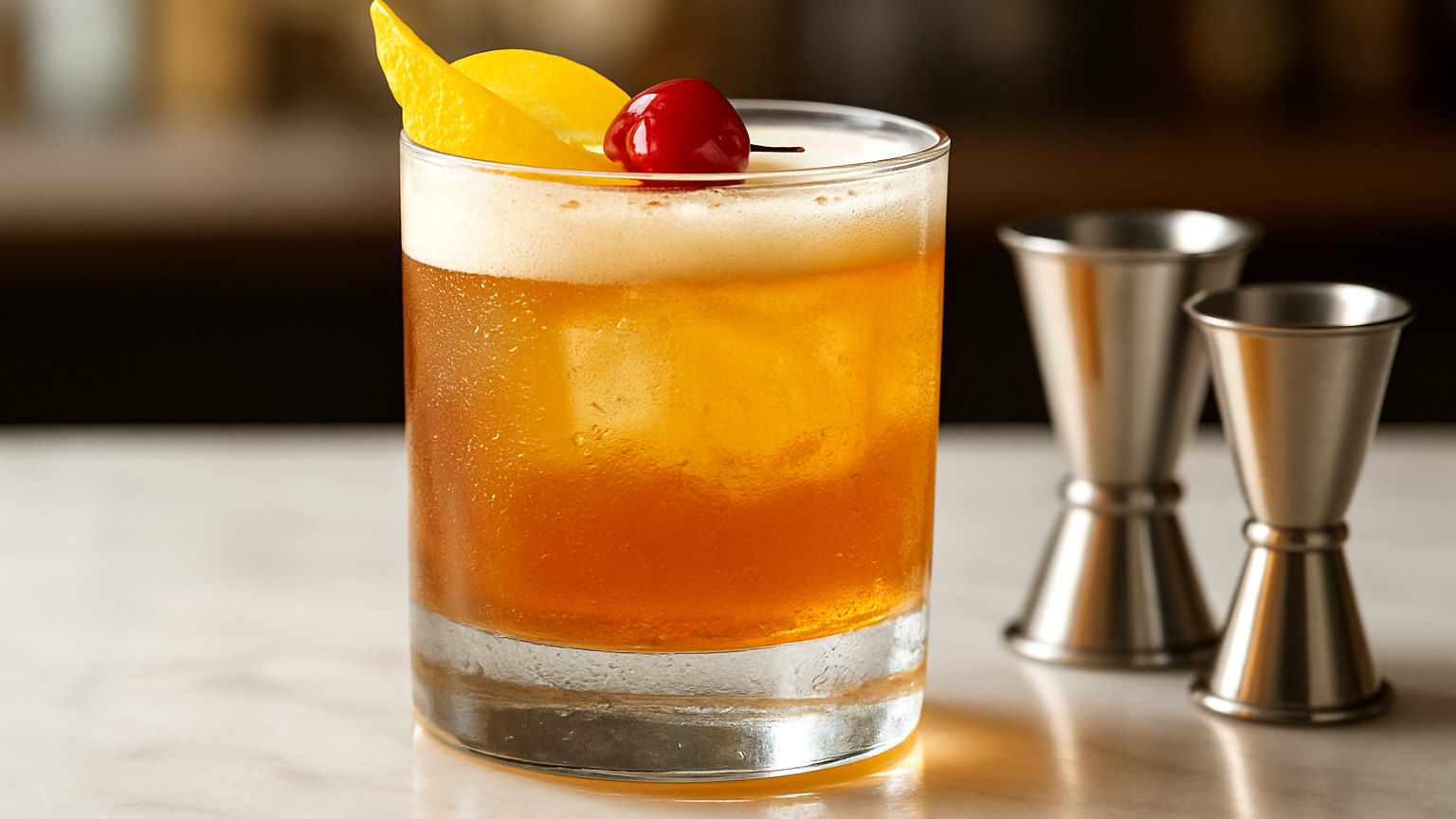
The amaretto sour has a reputation for being sickly, and the standard bar version earns it. One addition transforms the drink, and it is the reason the modern specification looks nothing like the old one.
What is the recipe?
- 45ml amaretto
- 25ml bourbon or overproof whiskey
- 25ml fresh lemon juice
- 5ml sugar syrup, optional
- 1 egg white
Dry shake without ice for 15 seconds, then shake hard with ice for 15 more. Strain over a large cube in a rocks glass. Garnish with a lemon twist and a cherry.
Why add bourbon?
Because amaretto is a liqueur at around 21 to 28 per cent with a great deal of sugar. On its own it produces a sweet, thin drink with no backbone.
Bourbon adds strength, oak and dryness, which gives the lemon something to work against. The modern version is generally credited to Jeffrey Morgenthaler, and it is a substantial improvement on the original.
How much bourbon?
Around 25ml against 45ml of amaretto. An overproof whiskey at 50 per cent or above does the job with less volume, which is why some specifications call for it.
What is the allergen point?
Amaretto tastes of almond and most commercial versions derive that flavour from apricot kernels processed industrially rather than from almonds themselves. Some do contain almond.
Labelling varies, so anyone serving guests with a nut allergy should check the specific bottle rather than assume either way. It is worth mentioning when serving.
What is the raw egg safety point?
Raw egg carries a small risk of salmonella. In the UK, eggs bearing the British Lion mark are produced under a vaccination scheme, and the Food Standards Agency advises these are safe for vulnerable groups.
Use Lion-marked eggs, keep them refrigerated, and offer aquafaba as an alternative. Around 20ml of chickpea water foams comparably and makes the drink vegan.
What is a dry shake?
Shaking without ice first, which lets the egg white proteins denature and form a stable foam. Adding ice immediately chills the mixture and the foam never develops.
Fifteen seconds dry, then fifteen with ice.
How much syrup should you add?
Very little, and often none. Amaretto is already sweet, so the 5ml is there only to balance a particularly sharp lemon.
Taste before straining. If it is cloying, more lemon is the answer rather than less amaretto.
How strong is it?
Around 2 units. The sweetness disguises it, and it is lighter than most sours because a large part of the volume is a low-strength liqueur.
Can you batch it?
Mix the amaretto, bourbon and syrup ahead and keep it cold. Lemon and egg white go in per serve, since neither the freshness nor the foam survives batching.
What is a disaronno sour?
The same drink under a brand name. Any decent amaretto works and the specification is identical.
What glass should you use?
A rocks glass over a large cube is the usual serve, since the drink is rich and the slow dilution suits it. A chilled coupe works if you want it up.
What ruins it?
Leaving out the whiskey and using bottled lemon. The first makes it cloying and the second makes it taste flat and chemical.
Why did the drink have such a poor reputation?
Because the standard bar version was amaretto, bottled sour mix and nothing else. That produces a thin, sweet drink with no structure and no reason to order a second.
Adding whiskey and using fresh lemon changes it from a novelty into a proper sour, which is why it has returned to serious cocktail lists.
How do you know when the foam is right?
It should sit as a firm pale cap that holds a dash of bitters on its surface without them sinking straight through. A thin bubbly layer means the dry shake was too short.
What garnish works?
A lemon twist and a good cocktail cherry. Three dashes of aromatic bitters dropped onto the foam and drawn through with a cocktail stick is common and looks well.


