
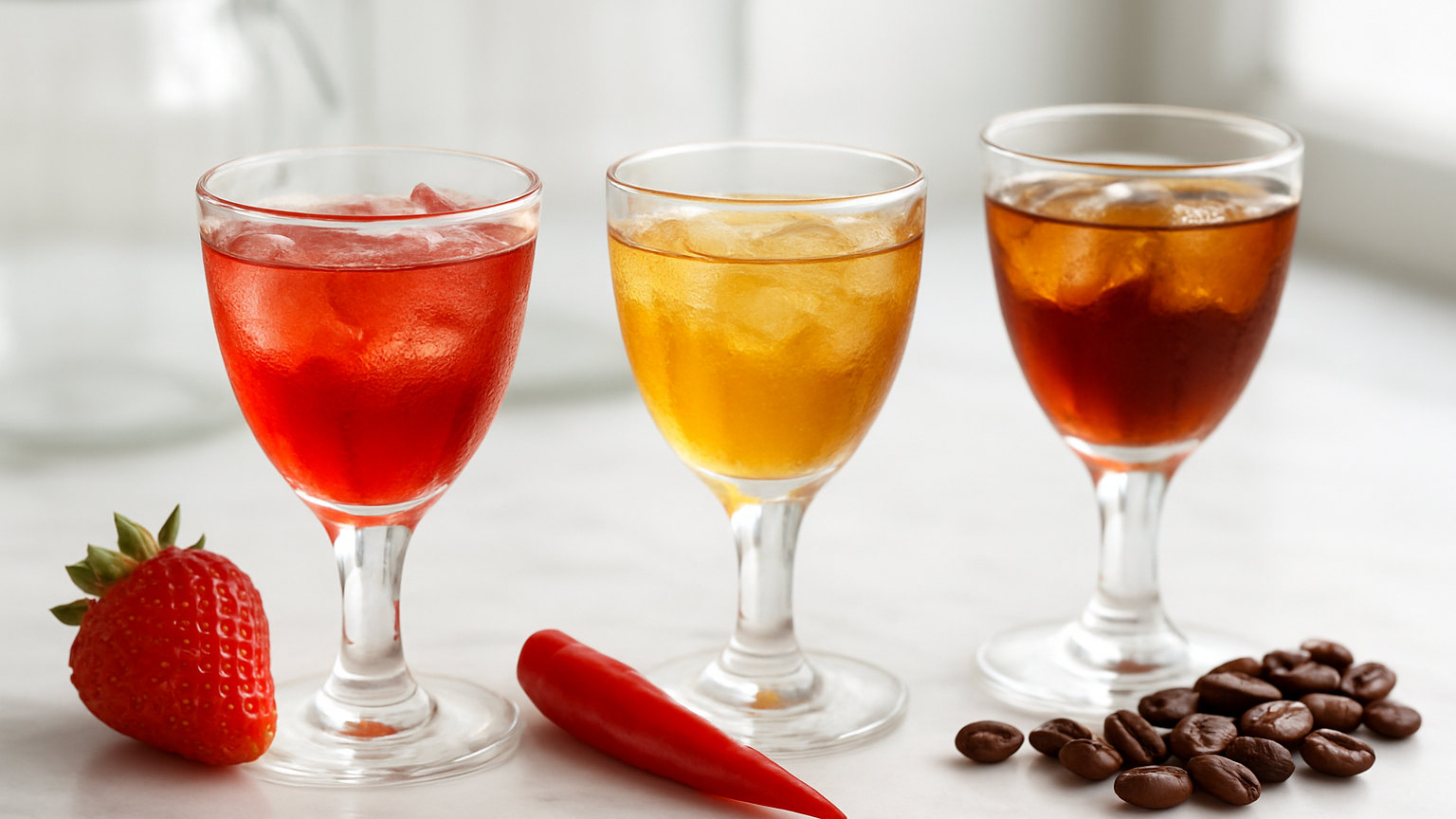
Not every infusion earns its place. Some are much cheaper than the commercial equivalent, some produce something unavailable at any price, and a few take up a jar for weeks to deliver very little.
Which are worth it for the saving?
- Vanilla vodka. Two pods in a bottle. A fraction of the commercial price and far better.
- Citrus vodka. Peel only, two days. Cleaner than most bought versions.
- Coffee spirit. Whole beans, cheap, and unsweetened unlike the liqueur.
- Spiced rum, unsweetened. Controls the sugar the commercial ones bury you in.
Which produce something you cannot buy?
- Chilli tequila. Fresh jalapeño character that bottled versions lack.
- Lapsang souchong whisky. Smoky in a way no product replicates.
- Fat-washed spirits. Bacon bourbon and brown butter rum are not on shelves.
- Rhubarb gin, unsweetened. Almost all commercial versions are sweetened liqueurs.
- Sichuan pepper vodka. Genuinely unusual and easy to make.
Why does unsweetened matter?
Because it behaves like a spirit in a drink. A sweetened commercial rhubarb gin throws the balance of a sour, where an unsweetened infusion slots straight in as the base.
Which are the most reliable?
Vanilla, citrus peel, coffee beans and rooibos tea. All four are forgiving, hard to over-extract badly, and produce a usable result on a first attempt.
Rooibos in particular contains no tannin, so it is nearly impossible to ruin by leaving it too long.
Which are not worth the jar?
- Melon and watermelon. Almost entirely water. Weak and diluted.
- Banana. Turns slimy and tastes artificial.
- Cucumber, beyond a day or two. Fades quickly in the bottle.
- Delicate flowers. Often either imperceptible or soapy.
- Lettuce and salad leaves. Occasionally suggested. There is a reason nobody sells it.
Where should a beginner start?
Vanilla vodka or citrus vodka. Both use one ingredient, both are hard to get wrong, and both are immediately useful in drinks you already make.
Chilli tequila is the third, since it teaches the importance of tasting and it makes a genuinely good margarita.
How many should you have going?
Two or three at once, no more. Infusions need tasting on their own schedules, and four jars with different windows is how batches get forgotten and over-extract.
What is the honest assessment?
Infusing is worthwhile for flavours you cannot buy unsweetened and for saving money on simple ones. It is not worth doing to replicate a good commercial product that already exists.
A homemade vanilla vodka beats most bought ones. A homemade attempt at a complex botanical gin does not beat a distilled one, because distillation is doing something maceration cannot.
What about infusions as gifts?
They work well, provided the bottle is labelled. State what it is, the base spirit and strength, the date, and any allergen.
A small 250ml bottle makes a better gift than a large one, since most people use these slowly and the flavour is best in the first few months.
How much do they cost to make?
The spirit is nearly the whole cost. Two vanilla pods, a handful of coffee beans or a few chillies add very little, which is why the saving against a commercial flavoured spirit is so large.
Which single one should you make?
Vanilla vodka. Two split pods in a bottle for a month, no straining difficulty, and it improves any drink calling for vanilla far more than a bought version does.
Are commercial flavoured spirits ever better?
For anything requiring distillation, yes. A distilled botanical gin does something maceration cannot, and no home infusion matches it.
For simple single flavours, the homemade version usually wins on freshness and always wins on cost.
Do any save meaningful money?
Vanilla vodka most obviously, where two pods and a mid-priced bottle replace something sold at a considerable premium. Coffee and citrus follow closely.
How long should you expect one to last?
Six months to a year for anything dry-ingredient based, and three to six months where fresh fruit introduced water. None of them improves with keeping, so make what you will use.


