
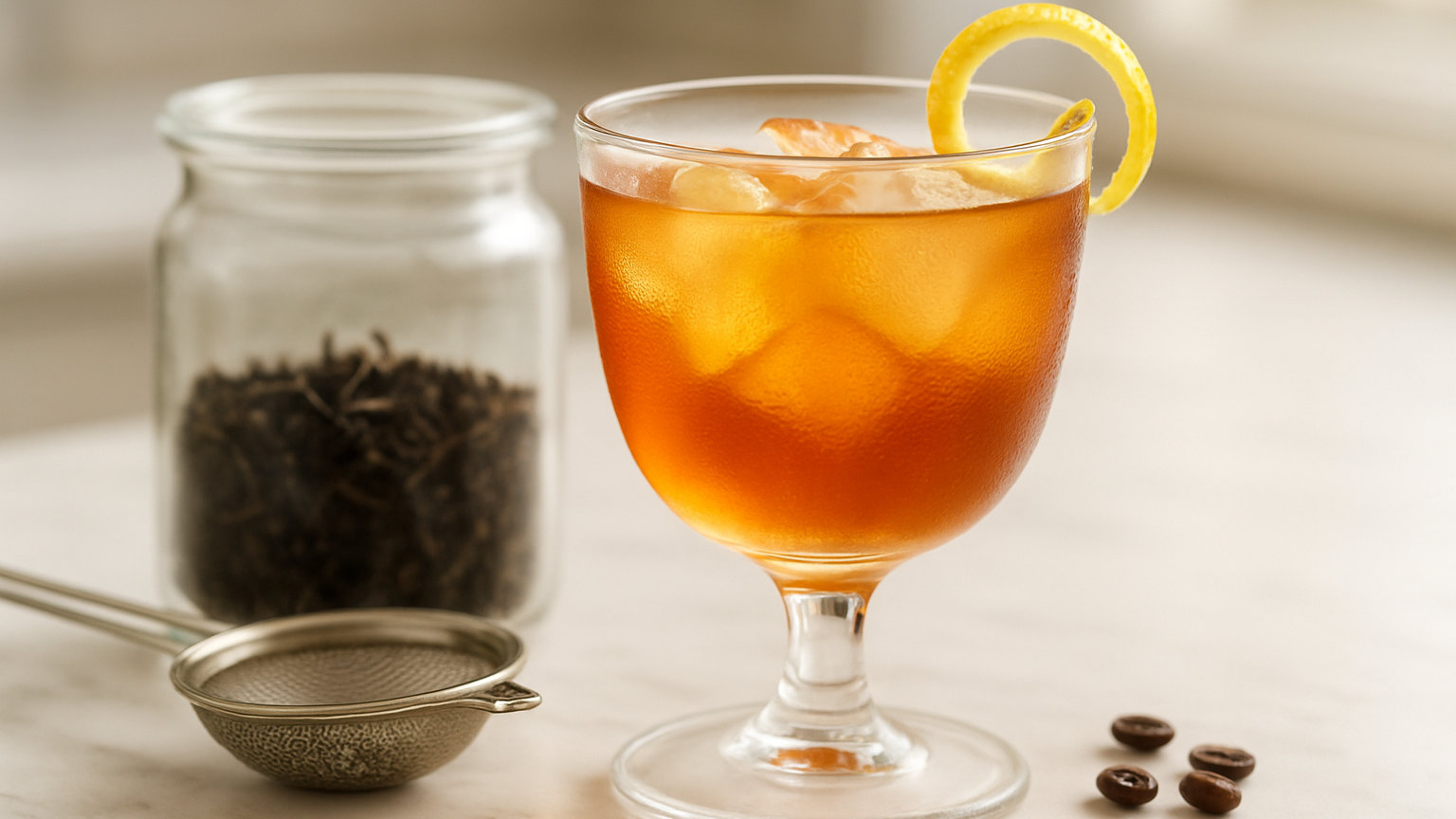
Tea and coffee both infuse quickly and both turn astringent if left. The mechanism is the same one that makes a stewed pot of tea unpleasant, running faster because alcohol is a more aggressive solvent than water.
How long should tea take?
Two to twelve hours, depending on the tea. Fine-leaf black tea can be ready in two; large-leaf oolong or white tea takes longer.
Taste from the first hour. Once tannin has come through, the infusion is astringent and drying and cannot be corrected.
How much tea per bottle?
Around 10 to 15g per 500ml, which is roughly four to six teaspoons. That is a lot of leaf relative to the liquid, and it stays in for a short time.
Which teas work best?
- Earl grey. The bergamot suits gin particularly well.
- Lapsang souchong. Smoky, excellent with whisky or rum.
- Jasmine green. Floral and delicate. Watch it closely.
- Assam or English breakfast. Malty, good in rum.
- Chamomile. Soft and honeyed, suits gin.
- Rooibos. No tannin at all, so almost impossible to over-extract.
Rooibos is worth knowing about for exactly that reason. It is a forgiving starting point.
Why does tannin matter so much?
Because it is what makes over-brewed tea harsh, and alcohol extracts it efficiently. The pleasant aromatic compounds come out first, and tannin follows and keeps coming.
Green and white teas are lower in tannin than black, which gives a slightly wider window. Herbal infusions such as rooibos and chamomile contain none.
How do you infuse coffee?
With whole beans rather than grounds. Around 60 to 80g of whole roasted beans per 500ml, for 12 hours to three days.
Whole beans extract slowly and cleanly. Grounds extract fast, cloud the spirit heavily and are difficult to filter out, which is why they are a poor choice for an unsweetened infusion.
Which roast?
Medium to dark, with chocolate and nut character. Bright fruity light roasts can read as sour against alcohol without the sugar a liqueur would provide.
Crack the beans roughly if you want it faster, accepting more sediment.
How is this different from coffee liqueur?
No sugar and no brewing. A coffee liqueur uses brewed coffee and a great deal of syrup; a coffee infusion is spirit that has sat with beans and nothing else.
The infusion is more useful in cocktails, since it behaves like a spirit rather than a sweetener. It works in an old fashioned where a liqueur would unbalance the drink.
What should you make with them?
- Earl grey gin: in a sour with lemon and a little sugar.
- Lapsang whisky: in a smoky old fashioned.
- Coffee bourbon: stirred with bitters and a little syrup.
- Jasmine vodka: with soda and lemon as a long drink.
- Chamomile gin: with honey syrup and lemon.
How long do they keep?
Six months to a year once strained, since no water is introduced. Tea infusions fade faster than coffee ones and both dull rather than spoil.
Filter thoroughly. Fine leaf particles left behind continue extracting in the bottle and slowly turn the infusion bitter.
Does the water in the leaf matter?
Not meaningfully, since dried tea and roasted beans contain very little. That is why tea and coffee infusions keep their strength, unlike fruit ones where dilution is substantial.
Can you use tea bags?
Yes, and loose leaf is better. Bag tea is finely cut, which extracts fast and produces more sediment, so check it after an hour rather than several.
Should the beans be roasted or green?
Roasted. Green coffee beans give a grassy, vegetal result that bears no relation to what people expect from coffee.
Freshly roasted beans give the most aroma, and any decent bag from a shop works well.
Can you sweeten it afterwards?
You can, and at that point you have made a liqueur rather than an infusion. Both are legitimate, and it is worth deciding which you want before adding syrup, since it cannot be taken out.
What is the quickest useful one?
Earl grey gin. Around two hours, one ingredient, and it makes an immediately better gin sour than the plain version does.


