
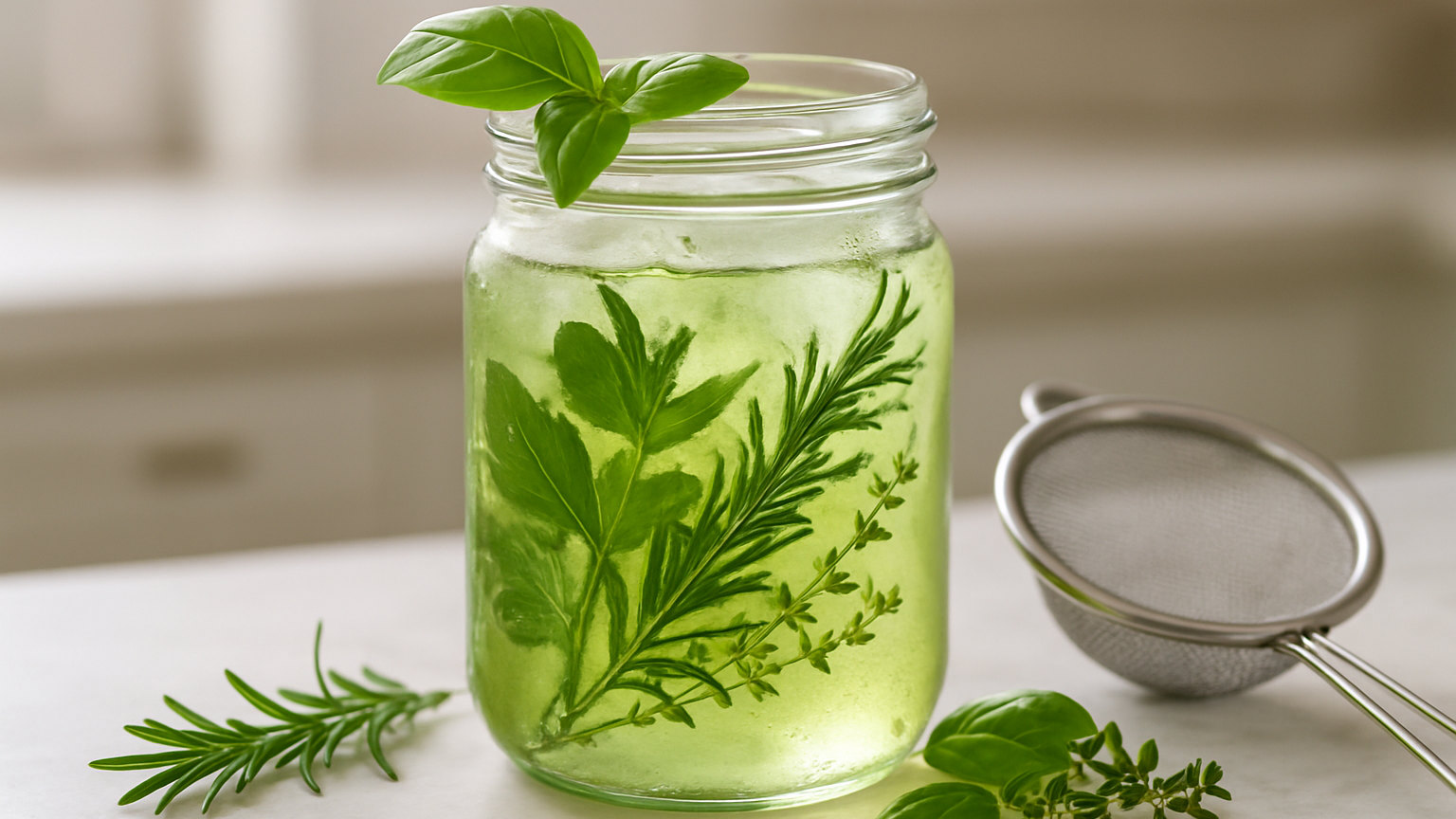
Herbs give up their character quickly and then keep going into territory nobody wants. A basil vodka left for a fortnight tastes of boiled greens rather than basil, and that is a mistake worth avoiding once.
Why are the times so short?
Because the aromatic oils sit in surface cells that alcohol reaches almost immediately. There is no dense flesh or tough skin to work through.
After the pleasant volatile oils have transferred, chlorophyll and cell wall compounds continue extracting. Those give the stewed, grassy, faintly bitter note that ruins long herb infusions.
How long should each take?
- Mint. 6 to 24 hours. Very fast.
- Basil. 12 to 24 hours.
- Coriander leaf. 6 to 12 hours.
- Rosemary. 1 to 3 days. Woodier, so slower.
- Thyme. 1 to 3 days.
- Lemongrass. 1 to 2 days.
- Lavender. 2 to 6 hours. Extremely easy to overdo.
- Bay. 2 to 4 days.
Taste every few hours for the fast ones. A timer is more use here than anywhere else in infusing.
Should you bruise the herbs?
Lightly, and no more. One firm clap between the palms ruptures the oil cells and releases aroma.
Crushing or chopping releases chlorophyll and cell contents, which is exactly what causes the vegetal off note. Whole leaves, lightly slapped, give the cleanest result.
Should the stems go in?
For soft herbs, no. Stems are woody and bitter and contribute little. For rosemary and thyme the whole sprig is fine, since the stem is part of the character.
Fresh or dried?
Fresh gives brighter, greener, more volatile character and introduces some water. Dried gives deeper, warmer, more concentrated notes and extracts more slowly.
Dried herbs are stronger by weight, so use roughly a third as much. Dried mint and dried basil are quite different products from the fresh versions and are not substitutes.
How much should you use?
A generous handful of fresh soft herbs per 500ml, or two or three woody sprigs. It is a large volume of leaf relative to liquid, which is normal given how briefly it stays in.
Why do herb infusions go brown?
Chlorophyll degrades on exposure to light and air, so a bright green infusion turns olive and then brown within weeks. It is cosmetic rather than a fault.
Keeping the bottle in the dark slows it. Making small batches and using them quickly is the more practical answer.
Which combinations work?
- Rosemary gin. With tonic or in a sour.
- Basil vodka. With lemon and a little sugar.
- Mint white rum. A shortcut to a mojito without muddling.
- Thyme gin. Excellent with grapefruit.
- Lemongrass vodka. With ginger and lime.
What about foraged material?
Only use plants you can identify with complete certainty, and stick to species with established culinary use. Several common wild plants are toxic and a few are dangerously so.
Culinary herbs from a shop or a garden cover almost everything worth infusing, and there is no flavour argument that outweighs the risk of misidentification.
Can you combine herbs?
Better to infuse separately and blend at the end, since the timings differ. Mint is done in six hours and rosemary takes three days, so a single jar of both gives an unbalanced result.
Blending afterwards also lets you adjust the ratio, which a combined jar does not.
How should you store the result?
In the dark, in a small bottle, and use it within a few months. Herb infusions fade faster than almost anything else, both in colour and in aroma.
What quantity is right?
A generous handful of soft herbs per 500ml, or two or three woody sprigs. It looks like too much leaf for the liquid, and it is correct given how short the contact time is.
Do dried herbs behave differently?
Substantially. They are more concentrated, so use roughly a third as much by weight, and they extract more slowly because the cell structure has already collapsed and dried.
Dried mint and dried basil taste quite unlike the fresh versions, so they are not substitutes in a recipe even at the adjusted quantity.
What is the easiest herb to start with?
Rosemary. It is woody rather than soft, which makes the window far wider, and it works with gin, vodka and whisky alike.


