
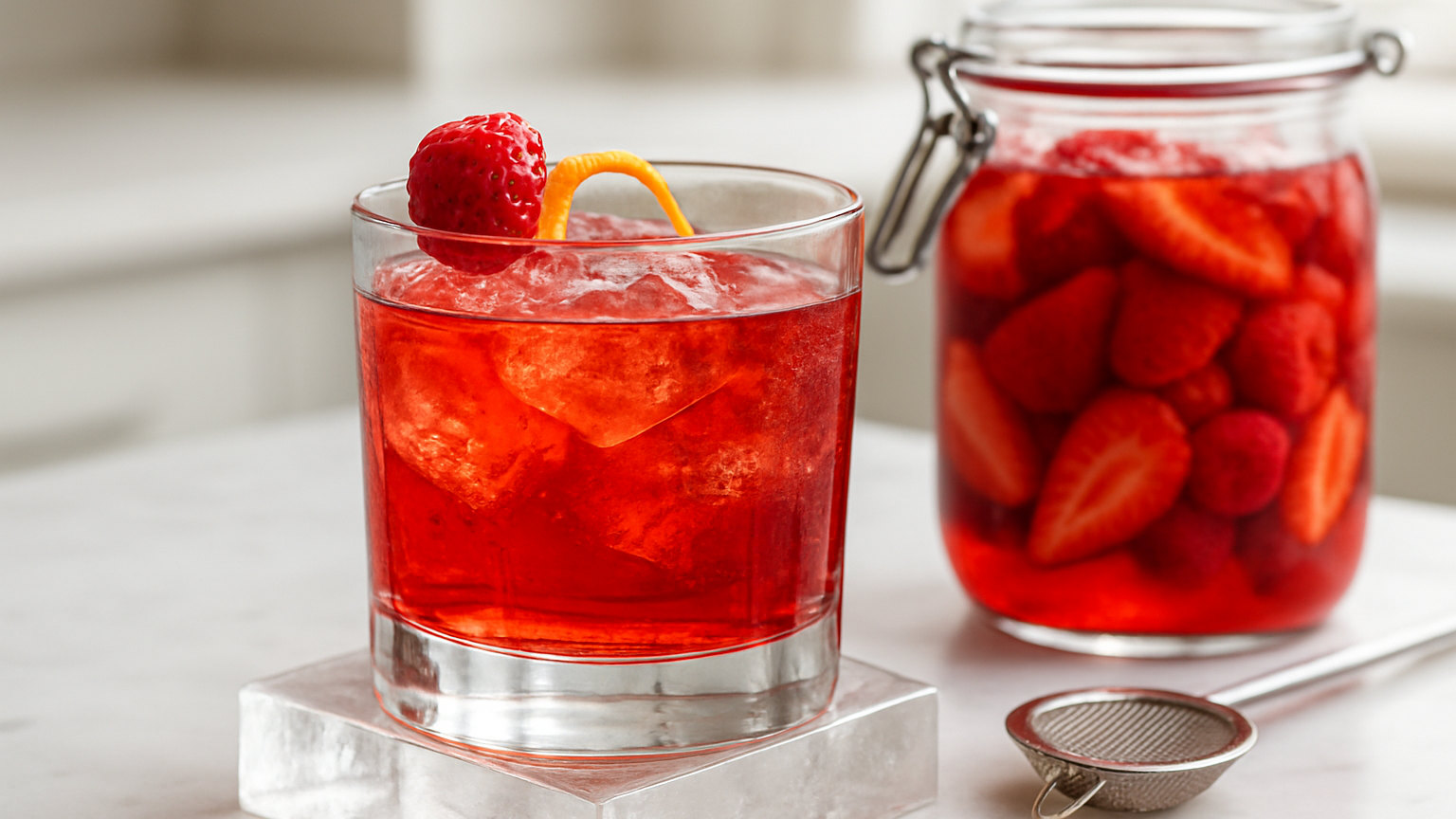
Fruit infusions are the most popular place to start and the most likely to disappoint. The reason is usually water: fresh fruit is mostly water, and adding a lot of it to a spirit changes more than the flavour.
Why does water content matter?
Because it dilutes the spirit. A jar packed with juicy fruit can drop a 40 per cent vodka to 30 per cent or below by the time it is strained.
That affects both the taste, which becomes thinner, and the keeping quality, since the preservative effect of alcohol falls away as the strength drops.
Using less fruit, or starting with a stronger spirit, addresses both. A 50 to 60 per cent base leaves room for dilution.
How much fruit should you use?
Around 300 to 500g per litre for most fruit, which is less than most recipes suggest. Packing the jar full gives a stronger flavour and a much weaker spirit.
For intensely flavoured fruit such as blackcurrant or passion fruit, 200g per litre is ample.
Which fruit works well unsweetened?
- Raspberry and strawberry. Fast, bright, ready in days.
- Blackberry. Deep colour and flavour.
- Pineapple. Excellent in rum, ready in about a week.
- Peach and apricot. Slower, stones left whole.
- Rhubarb. Sharp and clean, particularly with gin.
- Apple and pear. Subtle, and better with a little spice alongside.
Which are difficult?
Melon and watermelon, which are almost entirely water and give a weak, diluted result. Banana, which turns slimy. Citrus flesh, which is bitter, and where the peel should be used instead.
Should the fruit be frozen first?
For anything with tough skin, yes. Freezing ruptures the cell walls and speeds extraction, which saves pricking sloes or damsons individually.
Soft berries do not need it and can collapse into pulp, which makes straining slow and the result cloudy.
How do you keep it clear?
Slice rather than crush, avoid squeezing the muslin, and filter in stages. Fruit pulp forced through the cloth is what causes persistent haze and sediment.
Let the jar settle for a day before straining, and pour off the clear liquid first rather than tipping everything in at once.
Should you add sugar?
Not if you want an infusion rather than a liqueur. An unsweetened fruit spirit is far more useful in cocktails, since you control the sweetness in the drink.
If you decide later that it needs sweetening, syrup can be added at any point. Removing it is not possible.
How long does a fruit infusion keep?
Three to six months for anything with high water content, and closer to a year for drier fruit at higher strength.
Keep it in the fridge if the strength has dropped below about 25 per cent, and check for any sour smell or fizzing before using an old batch.
How should you use it?
As a straight substitute for the base spirit in a cocktail. A raspberry vodka in a sour, a pineapple rum in a daiquiri, or a rhubarb gin with tonic all work without adjusting the recipe.
Should the fruit be peeled?
Depends on the fruit. Apple, pear and peach skins contribute colour and a little tannin and are fine left on. Citrus flesh is bitter and should be avoided entirely in favour of peel.
Pineapple skin is tough and contributes little, so the flesh alone is better.
How do you know when to strain?
When the colour has stopped deepening and the fruit looks pallid. At that point most of what is coming out has come out, and leaving it longer risks the flesh breaking down and clouding the spirit.
Can you reuse the fruit?
For a weaker second infusion, yes, though most of the character has gone. It is better used in a crumble or a cake, where it still contributes.
It is not pleasant eaten straight, being both alcoholic and largely spent.
What jar should you use?
A wide-mouthed sterilised glass jar large enough that the fruit sits fully submerged with liquid above it. Fruit above the line can spoil and will affect the whole batch.


