
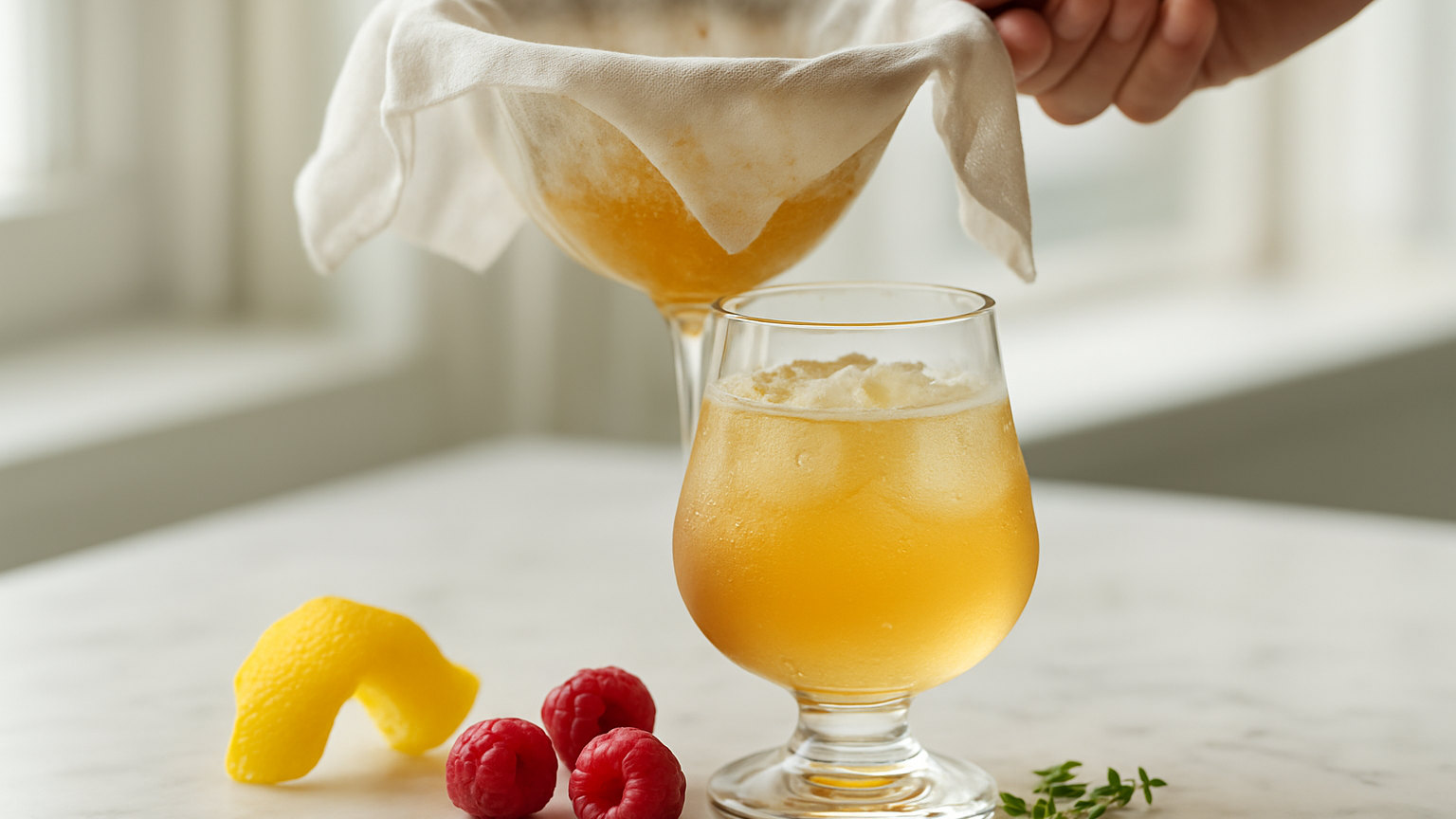
Filtering is the least interesting stage and the one that most often spoils an otherwise good infusion. A cloudy, sedimented bottle usually comes from one avoidable mistake.
What is the staged approach?
- Let it settle. Leave the jar undisturbed for a day so solids drop.
- Decant. Pour off the clear liquid first, leaving the last centimetre.
- Coarse sieve. Remove fruit, peel and spices.
- Muslin. Catches fine material. Two layers if it is very cloudy.
- Paper filter. Coffee filter papers give the clearest result.
Each stage removes progressively finer material. Skipping to a paper filter with pulp still present simply clogs it.
Why should you never squeeze the cloth?
Because squeezing forces fine solids through the weave and into the finished spirit. That is the single commonest cause of a haze that never settles.
Let it drip. It takes longer and gives a considerably better result, and the small quantity left in the cloth is not worth the loss of clarity.
How long does paper filtering take?
Several hours for a litre, sometimes overnight. It cannot be rushed, and pressing the paper tears it.
Set it up over a jug, cover loosely to keep dust out, and leave it. Changing the paper once partway through speeds it up if it clogs.
When is cloudiness normal?
When it comes from oils rather than solids. Citrus infusions go cloudy when diluted because the oils come out of solution, and anise-flavoured spirits do the same.
That louche is a sign of genuine oil content and cannot be filtered out without removing the flavour. It is desirable rather than a fault.
How can you tell the difference?
Oil haze is uniform and stays suspended. Solid haze settles into sediment at the bottom over days, and that is the kind worth filtering.
What causes sediment to appear later?
Fine particles that passed through the filter and gradually settle, or compounds coming out of solution as the temperature changes.
Neither is a safety concern. Decant carefully off the top or filter again through paper if it bothers you.
What about fat-washed spirits?
These need the most thorough filtering, since any remaining fat will eventually go rancid. Freeze, lift the solid cap, then filter through muslin and paper.
If it is still cloudy, freeze and filter again. Persistence here directly determines how long the bottle lasts.
Does filtering remove flavour?
Slightly, and less than people fear. Paper filtering removes some oils along with the solids, which is a small loss against a much clearer result.
For anything where the oils are the point, such as citrus, stop at muslin and accept the haze.
What equipment helps?
A funnel, a fine sieve, muslin, coffee filter papers and a large jug. Reusable metal filter cones work and clog faster than paper.
None of it costs much and all of it makes the stage less messy than improvising with a tea towel.
Should you filter before or after adjusting?
Filter first, then taste and adjust with more base spirit or syrup if needed. Adding anything before filtering means filtering it again.
Can you use a fine mesh strainer alone?
For spices and large material, yes. For anything with pulp it will let fine particles through, which then settle as sediment over the following weeks.
Muslin costs very little and is the step most worth not skipping.
How much do you lose?
Around 5 to 10 per cent of the volume across a thorough staged filtering, absorbed into the cloth and paper. That is a fair cost for clarity, and it is another reason not to squeeze.
Does it matter for shelf life?
For most infusions, marginally. For fat-washed spirits it matters a great deal, since any fat left behind will eventually go rancid and that determines how long the bottle lasts.
What order should the stages go in?
Always coarsest first. Going straight to paper with pulp still present clogs the filter within minutes and turns a two-hour job into an afternoon of changing papers.
Settle, decant, sieve, muslin, paper. Each stage protects the next one from doing work it is not designed for.


