
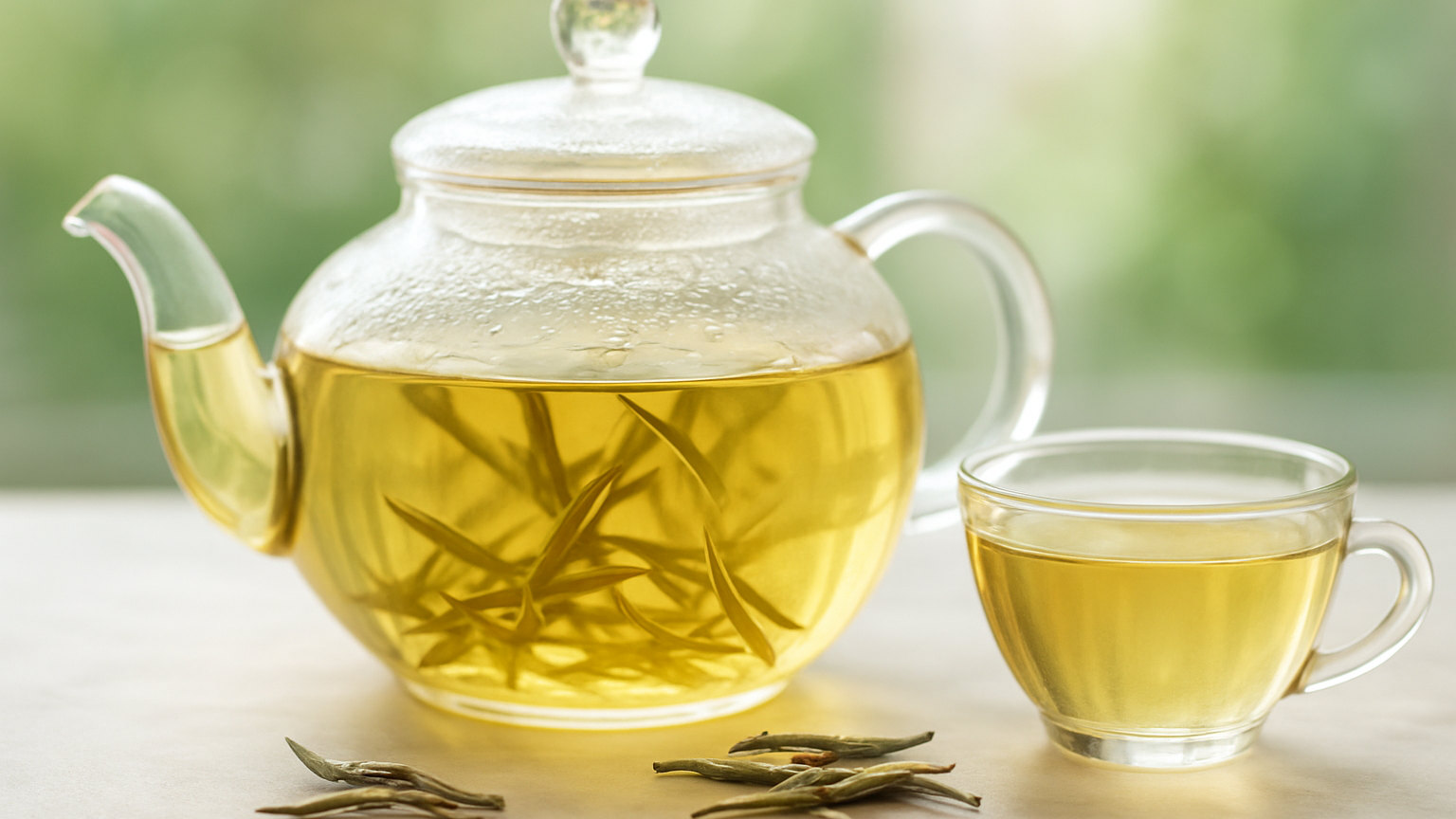
White tea is the simplest tea to produce and among the most difficult to produce well. It is picked, withered and dried, and that minimal handling leaves nowhere for a poor leaf to hide.
How is it made?
Young buds and leaves are picked, allowed to wither in air, and dried. There is no rolling, no bruising and no deliberate oxidation step.
Some slight oxidation occurs naturally during withering, which is why white tea is not identical to green despite both being minimally processed.
What are the main types?
- Silver needle. Unopened buds only, covered in fine silver down. The most prized and expensive.
- White peony. Buds plus the first two leaves. Fuller, more flavour, considerably cheaper.
- Shou mei and gong mei. Later picks with more leaf. Darker, fruitier, the best value.
Why is silver needle expensive?
Because it is only buds, picked by hand over a short window in early spring. An enormous number of buds is needed for a small quantity of tea, and the picking window is narrow.
White peony gives most of the character for a fraction of the price, which makes it the sensible entry point.
What does it taste like?
Delicate, sweet and floral, with notes of honey, melon and hay. It is subtle rather than weak, and it rewards attention in a way a strong tea does not require.
Aged white tea develops quite differently, becoming darker, fruitier and more honeyed. Some producers age it deliberately for years.
How should you brew it?
- Water at 75 to 85 degrees.
- Around 3 grams per 200ml, which is a generous volume since the leaves are bulky.
- 3 to 5 minutes for the first infusion.
- Two or three further infusions, slightly longer each time.
It is more forgiving than green tea on time and less forgiving on quantity, since too little leaf gives a cup that tastes of nothing.
Is it low in caffeine?
A persistent claim and not reliably true. White tea contains roughly 15 to 30mg per cup, which is lower than black tea and not dramatically so.
Buds actually contain more caffeine than mature leaves, so silver needle can be higher than a leafy white tea. The idea that white tea is the caffeine-free option is a marketing simplification.
Does it have more antioxidants?
It is often claimed, on the basis that minimal processing preserves more catechins. Measurements vary and the differences between teas are smaller than the differences between how strongly people brew them.
All tea is a reasonable source of polyphenols. Choosing one type over another for health reasons is a weaker argument than the marketing suggests.
Can you cold brew it?
Very well, and it is one of the best applications. Leaves in cold water in the fridge for 6 to 8 hours gives a sweet, delicate infusion with almost no astringency.
How should you store it?
Airtight, dark and away from strong smells, like any tea. White tea is bulky, so it needs more container space than the weight suggests.
Unlike green tea, it can improve with age if stored well, which is unusual and worth knowing before discarding an old packet.
What should you look for when buying?
Intact buds with visible silver down for silver needle, and whole unbroken leaves for the leafier grades. Broken or dusty white tea has usually been handled badly.
White peony is the best value in the category and the sensible place to start.
How does it compare to green tea?
Lighter, sweeter and less vegetal, since it is neither steamed nor pan-fired. Green tea has a fresh grassy character that white tea lacks entirely.
White tea is also more forgiving on brewing time, though it needs more leaf by volume because the buds are so bulky.
Can it be aged deliberately?
Yes, and it is increasingly common. Pressed white tea cakes are sold specifically for ageing, developing honeyed, dried-fruit character over several years.
Store it as you would pu-erh, with some air circulation rather than sealed airtight, and away from anything strongly scented.


