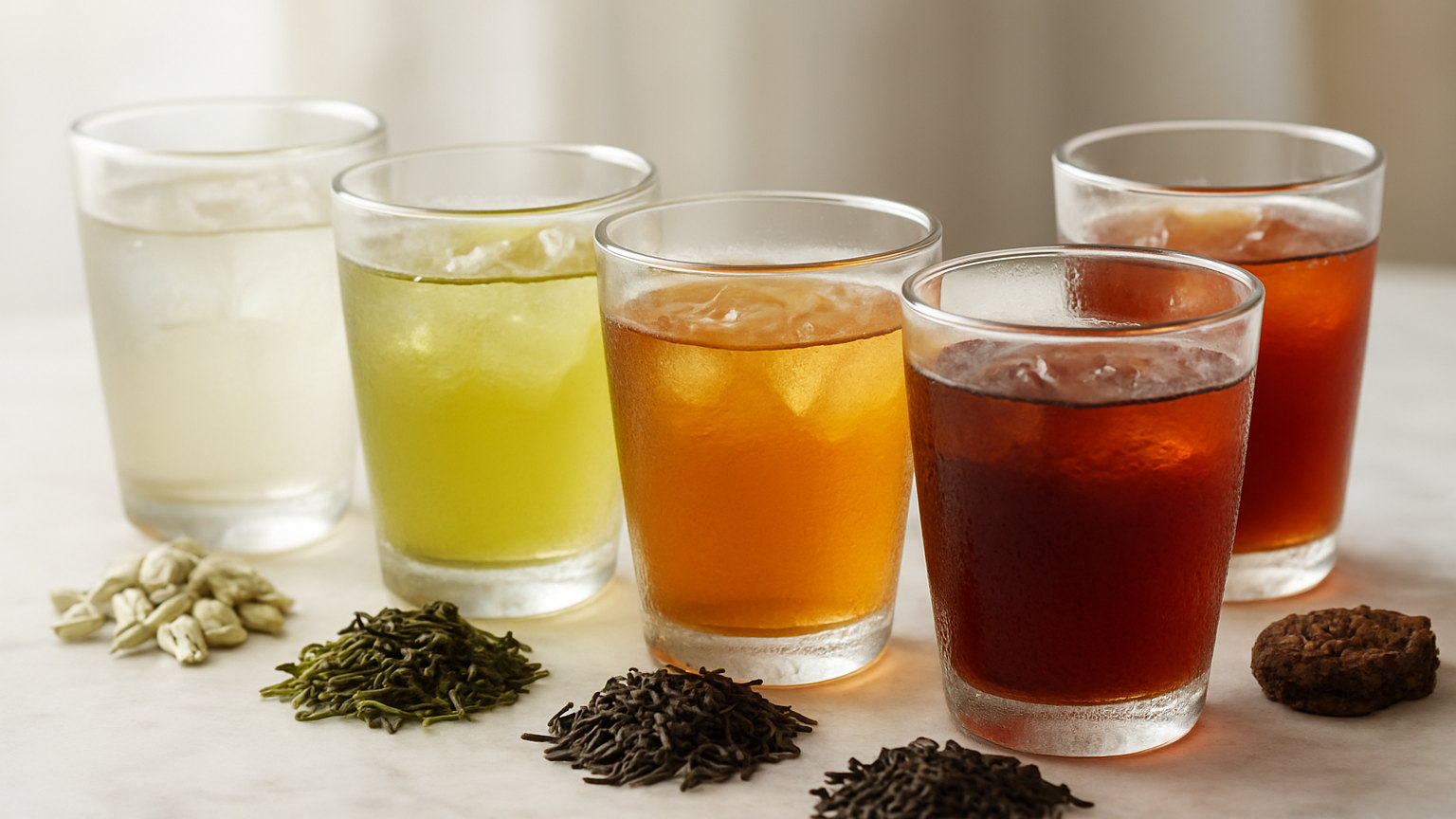
The most surprising fact about tea is that almost all of it comes from a single species. Everything from a delicate white tea to a strong breakfast blend is the same plant, processed differently.
What is the plant?
Camellia sinensis, an evergreen shrub. Two main varieties are used: sinensis, smaller leaved and suited to cooler high-altitude growing, and assamica, larger leaved and more robust.
Anything not made from this plant is technically an infusion or tisane rather than tea, which includes chamomile, peppermint, rooibos and fruit blends.
What is oxidation?
An enzymatic browning process, the same one that turns a cut apple brown. When tea leaves are bruised or rolled, enzymes react with oxygen and transform the compounds inside.
How far that process is allowed to run, and when it is halted by heat, determines which type of tea results. It is the single most important variable in tea production.
What are the six types?
- White. Barely processed. Young buds and leaves, withered and dried. Delicate, floral, subtle.
- Green. Oxidation stopped early by steaming or pan-firing. Fresh, grassy, vegetal.
- Yellow. Rare Chinese type with an extra smothering step. Mellow and slightly sweet.
- Oolong. Partially oxidised, anywhere from 10 to 80 per cent. Enormously varied.
- Black. Fully oxidised. Malty, brisk, robust. Called red tea in China.
- Pu-erh. Fermented and aged, sometimes for decades. Earthy and deep.
Why is oolong so varied?
Because the category spans the whole middle of the range. A lightly oxidised oolong tastes close to a green tea and is floral and creamy; a heavily oxidised roasted one tastes closer to a black tea and is dark and toasty.
What is the difference between green and black?
Processing alone. Green tea is heated soon after picking to deactivate the enzymes, preserving the fresh green character. Black tea is rolled and left to oxidise fully before drying.
That is why green tastes vegetal and black tastes malty despite coming from identical leaves.
What about the named teas?
- Earl Grey. Black tea flavoured with bergamot oil.
- English breakfast. A blend of black teas, usually Assam-led.
- Darjeeling. Black tea from a specific region of India. Lighter and muscatel.
- Assam. Strong, malty black tea. The backbone of most builder’s tea.
- Sencha and gyokuro. Japanese green teas.
- Jasmine. Usually green tea scented with jasmine flowers.
- Lapsang souchong. Black tea dried over pine smoke.
Do herbal infusions count?
Not technically, and they are usually sold alongside tea and brewed similarly. They contain no caffeine at all, which is their main practical difference.
Rooibos, chamomile, peppermint, hibiscus and fruit blends all fall into this group.
Where should you start?
A good loose leaf black tea and a decent Japanese green cover most everyday drinking. An oolong is the most rewarding next step, since the category contains the widest range of anything in tea.
Does the region matter?
Considerably, in the same way it does for wine. Altitude, climate and soil all affect the leaf, which is why Darjeeling tastes quite different from Assam despite both being black teas from India.
Processing decides the type; growing conditions decide the character within it.
What about flavoured teas?
They are a base tea with something added, whether oil, dried fruit, flowers or flavouring. Earl Grey is black tea with bergamot; jasmine is usually green tea scented with flowers.
The quality of the base leaf still matters, and heavy flavouring is sometimes used to cover a mediocre one.
Which type should you drink when?
Black tea in the morning, where the caffeine and the robustness suit it. Green or oolong in the afternoon, where the lower caffeine and lighter character work better.
Herbal infusions in the evening, since they contain no caffeine at all and cover the hours when tea would otherwise interfere with sleep.
Does one type suit milk?
Black tea, chiefly, since milk proteins bind to its tannins and soften the astringency. Green, white and oolong are built on aromatic subtlety that milk covers entirely.