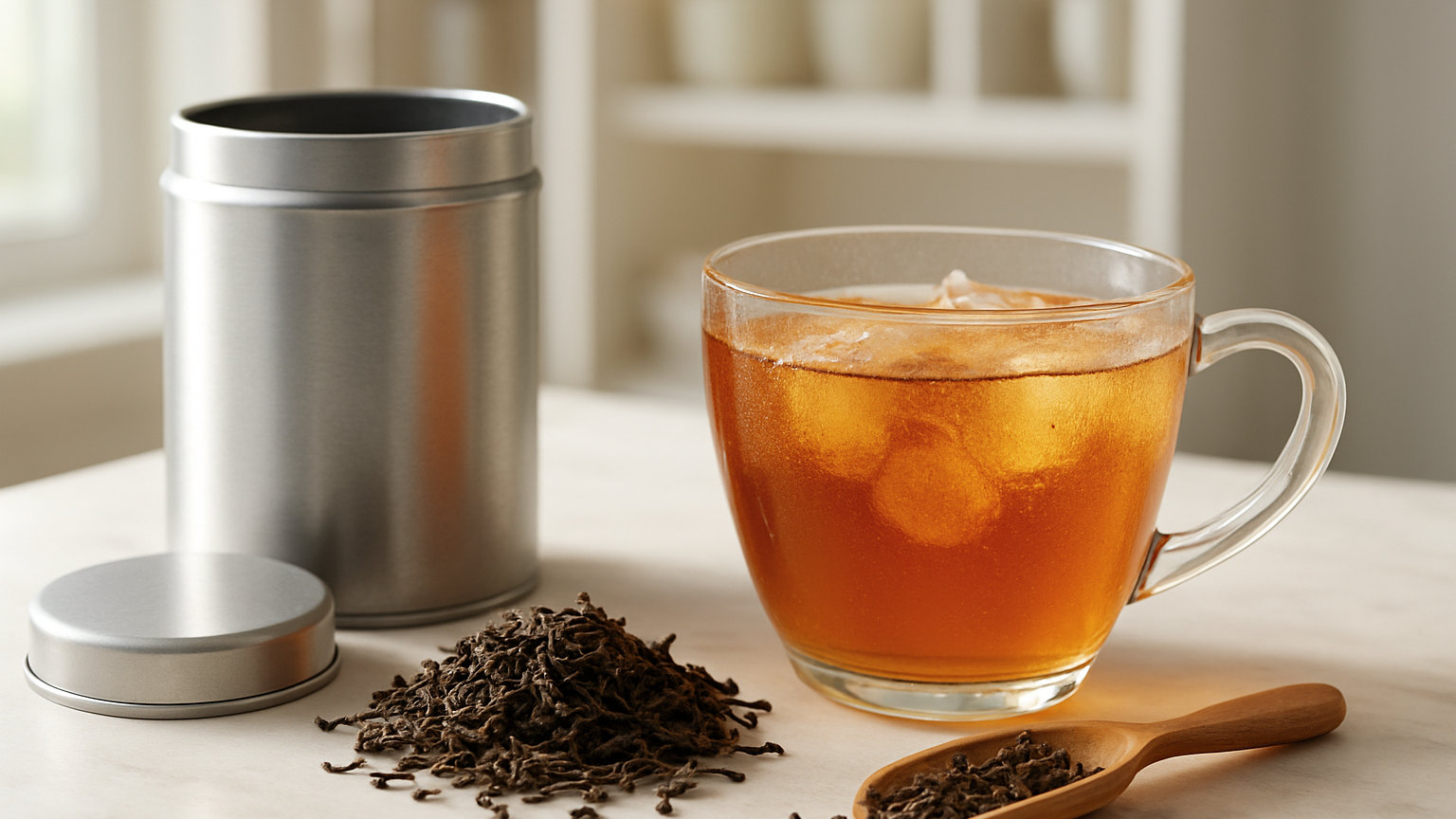
Tea does not spoil in a way that makes it unsafe. It goes stale, losing the aromatic compounds that make it worth drinking, and it does so faster than most people expect.
What causes staling?
- Air. Oxidises the compounds that carry aroma.
- Light. Degrades chlorophyll and aromatics, worst for green tea.
- Heat. Accelerates every reaction.
- Moisture. Encourages mould and ruins the leaf.
- Strong smells. Tea absorbs them readily.
Why does tea absorb smells?
Because dried leaf is porous and has an enormous surface area. It will take on the character of whatever it is stored near within weeks.
That is why tea should never be kept beside coffee, spices or cleaning products. It is also why jasmine tea is made by simply placing flowers alongside the leaf.
How long does each type last?
- Green tea. 6 to 12 months. The most perishable.
- White tea. 1 to 2 years, and it can improve with age.
- Oolong. 1 to 2 years, longer for roasted styles.
- Black tea. 2 to 3 years.
- Pu-erh. Indefinitely, and improving.
- Matcha. 4 to 8 weeks once opened.
- Herbal infusions. 1 to 2 years.
Best-before dates on tea are usually generous. The leaf will be safe long after it stops tasting of anything.
How should you store it?
In an airtight, opaque container at stable room temperature, away from the cooker and away from anything strongly scented.
A tin is ideal. Glass jars work if kept in a cupboard, and clear jars on a worktop expose the leaf to light continuously.
What about the fridge?
Generally a mistake. It is humid, the temperature swings each time the door opens, and tea absorbs food smells readily.
Condensation is the real problem. Cold tea taken into a warm kitchen draws moisture immediately, which damages the leaf.
Matcha is the exception and benefits from refrigeration in a sealed container, brought to room temperature before opening.
What about pu-erh?
The opposite of everything above. Pu-erh needs some air circulation and stable humidity to continue developing, so it should not be sealed airtight.
Keep it out of plastic, away from strong smells, and somewhere neither damp nor bone dry. A cardboard box in a cupboard works well.
How can you tell if tea is stale?
Smell the dry leaf. Fresh tea is aromatic when the container is opened; stale tea smells faint, flat or dusty.
In the cup it shows as a loss of aroma and a thin finish rather than any obvious off flavour, which is why it usually goes unnoticed.
How much should you buy?
What you will drink in a few months, particularly for green tea. Large quantities bought for value are a false economy once the last third has faded.
Can stale tea still be used?
Yes, for cold brewing, iced tea or cooking, where the loss matters less. It is safe to drink and simply dull.
Does the original packaging work?
Often, if it reseals properly and is opaque. Foil-lined pouches with a resealable strip are perfectly good and better than decanting into a jar that lets light in.
Does it need to be sealed immediately?
Yes. Most staling happens through repeated exposure to air, so a container opened daily loses aroma faster than one opened weekly.
Decanting a large bag into a small daily tin and keeping the rest sealed slows that down considerably.
What is the simplest approach?
An opaque airtight tin in a cupboard away from the cooker, spices and coffee. That handles every tea except pu-erh and matcha, and it costs almost nothing.
Should you keep different teas separately?
Yes, particularly anything flavoured. Earl Grey and jasmine will scent whatever is stored beside them, and a plain black tea kept next to an aromatic one picks it up within weeks.
How much should you keep open at once?
One or two teas in daily use, with anything else sealed. Every open container is losing aroma continuously, and a cupboard of half-used packets fades together rather than one at a time.
Does it need to be cool?
Stable matters more than cold. A cupboard away from the cooker and out of direct sun is enough, and the loft, the windowsill and the shelf above the kettle are all poor choices for the same reason.