
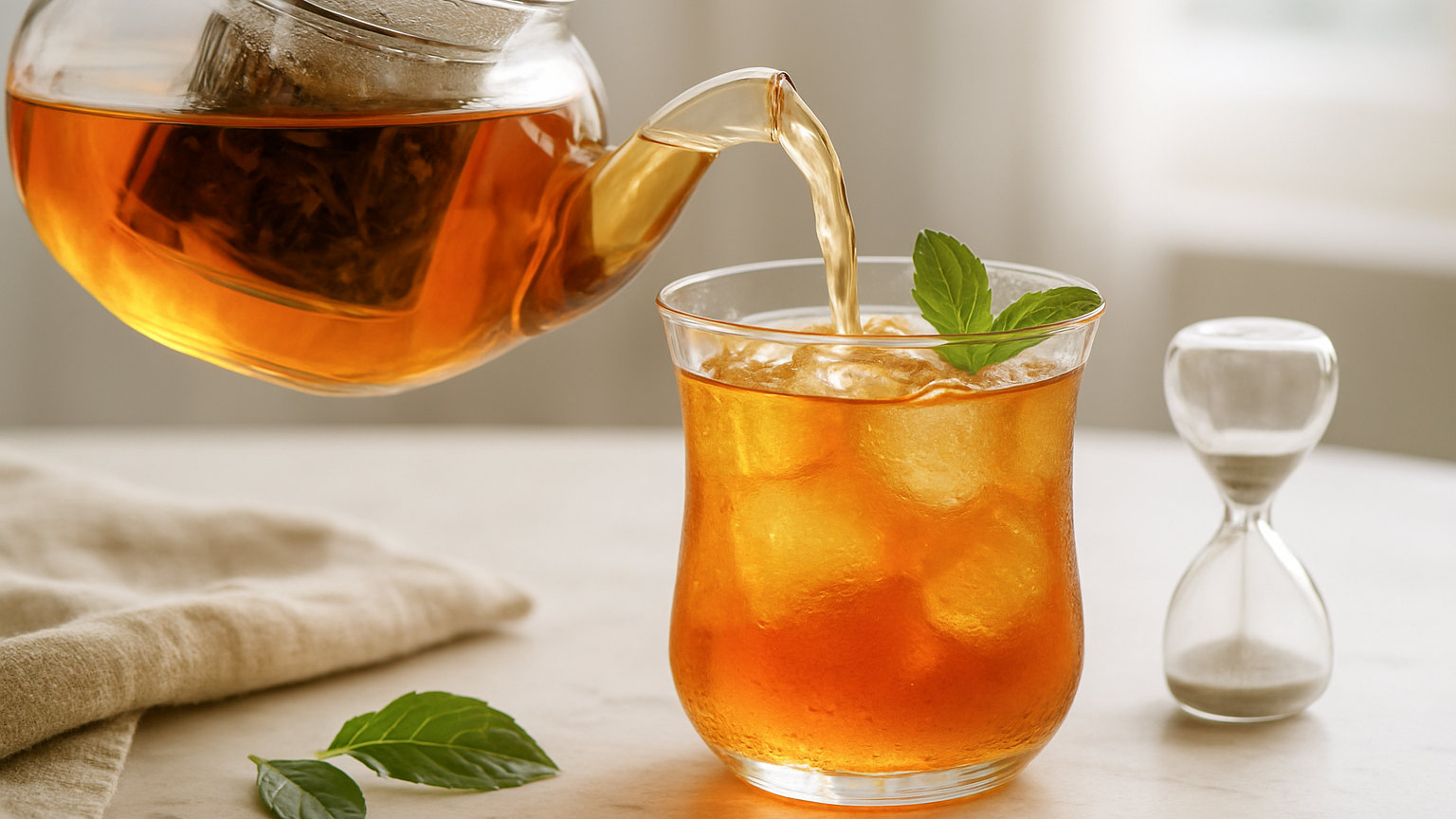
Most people make tea stronger by leaving it in longer. That works up to a point and then stops working, because the compounds that arrive late are not the ones anybody wants.
What are the timings?
- White tea. 3 to 5 minutes.
- Green tea. 1 to 3 minutes.
- Oolong. 3 to 5 minutes.
- Black tea. 3 to 5 minutes.
- Pu-erh. 3 to 5 minutes after a quick rinse.
- Herbal infusions. 5 to 10 minutes.
Green tea is the shortest and the least forgiving. A minute too long is genuinely noticeable.
What comes out first?
Caffeine and amino acids extract quickly, in the first minute or two. They carry the brightness, the savoury depth and much of the aroma.
Tannins and catechins extract more slowly and keep coming. They carry astringency and bitterness, which is why the fourth minute of a green tea tastes quite different from the first.
So does longer mean stronger?
Only up to a point. After that it means more bitter without much more flavour, which is why over-brewed tea tastes harsh and drying rather than richer.
To make tea stronger, use more leaf rather than more time. That is the single most useful adjustment in the whole subject.
How much leaf should you use?
Around 2 to 3 grams per 200ml cup, which is roughly a heaped teaspoon of most loose leaf teas.
Larger, fluffier leaves such as white tea take up more volume for the same weight, so a full tablespoon may be right.
What happens if you leave a bag in?
It keeps extracting. A tea bag left in a mug for ten minutes produces something noticeably more astringent and drying than the same bag removed at three.
Taking the bag out is not fussiness. It is the difference between a brewed tea and a stewed one.
Why does milk seem to fix it?
Because proteins in milk bind to tannins and reduce the perception of astringency. That is why strong builder’s tea works with milk and would be punishing without it.
It is a genuine chemical interaction rather than dilution, and it is why the British tradition of strong black tea with milk makes sense.
Can you brew the same leaves twice?
Loose leaf teas often yes, particularly oolong and pu-erh, which are traditionally brewed many times in short infusions.
Green and white teas usually give two or three good infusions. Tea bags give one, since the leaf is already broken small and extracts almost completely the first time.
What is gongfu brewing?
A Chinese method using a great deal of leaf, a small vessel and very short infusions, often 10 to 30 seconds, repeated many times.
Each infusion tastes slightly different as the leaf opens up. It is worth trying with a good oolong and it makes very little sense with a tea bag.
What should you adjust first?
Time, then leaf quantity, then temperature, one at a time. If tea is bitter, shorten the brew before anything else. If it is weak, add leaf rather than minutes.
Does the vessel change the time?
Slightly. A large pot holds heat longer than a mug, so extraction continues at a higher temperature and the brew develops faster.
Decanting the tea off the leaves rather than leaving them in the pot is what keeps a second cup as good as the first.
Why do packet times differ from these?
Because they are written for a single strong cup from a bag rather than for loose leaf that may be brewed more than once. Both are reasonable within their own assumptions.
Following the packet for bags and these figures for loose leaf covers most situations sensibly.
Is a timer worth using?
For green tea especially, since the window is short and a minute is genuinely noticeable. For black tea, judging by colour is usually close enough.
What should you change if the tea is wrong?
Time first, then leaf quantity, then temperature. Bitter means shorten; weak means add leaf. Changing two things at once makes it impossible to know which helped.


