
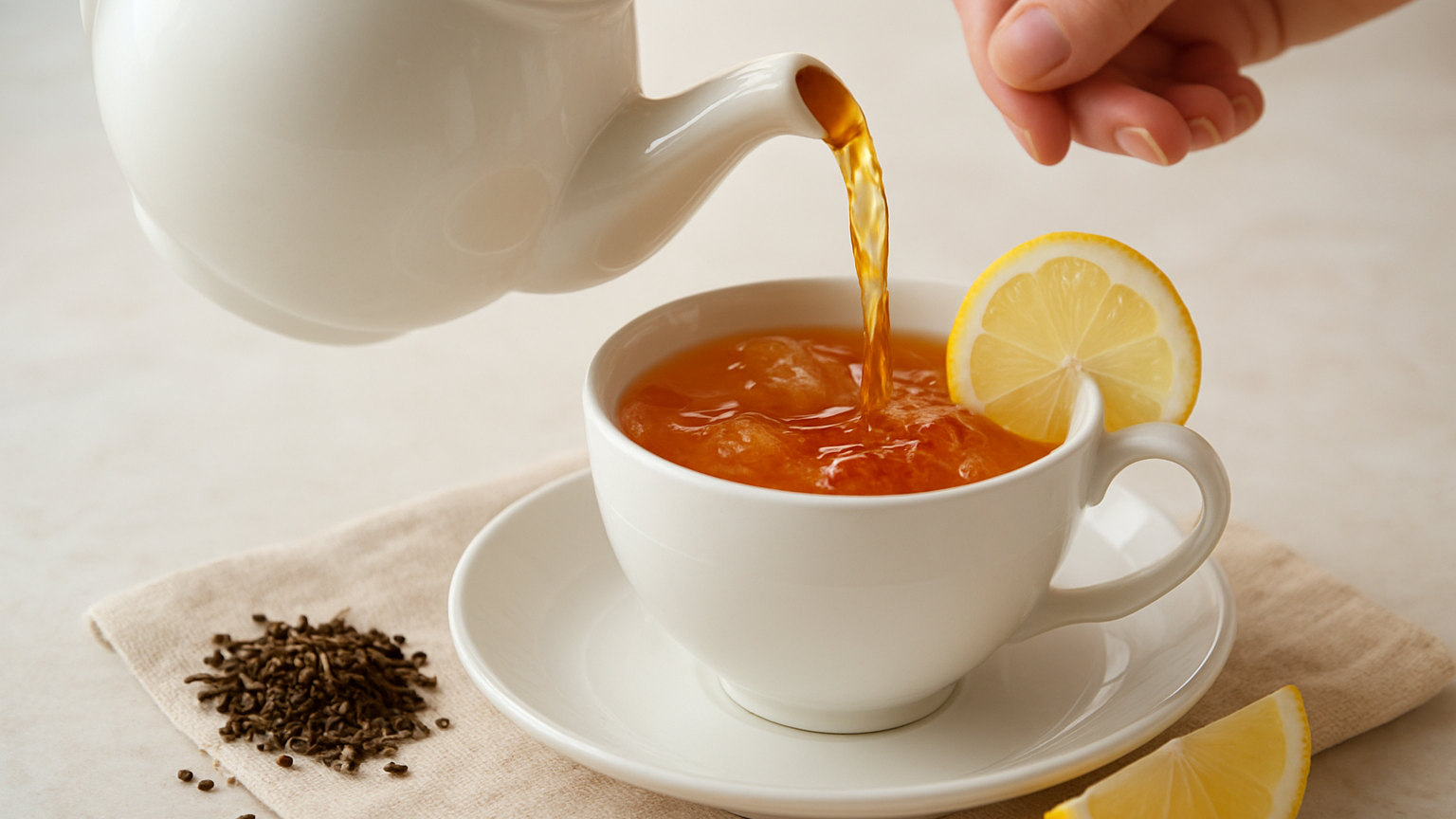
Black tea is where most British tea drinking happens and where the least attention is paid. It is genuinely forgiving, which is why bad habits persist, and a few small changes improve it considerably.
What is the method?
- Warm the pot with a little hot water and discard it.
- Add 2 to 3 grams of leaf per 200ml, or one bag per mug.
- Pour water straight off the boil.
- Brew 3 to 5 minutes.
- Remove the leaves or bag and stir.
- Add milk if wanted.
Why does black tea need boiling water?
Because it is fully oxidised, so its compounds are larger and less readily soluble than those in green tea. Water below about 90 degrees produces a weak, flat cup that never develops.
This is the opposite of green tea, and it is why one temperature does not suit all tea.
Why warm the pot?
Because pouring boiling water into a cold ceramic pot can drop the temperature by 5 degrees or more immediately. Warming it first keeps the water where it needs to be.
The difference is small and real, and it costs ten seconds.
How long should it brew?
Three minutes for a lighter cup, five for a strong one. Beyond five, the tannins keep extracting and the tea becomes astringent rather than stronger.
For a stronger brew, use more leaf rather than more time. That is the fix people reach for last and should reach for first.
Should the bag come out?
Yes. A bag left in continues extracting for as long as it sits there, and a mug of tea with the bag still in at the last mouthful is noticeably harsher than at the first.
Squeezing the bag against the side of the mug also forces out concentrated tannins and adds bitterness, which is why it is worth resisting despite being universal.
Does milk go in first?
There is a genuine argument, and it is about temperature rather than tradition. Milk added first is heated gradually by the tea; tea poured onto cold milk heats it in stages.
Pouring hot tea onto milk in a cup heats a small quantity of milk very quickly, which can scald the proteins slightly and change the taste.
In practice the difference is small and detectable in blind tests. Milk first was historically also a way of protecting fragile china from thermal shock.
Does milk change the tea chemically?
Yes. Proteins in milk bind to tannins, which reduces astringency substantially. That is why strong Assam-led blends work with milk and would be harsh without it.
It also means delicate teas such as Darjeeling and first-flush blends are generally better without.
What about the scum on the surface?
A film of calcium carbonate reacting with tea polyphenols, caused by hard water. It is harmless and unappealing.
Filtered water removes it entirely, and it is one of the clearest signs that water quality is affecting your tea.
Which black teas suit which purpose?
Assam and breakfast blends for strong tea with milk. Ceylon for something brisker and lighter. Darjeeling and Earl Grey without milk, where the aromatics are the point.
Does the pot material matter?
Only for heat retention. Ceramic and cast iron hold temperature well; glass and thin metal lose it quickly.
What matters more is that the pot is clean and free of tannin build-up, which turns bitter and taints subsequent brews.
What about a second pot from the same leaves?
Loose leaf black tea gives a reasonable second infusion, noticeably lighter than the first. Brew it slightly longer, since the readily soluble compounds have gone.
Tea bags give one usable brew, since the leaf is already broken small and extracts almost completely.
How much leaf per pot?
One teaspoon per cup and one for the pot is the traditional guidance, which works out at roughly 2 to 3 grams per 200ml. That is a generous measure and it suits a strong British-style brew.
For a lighter cup, drop the extra spoon for the pot rather than shortening the brewing time.


