
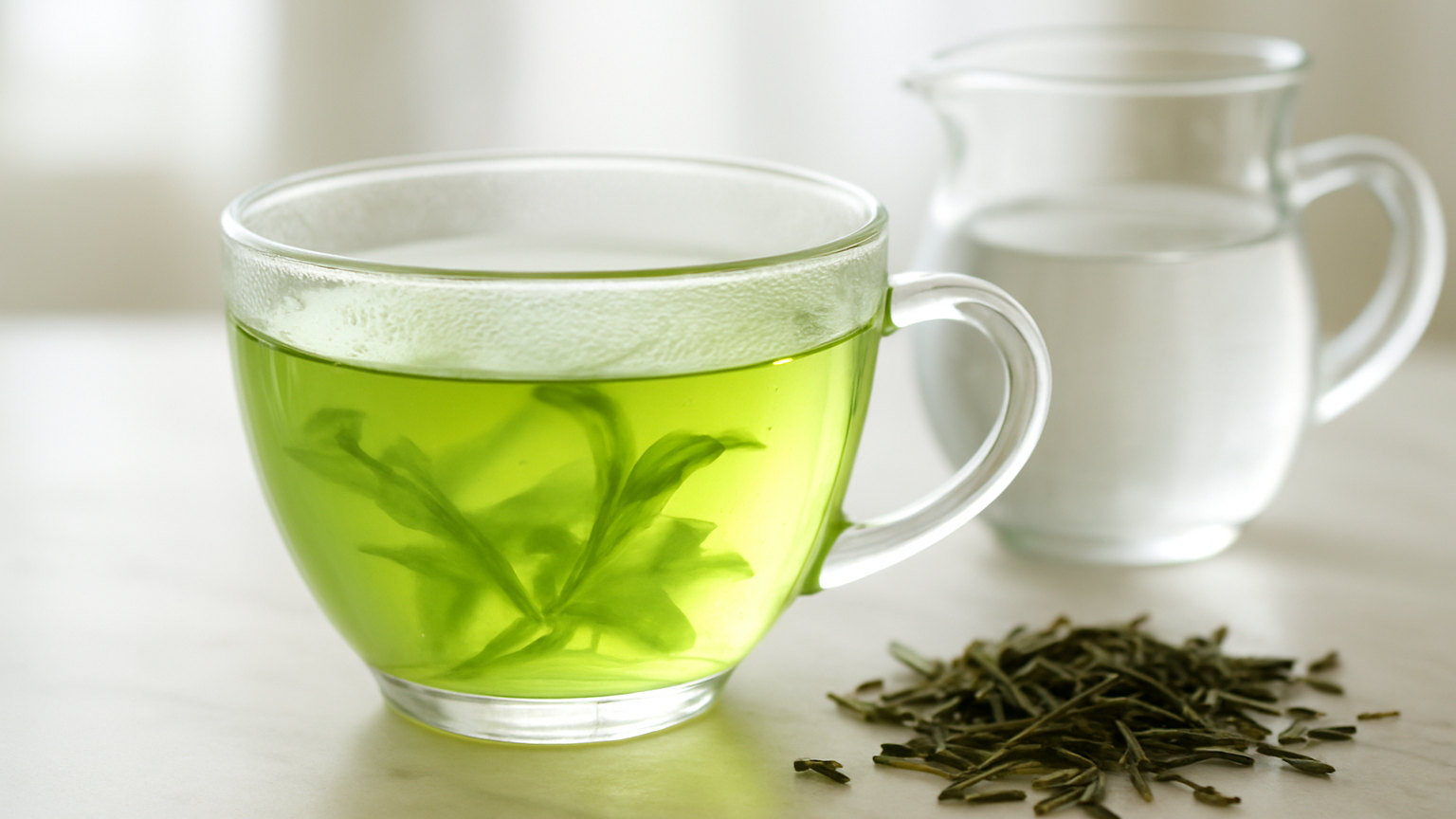
Green tea has a reputation for bitterness that it does not deserve. Made correctly it is sweet, savoury and delicate. Made with boiling water and left five minutes, it is genuinely unpleasant.
What are the two adjustments?
- Cooler water. 70 to 80 degrees rather than boiling.
- Shorter time. 1 to 3 minutes rather than 4 or 5.
Those two changes account for nearly every improvement available. Neither costs anything.
Why does boiling water ruin it?
Because catechins, the compounds that give green tea its astringency and bitterness, dissolve far more readily at high temperatures.
Amino acids such as theanine, which carry the sweetness and savoury depth, extract well at lower temperatures. Cooler water pulls those out while leaving much of the bitterness in the leaf.
At 100 degrees everything comes out at once and the balance is lost.
What is the method?
- Boil the kettle and let it stand 3 to 5 minutes, or add a splash of cold water.
- Use 2 to 3 grams of leaf per 200ml.
- Pour, and brew 1 to 2 minutes for the first infusion.
- Strain the leaves out or decant the tea completely.
Leaving leaves sitting in the water is the commonest fault, and it turns a good cup harsh within minutes.
How do Japanese and Chinese greens differ?
Japanese greens such as sencha and gyokuro are steamed, which preserves a deep green colour and a marine, umami character. They are the more delicate and want cooler water, often 60 to 70 degrees for gyokuro.
Chinese greens such as longjing and gunpowder are pan-fired, which gives a nuttier, toastier, more forgiving cup. They take slightly hotter water comfortably.
Which is easier to start with?
A Chinese pan-fired green, since it tolerates a wider range of temperatures. Japanese greens reward precision and punish carelessness.
Can you brew it more than once?
Yes, and it is worth doing. Good green tea gives two or three infusions, each slightly different.
Make the second infusion shorter than the first, since the leaves are already open and extract faster. Thirty to sixty seconds is often enough.
What if it still tastes bitter?
Check the water temperature first, then the time, then the quantity of leaf. Too much leaf in too little water will be bitter regardless of how carefully you brew.
Old tea is another cause. Green tea deteriorates faster than black and tastes flat and slightly stale after a year.
Should you add milk or sugar?
Neither is traditional and both mask what green tea offers. Milk in particular binds the compounds that give it its character.
If a green tea needs sugar to be drinkable, it is almost certainly being brewed too hot or too long.
How much caffeine does it have?
Around 20 to 45mg per cup, roughly a third to a half of a mug of coffee. Matcha is higher, since the whole leaf is consumed.
Does the water matter?
More than for black tea. Hard water flattens green tea noticeably, muting its sweetness and leaving a dull, chalky finish.
Filtered water is a genuine improvement in hard water areas and it costs very little.
Which green teas are most forgiving?
Chinese pan-fired greens such as gunpowder and longjing, which tolerate a wider temperature range. Japanese steamed greens are more delicate and less tolerant of error.
How long does green tea keep?
Six to twelve months, which is the shortest of any tea except matcha. It fades rather than spoiling, losing its fresh grassy character first.
What should you look for when buying?
A vivid green colour and a fresh, grassy aroma from the dry leaf. Dull, yellowish or brownish green tea is usually old, and it will taste flat regardless of how carefully it is brewed.
A stated harvest year is a good sign, since it means the seller expects you to care about freshness.
Does it suit food?
Well, and particularly with Japanese food, fish and lighter dishes. The savoury character and the astringency both cut through richness in a way similar to a high-acid white wine.


