
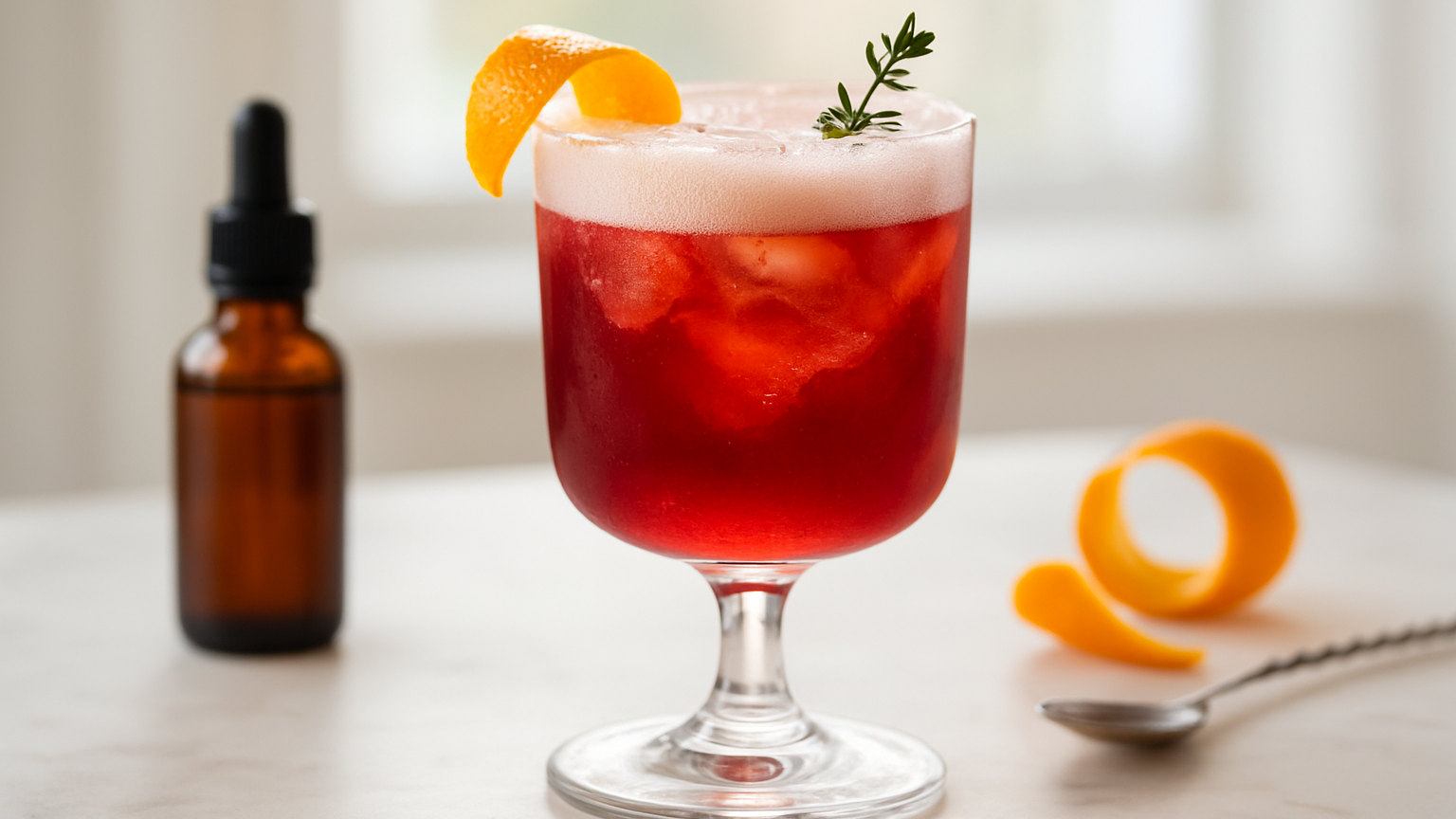
Bitters are the ingredient most often overlooked when someone builds an alcohol-free drink, because a few drops feels like nothing. Traditional cocktail bitters are typically between 35 and 45 per cent alcohol, which puts them alongside a spirit in strength if not in volume.
How much alcohol does a dash actually add?
A dash from a standard bitters bottle is roughly 0.8ml. Two dashes of a 44 per cent bitters is therefore about 0.7ml of pure alcohol.
In a 200ml finished drink that works out at around 0.35 per cent alcohol by volume, which is below the 0.5 per cent threshold used for de-alcoholised products and comparable to the trace amounts in some fruit juices and ripe fruit.
Whether that matters depends entirely on why you are avoiding alcohol. For someone pacing themselves at a party it is irrelevant. For someone avoiding alcohol completely, for medical, religious or recovery reasons, it is a real consideration and the alcohol-free versions exist for good reason.
What do alcohol-free bitters use instead?
Vegetable glycerine, usually. Glycerine is a thick, slightly sweet liquid that extracts botanical flavours in a similar way to alcohol, though less efficiently and with a different result.
The trade-offs are worth knowing. Glycerine extracts fewer of the volatile aromatic compounds, so the flavour is less sharp and less penetrating. It is also mildly sweet, which slightly offsets the bitterness. And the shelf life is shorter, since alcohol is a preservative.
Do they work as well?
Close, and noticeably different side by side. They carry the flavour but with less of the immediate hit that alcohol-based bitters give. In an alcohol-free drink, where nothing else is providing that hit either, using slightly more than the recipe states usually gets you where you want to be. Try three or four dashes where a recipe says two.
How do you tell what you have?
Read the label. Alcohol-based bitters will state a strength, usually as a percentage. Alcohol-free versions will say so explicitly and generally list glycerine among the first ingredients.
If a bottle states no strength and does not mention alcohol, check the ingredients list before assuming. Some products described as extracts or essences are alcohol based.
Can you make your own?
Yes, and glycerine-based bitters are straightforward, though they need longer than an alcoholic tincture would:
- Combine 150ml of vegetable glycerine with 50ml of water in a clean jar.
- Add your bittering agent: 2 teaspoons of gentian root, dried orange peel or dandelion root.
- Add aromatics: cardamom, clove, cinnamon, coriander seed, dried citrus peel.
- Seal and leave somewhere dark for three to four weeks, shaking daily.
- Strain through muslin and bottle, ideally with a dasher top.
Keep it in the fridge and use within about six months. Without alcohol as a preservative it will not last indefinitely, and any sign of mould or fermentation means it goes.
What can you use instead of bitters entirely?
Several kitchen ingredients provide bitterness without any bottle at all:
- Strong over-steeped tea. A teaspoon added to a drink.
- Grapefruit peel. Squeezed and dropped in.
- A few drops of strong coffee. Adds depth rather than tasting of coffee.
- Angostura-style spice blend. A pinch of ground clove and cinnamon in a syrup.
None replaces bitters exactly, and all of them are better than leaving the bitterness out.
Where should you use them?
Anywhere a drink tastes sweet or one-dimensional. Bitters on top of a foam, in a sour, or in a long drink with soda all add a top note that lifts the whole thing. In alcohol-free drinks this is not a refinement, it is usually the difference between a drink and a squash.
Should you tell people what is in a drink?
Yes, if it contains traditional bitters and you are serving it as alcohol free. The quantity is small and for most people it is irrelevant, but someone avoiding alcohol completely for medical, religious or recovery reasons is entitled to know before they drink it rather than after.
Saying so takes a sentence and removes any awkwardness later. Keeping a bottle of alcohol-free bitters alongside the traditional ones costs very little and means you never have to think about it.


