
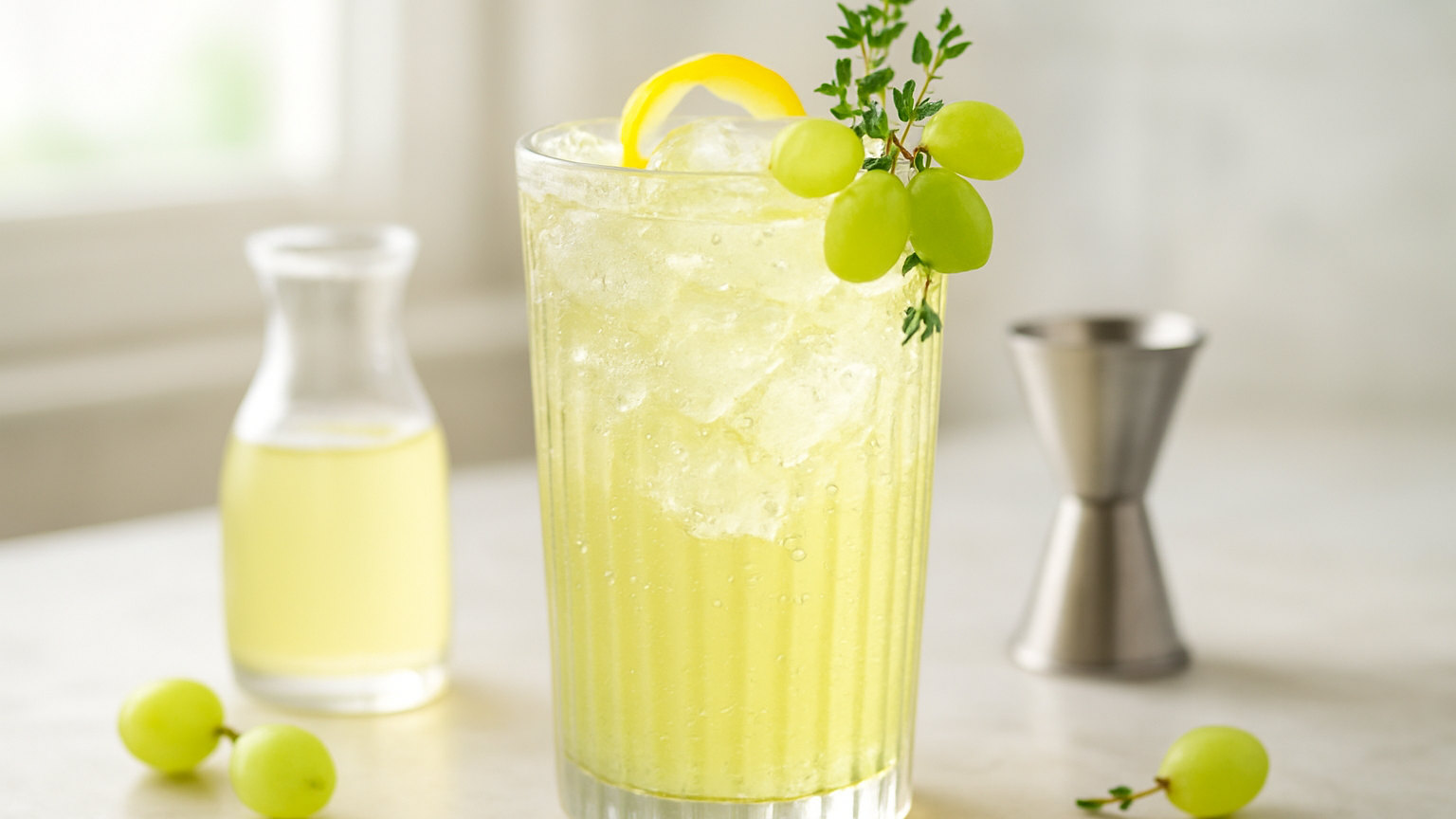
Verjuice is the juice of unripe grapes, pressed before the sugar has developed. It was the standard souring agent across medieval Europe, fell out of use when lemons became cheap, and has come back partly through cooking and partly because it solves a specific problem in alcohol-free drinks.
What does it taste like?
Sharp but soft, with a grape character and a faint tannic grip. It sits between lemon juice and white wine, and it is noticeably gentler than either vinegar or citrus.
That softness is the useful part. Lemon juice is bright and aggressive and announces itself. Verjuice provides acidity that recedes into a drink rather than sitting on top of it, which is what wine does in a spritz or a sangria.
Why does it work where citrus does not?
Because some drinks were built around wine or vermouth rather than around citrus, and replacing a wine element with lemon juice produces something quite different.
A spritz, a sangria, a wine cooler or anything using vermouth all have a grape-based acidity at their centre. Verjuice is the only common ingredient that provides it without alcohol.
How is it different from vinegar?
Vinegar is acetic acid, produced by bacteria converting alcohol. Verjuice is mostly tartaric and malic acid from the fruit itself, with no fermentation involved. Vinegar is much sharper and carries a distinctive pungency; verjuice does not.
What can you make with it?
- Verjuice spritz. 60ml verjuice, 30ml alcohol-free bitter aperitif, 90ml soda, over ice with an orange slice.
- Verjuice and soda. 50ml to 150ml with a strip of lemon peel. Two ingredients and genuinely refreshing.
- Alcohol-free sangria. Verjuice, red grape juice, chopped fruit, a cinnamon stick and soda.
- Verjuice sour. 60ml verjuice, 20ml rich syrup, 15ml aquafaba, shaken hard.
- In place of vermouth. In any alcohol-free take on a negroni or Manhattan.
How much should you use?
More than you would use of lemon juice, because it is less acidic. As a rough guide, 1.5 to 2 times the quantity. A recipe calling for 25ml of lemon juice wants around 40ml of verjuice.
It is also less sweet than most fruit juices, so drinks built on it usually need a little syrup to balance. Start at 10ml of rich syrup per drink and adjust.
Can you make it yourself?
If you have a grapevine, yes. Pick the fruit while still green and hard, usually around midsummer in the UK, well before it begins to colour. Crush and press, then strain through muslin.
The juice is highly perishable and will begin fermenting within days, so freeze it in ice cube trays or refrigerate and use within a week. Commercial verjuice is pasteurised or lightly preserved, which is why a bought bottle keeps far longer.
What can you substitute if you cannot find it?
Nothing matches it exactly. The closest approximations:
- White grape juice with a squeeze of lemon and a pinch of tartaric or citric acid.
- Diluted white wine vinegar with white grape juice, roughly one part to four.
- Sour cherry juice, which is a different flavour but a similar soft acidity.
The first of these gets closest and is easy to assemble from a supermarket.
How should you store it?
An unopened bottle keeps well in a cupboard. Once opened, refrigerate and use within a month or two, since it will slowly oxidise and dull. Freezing it in an ice cube tray works well if you only use it occasionally, and cubes can go straight into a shaker.
Is it worth buying?
If you make alcohol-free drinks regularly, yes. It solves a problem that nothing else in a supermarket solves, and a bottle lasts a long time because you use 40 to 60ml at a time.
If you make them occasionally, the white grape juice and lemon substitute gets close enough and costs nothing extra. Buy the real thing once to know what you are aiming at, then decide whether it earns a permanent place.


