
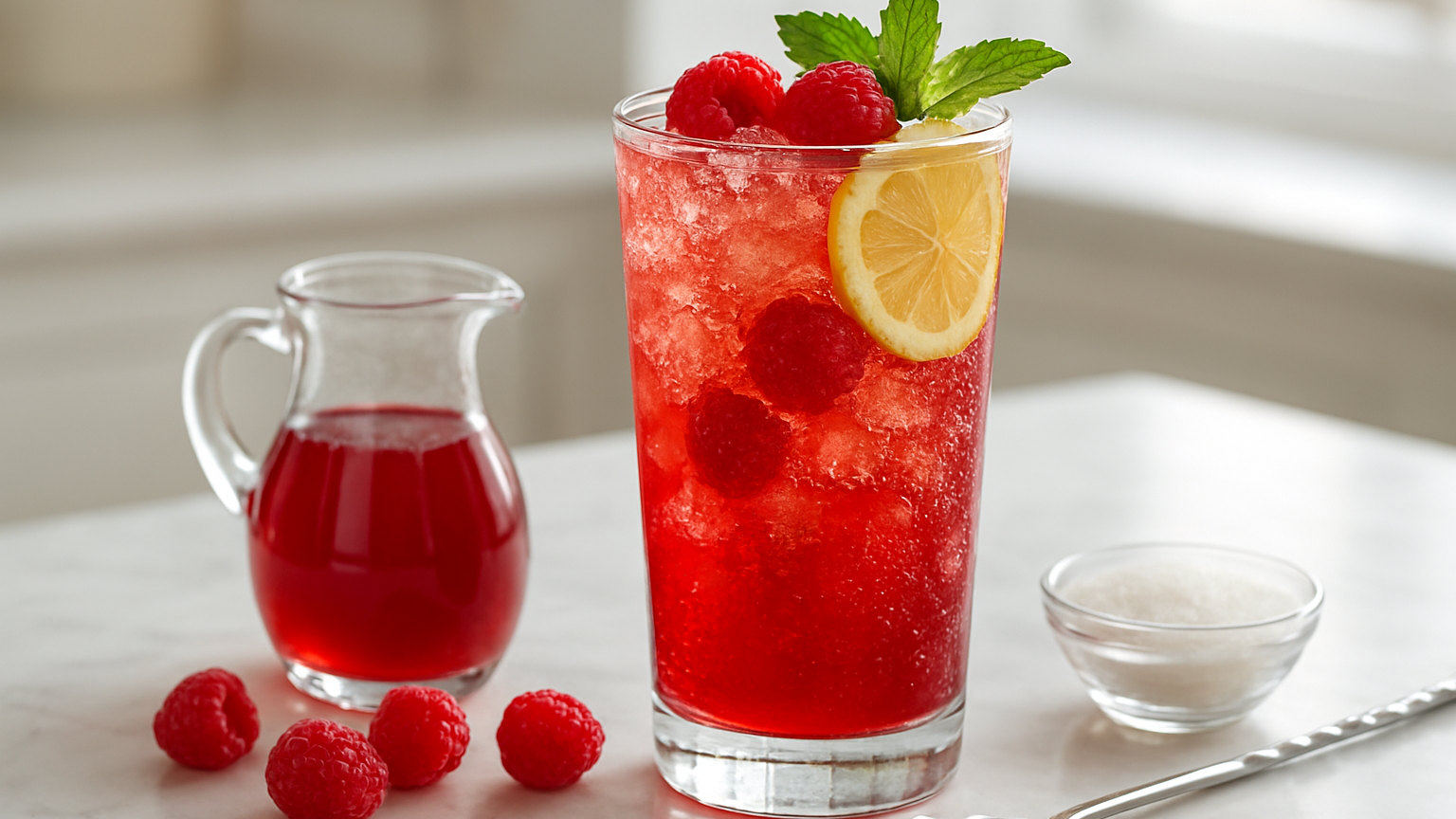
A shrub is a syrup of fruit, sugar and vinegar, made for centuries as a way of preserving fruit before refrigeration. It has been rediscovered because it does something no other ingredient does in an alcohol-free drink: it provides sharp, complex acidity with real depth behind it, where citrus gives brightness and stops there.
What is the ratio?
Equal parts by weight of fruit, sugar and vinegar. So 300g of fruit, 300g of sugar and 300ml of vinegar makes a useful quantity.
That produces a shrub sharp enough to need diluting heavily, which is the point. A finished drink uses 20 to 30ml of shrub topped with soda, so one batch goes a long way.
What is the cold method?
Slower and better, since no heat means no cooked flavour and more of the fresh fruit character survives:
- Chop or lightly crush the fruit and combine with the sugar in a bowl.
- Cover and refrigerate for two days, stirring occasionally. The sugar draws out the juice.
- Strain, pressing the fruit gently, and discard the solids.
- Stir the vinegar into the resulting syrup.
- Bottle and refrigerate for at least a week before using.
That resting week matters. A freshly mixed shrub tastes harshly of vinegar and mellows considerably as the flavours integrate.
What is the hot method?
Faster, at some cost. Simmer the fruit with the sugar and a splash of water for ten minutes, strain, then add the vinegar off the heat. Ready in a day rather than a week, with a jammier, less fresh flavour. Useful for firm fruit such as quince or rhubarb that will not give up juice cold.
Which vinegar should you use?
- Apple cider vinegar. The default. Mild, fruity, works with almost anything.
- White wine vinegar. Clean and neutral, good for delicate fruit.
- Red wine vinegar. Assertive, suits berries and stone fruit.
- Balsamic. Sweet and heavy. Use as a small proportion rather than the whole quantity.
Malt vinegar is the one to avoid. It is too strongly flavoured and reads unmistakably as chips.
Which fruit works best?
Anything with strong flavour and reasonable acidity. Raspberry, blackberry, strawberry, rhubarb, plum and peach all work well. Add herbs and spices at the sugar stage: rosemary with plum, basil with strawberry, black pepper with strawberry, ginger with rhubarb.
Very sweet, low-acid fruit such as melon and banana makes a poor shrub, since there is not enough character to stand up to the vinegar.
How long does it keep?
Several months refrigerated, and often longer. The combination of sugar and acetic acid is a genuinely effective preservative, which is what the whole technique was invented for.
It will continue changing over time, generally mellowing and integrating further. If it develops mould, cloudiness that was not there before, or any sign of fermentation, discard it.
How do you use it in a drink?
The simplest version is 25ml of shrub topped with 150ml of soda water over ice, which is a genuinely good drink in about ten seconds.
In a built mocktail it replaces the citrus rather than adding to it. Try 60ml of strong cold tea, 25ml of shrub, 10ml of rich syrup and a pinch of salt, shaken and topped with soda. The shrub supplies the acid and a good part of the complexity, which is exactly what an alcohol-free drink is usually short of.
Why does it taste so harsh at first?
Because the vinegar has not integrated. A freshly mixed shrub is two ingredients sitting next to each other rather than one thing, and the acetic sharpness sits right on top.
A week in the fridge changes it considerably and a month changes it further. If yours tastes aggressively of vinegar, the answer is almost always to wait rather than to add more sugar. Taste it again in a fortnight before deciding it went wrong.
The other common cause is using too strong a vinegar. Malt and undiluted distilled vinegar are both far more aggressive than cider or wine vinegar, and no amount of resting will soften them into something pleasant.


