
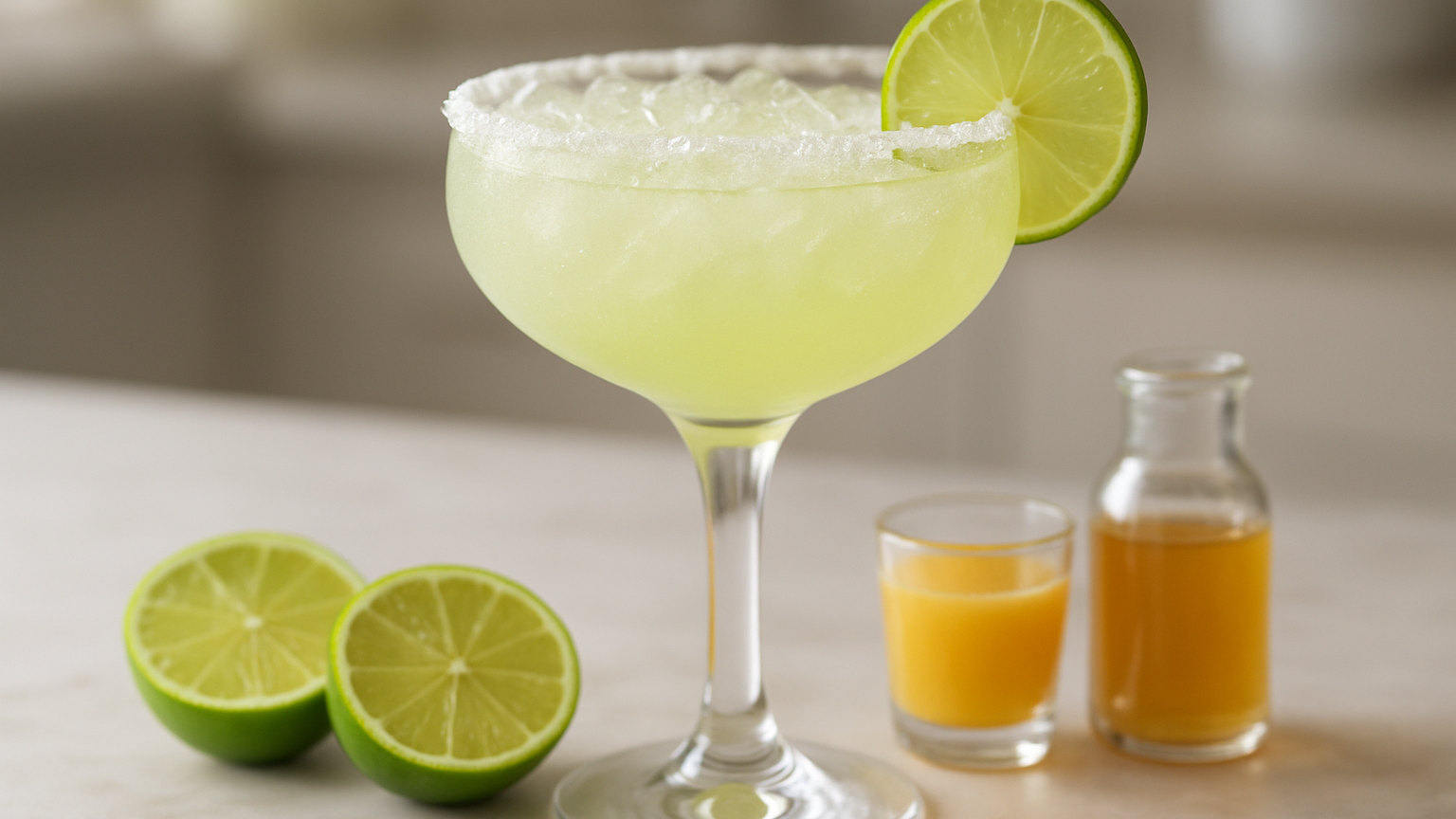
A margarita is tequila, orange liqueur and lime. Remove the first two and you have limeade. The tequila was bringing a vegetal, peppery bite and the liqueur was bringing bittersweet orange, and both need replacing separately if the drink is going to hold together.
What is the recipe?
In a shaker with ice:
- 60ml strong cold green tea
- 25ml fresh lime juice
- 20ml agave syrup
- 15ml fresh orange juice
- A wide strip of orange peel, squeezed in
- A generous pinch of salt
Shake hard for twelve seconds and strain over fresh ice into a glass with half the rim salted. Garnish with a lime wheel.
Why green tea rather than another base?
Because green tea has a grassy, slightly vegetal quality that is closer to blanco tequila than anything else in a kitchen cupboard. Brewed strong, it also carries tannin, which gives the drink grip and a finish.
Brew it at double strength, around 4g of leaf to 200ml of water, and steep for four minutes rather than the usual two or three. Slightly over-steeped green tea is unpleasant on its own and exactly right here.
What if you only have black tea?
It works and gives a darker, more tannic drink that sits closer to a reposado margarita. Use slightly less, around 50ml, since black tea is more assertive.
How do you replace the orange liqueur?
Not with orange juice alone, which is sweet without being bitter. The liqueur was contributing bittersweet peel character, so the peel is the important part.
Fifteen millilitres of juice plus a squeezed strip of peel gets most of the way there. Squeeze the peel over the shaker so the oils go in with everything else, then drop it in for the shake. A small amount of marmalade, half a teaspoon shaken hard until it dissolves, is an even closer match and brings genuine bitterness.
Why does the salt matter more here?
Salt suppresses bitterness and heightens sweetness, which is why a salted rim makes any margarita taste rounder. In an alcohol-free version it is doing more work still, because there is no alcoholic warmth to give the drink weight and the salt partly compensates.
Use it twice. A pinch in the shaker, distributed through the whole drink, and a rim on half the glass so the person drinking can choose. Rub a lime wedge round the outside edge and roll that edge in coarse salt on a plate, keeping the salt on the outside so it does not fall in.
How do you fix one that tastes wrong?
- Too sharp: add 5ml agave syrup at a time.
- Too sweet: increase the lime, or steep the tea longer for more bitterness.
- Thin and watery: the tea was too weak, or you used a thin syrup. Use rich syrup instead.
- Tastes like squash: no bitter element at all. This is the usual fault.
- Flat: the lime was not fresh.
Can you make a frozen version?
Yes, with an adjustment. Cold suppresses your perception of both sweetness and acidity, so a frozen drink made to the recipe above will taste bland.
Increase the agave to 25ml and the lime to 30ml, and blend with roughly 150g of ice per serving. Serve immediately, since blended drinks separate within about ten minutes and stirring will not bring them back together.
How do you scale it for a group?
Everything except the shake batches well. For six: 360ml tea, 150ml lime, 120ml agave syrup, 90ml orange juice, a teaspoon of salt and the squeezed oil from three orange peels. Mix and refrigerate.
Pour 130ml over ice per glass. Shaking each one individually still gives a better texture, but a well-chilled batch poured straight is perfectly good and far quicker.
What glass should you use?
Whatever the alcoholic version would go in. A margarita served in a proper coupe or a rocks glass with a salted rim reads as a drink; the same liquid in a tumbler reads as squash.
This matters more for alcohol-free drinks than for anything else, because people bring low expectations to them. Presentation does a genuine part of the work, and the salted rim in particular signals what the drink is before anyone tastes it.


