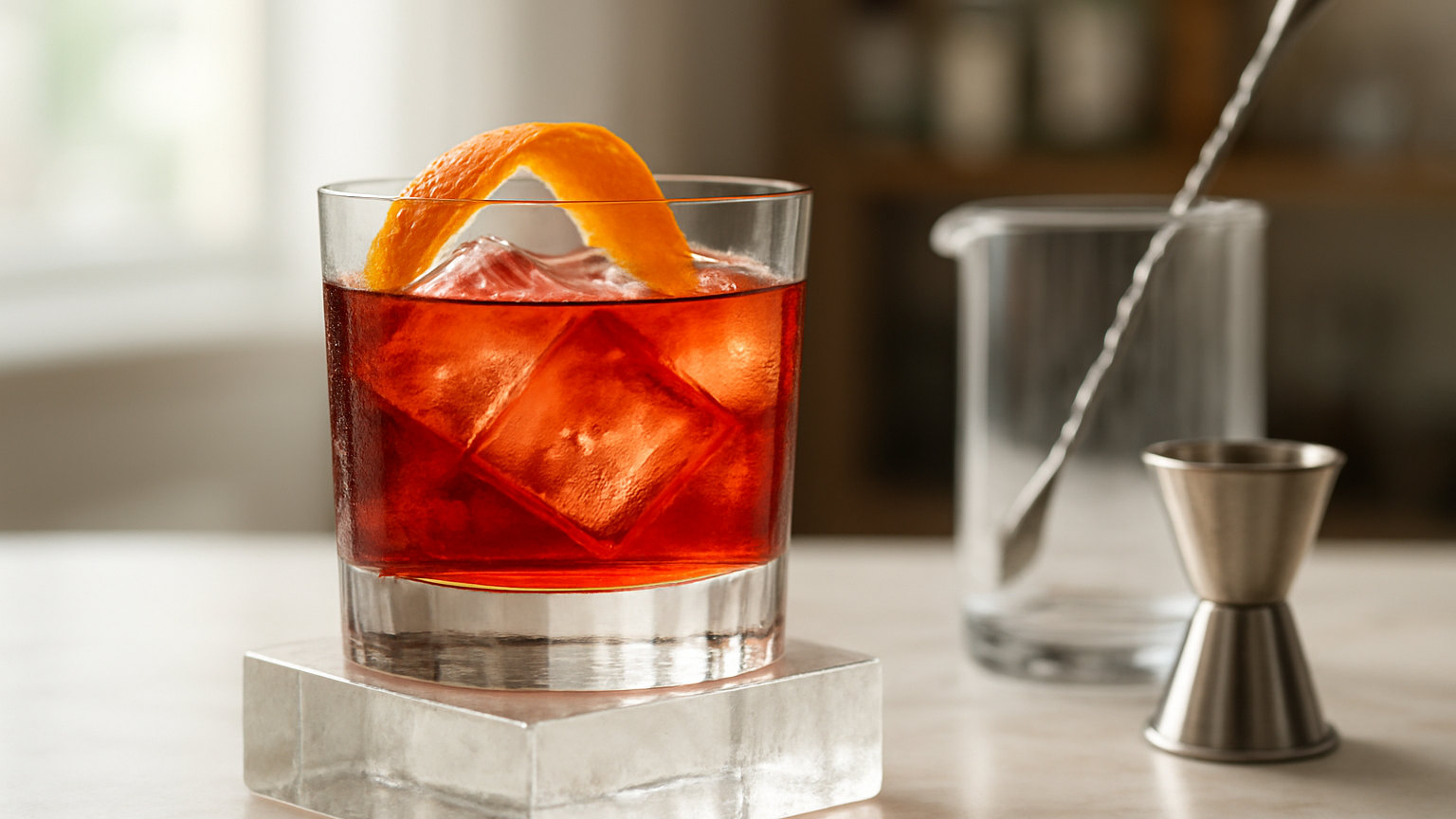
A negroni is gin, Campari and sweet vermouth in equal measure, and every one of those three brings bitterness or herbal depth. That makes it the hardest classic to reproduce without alcohol and, once you manage it, the most convincing. The bitterness that defines the drink is precisely what most mocktails are missing.
What replaces each of the three parts?
- Gin: a juniper-led botanical infusion, or an alcohol-free spirit.
- Campari: an alcohol-free bitter aperitif, or strong grapefruit and tea.
- Sweet vermouth: a rich herbal syrup, or verjuice with a spoonful of syrup.
Keep the equal parts structure. It was not a stylistic decision in the original, it was the point at which three strong flavours stopped fighting, and that logic still holds without the alcohol.
What is the simplest version?
Thirty millilitres of alcohol-free bitter aperitif, 30ml of strong cold black tea, 30ml of verjuice, 5ml of rich syrup and two dashes of alcohol-free bitters. Stir with ice for thirty seconds and strain over a large cube with an orange peel.
The tea provides the tannin the gin would have. The verjuice provides the wine character the vermouth would have. It is not identical to a negroni and it is unmistakably the same kind of drink.
Why stir for so long?
Because dilution is part of the recipe. A negroni finishes around twenty per cent water by volume, and an alcohol-free version needs the same softening. Most people stop stirring after ten seconds and the result tastes raw and sharp.
How do you make a botanical infusion?
If you would rather not buy an alcohol-free spirit, a homemade base costs almost nothing:
- Simmer 500ml of water with two tablespoons of juniper berries, one teaspoon of coriander seed, a strip of orange peel and a slice of angelica root if you have it.
- Cover and simmer very gently for twenty minutes.
- Take off the heat, leave to cool covered, then strain.
Keep it in the fridge and use within a week. It gives the aromatic top notes of gin, though not the body, which is why the syrup in the recipe above is doing real work.
Why does the orange peel matter more here?
Because there is no alcohol carrying the aromatics. In a normal negroni the ethanol releases volatile compounds as you drink and the aroma keeps arriving. Without it, most of the smell has to come from the garnish.
Cut a wide strip with a peeler, hold it skin side down a few centimetres above the surface and squeeze so you see the oil catch the light. Then rub it around the rim and drop it in. Skipping this step costs more in an alcohol-free version than it would in the original.
How do you adjust the bitterness?
Alcohol-free bitter aperitifs vary considerably in how bitter they actually are, and several are noticeably sweeter than Campari. If yours is on the sweet side:
- Increase the tea to 40ml and steep it longer.
- Add 10ml of fresh grapefruit juice, which is bitter as well as acidic.
- Increase the bitters to four dashes.
- Reduce or remove the syrup.
What about the sbagliato version?
Replace the tea with 60ml of alcohol-free sparkling wine, added last so it keeps its bubbles. That gives a longer, lighter drink and the carbonation adds a prickle that partly stands in for the missing alcoholic heat. Build it in the glass rather than stirring, and lift once gently from the bottom.
What does it cost to make?
Considerably less than the alcoholic version if you use tea and verjuice, and considerably more if you buy three separate alcohol-free bottles to replicate each component.
The homemade route is worth trying first. Strong tea, verjuice and a small amount of syrup cover most of what the three original ingredients did, and the only thing genuinely worth buying is an alcohol-free bitter aperitif, since bitterness at that intensity is difficult to produce in a kitchen.