The espresso martini is judged almost entirely on its foam, and the foam has nothing to do with the vodka. It comes from coffee oils and sugar emulsified by a hard shake. That makes this one of the few classics where the alcohol-free version loses very little, provided the coffee is strong enough.
What is the recipe?
- 60ml strong fresh coffee or cold brew concentrate
- 30ml coffee syrup
- 20ml rich syrup
- 20ml aquafaba
- A pinch of salt
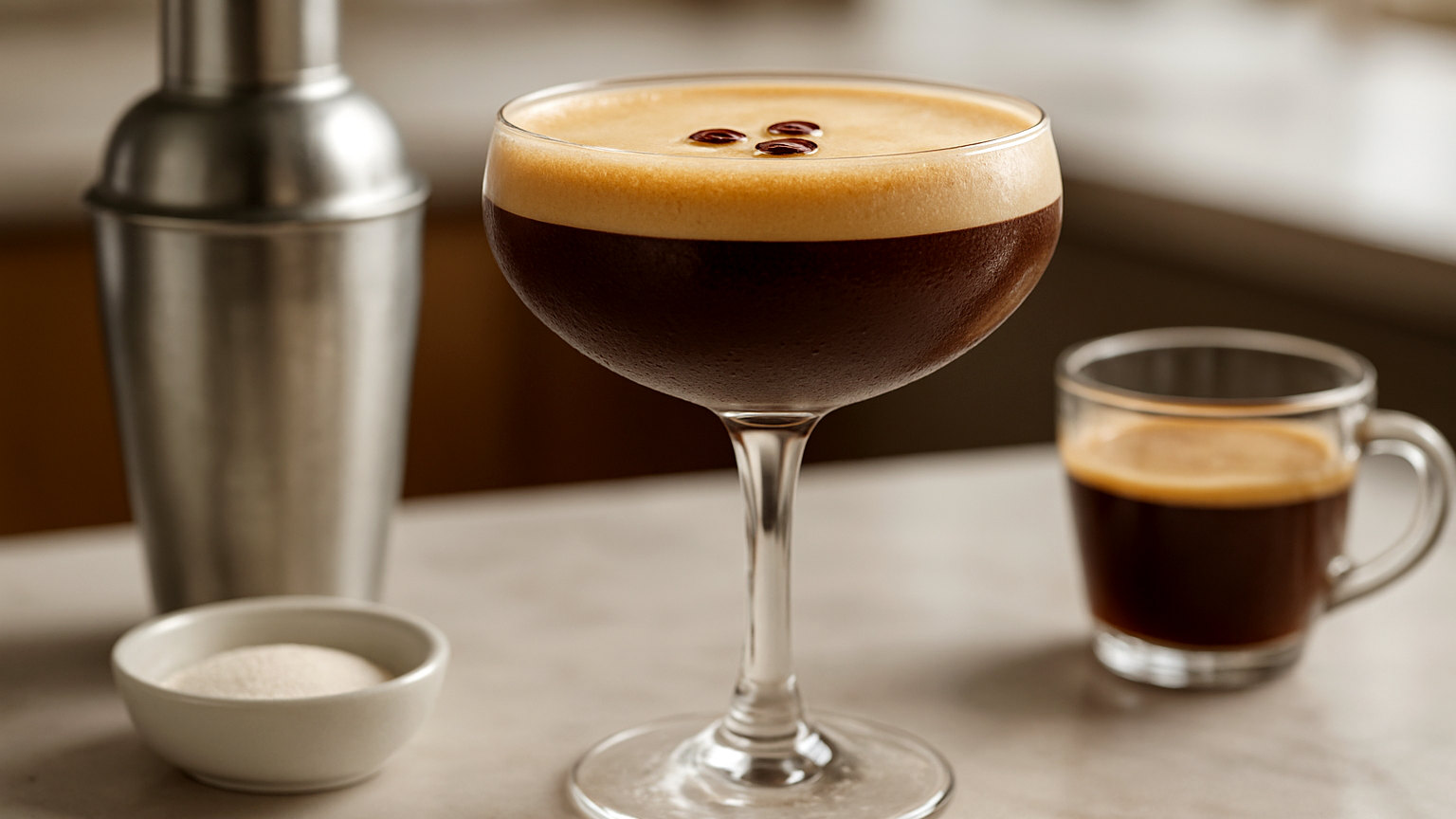
Dry shake without ice for fifteen seconds, add ice and shake hard for a further twelve, then double strain into a chilled coupe. Three coffee beans on top.
What replaces the coffee liqueur?
A homemade coffee syrup, which is closer than any bought alternative and takes ten minutes:
- Warm 200g of demerara sugar with 100ml of water until dissolved.
- Take off the heat and stir in 100ml of very strong coffee.
- Add a split vanilla pod, cover and leave to cool.
- Strain and refrigerate. Keeps around three weeks.
The demerara matters. Coffee liqueur carries a molasses depth that white sugar cannot replicate, and demerara gets most of the way there.
What replaces the vodka?
Nothing, and that is the honest answer. The vodka contributed strength and a little body and no flavour at all. The aquafaba and rich syrup cover the body. There is no gap in the flavour to fill.
Which coffee should you use?
Strength is the only thing that matters, and an espresso machine is not required:
- Moka pot. The closest match. Oily and concentrated, and it foams well.
- Instant espresso powder. Two teaspoons in 60ml of hot water. Genuinely effective.
- Cold brew concentrate. Smoother and less bitter, slightly thinner foam.
- Aeropress. Brewed short and strong with a fine grind.
Filter coffee from a cafetiere is too weak and produces a watery drink with no head at all.
How do you get the foam right?
The shake has to be genuinely hard, not a polite rattle. You are introducing air rather than just chilling, and fifteen seconds of real effort is the target.
The dry shake first, without ice, is what builds the foam. Cold inhibits the proteins in aquafaba from unfolding and trapping air, so shaking with ice from the start gives a thin, patchy head.
Double strain through a fine sieve as well as the shaker strainer. Small ice shards puncture the foam from below and it collapses within a minute.
How much caffeine is in it?
Between 80 and 130mg depending on your coffee, which is roughly a strong cup. The syrup adds a little more.
That is worth knowing, since an alcohol-free drink can feel like something you can have several of. Two of these late in the evening will keep many people awake, and anyone limiting caffeine should count them. The NHS advises no more than 200mg a day in pregnancy, which one of these largely uses up.
Can you batch it?
The liquid, yes. The foam, no. Mix the coffee and both syrups ahead and keep them cold, then shake individual servings with the aquafaba to order.
That still saves most of the work and takes fifteen seconds per drink. A batched base also means less ice melt in the shaker, which gives a stronger and better-textured result.
Why do the beans float?
Because the foam is dense enough to support them, which makes them a test as well as a garnish. Place them gently on the surface after the drink has settled for a few seconds. If they sink, the foam has not set and the shake was too gentle.
Three is the convention, said to represent health, wealth and happiness. There is no flavour reason for them, so leave them off if you would rather.
What if you have no aquafaba?
Egg white works identically at 15ml, if eggs are not being avoided. Failing both, a very strong shake with a well-made coffee syrup still produces a thin crema layer from the coffee oils alone, though it collapses faster.