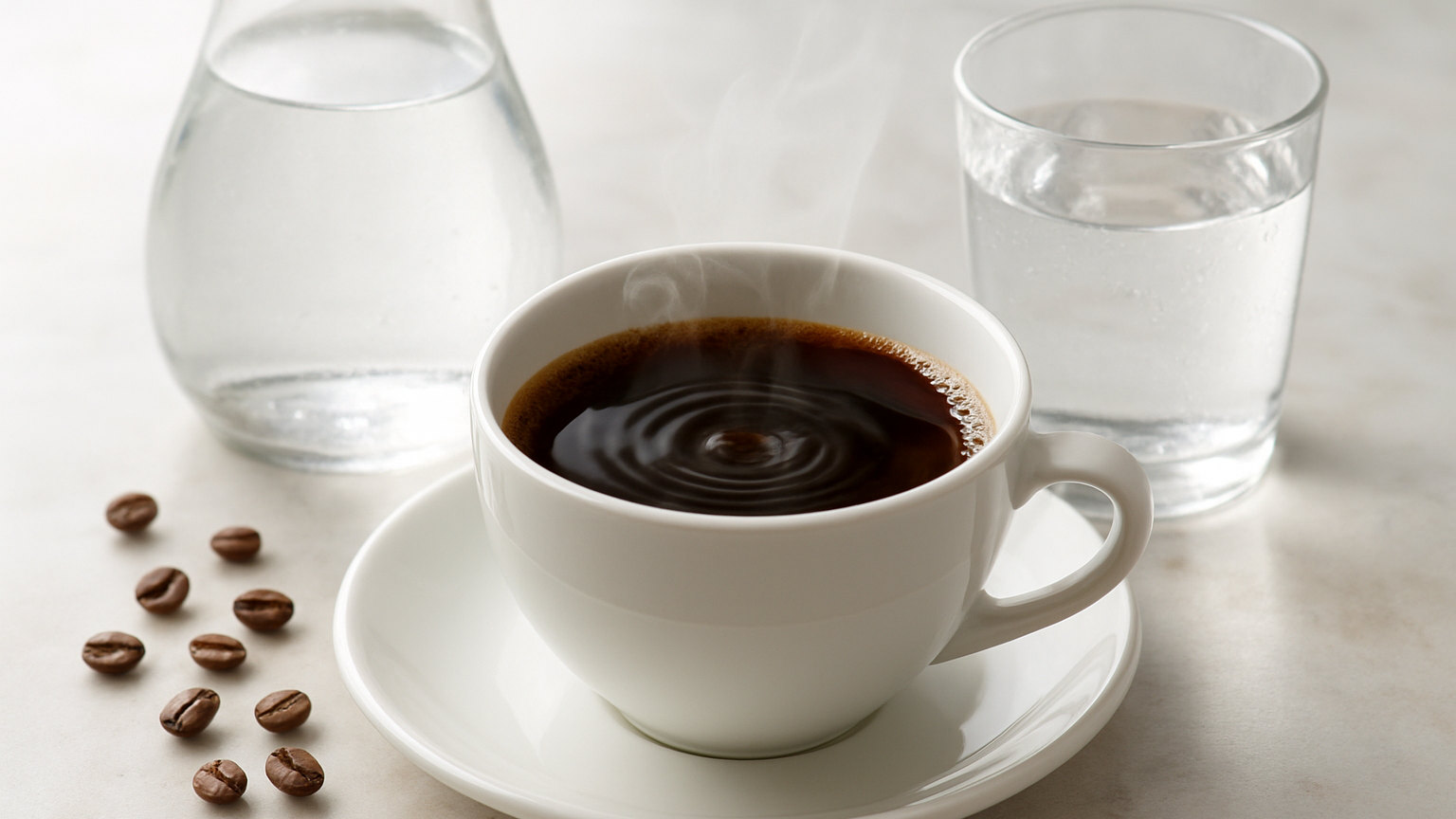
Coffee is roughly 98 per cent water by weight, and the water is usually whatever comes out of the tap. In hard water areas that is a real limitation on how good coffee can be.
Why does water composition matter?
Because minerals dissolved in water participate in extraction. Magnesium and calcium help pull flavour compounds out of the coffee, and bicarbonate buffers acidity.
Too few minerals and extraction is weak and the coffee tastes flat and hollow. Too many, particularly bicarbonate, and the acidity is neutralised, leaving coffee that tastes dull and chalky.
What is the ideal?
Speciality guidance suggests around 50 to 175 parts per million of total dissolved solids, with moderate hardness and low alkalinity.
Most UK tap water in soft areas is close enough. Hard water areas, which covers much of the south and east of England, run well above this.
How can you tell if your water is hard?
Limescale on the kettle is the clearest sign. A furred element and white deposits mean high mineral content, and it will be flattening your coffee as well as your kettle.
Should you filter it?
In hard water areas, yes, and it makes a noticeable difference. A jug filter reduces hardness and removes chlorine, both of which improve the cup.
In soft water areas the benefit is smaller, and removing chlorine still helps if your supply is noticeably treated.
What about distilled or deionised water?
Poor. Water with no minerals at all extracts badly and produces flat, empty coffee. It is a common experiment and it rarely works.
Some enthusiasts make water from distilled plus measured mineral additions. That is effective and considerably more effort than most people want.
Does bottled water help?
Depends entirely on the bottle. Mineral content varies enormously between brands, and some are harder than tap water.
Check the analysis on the label for total dissolved solids. A low to moderate figure suits coffee; a high one does not.
What temperature should it be?
Between 92 and 96 degrees for most methods, which is water brought to the boil and left for around 30 seconds.
Boiling water poured straight onto coffee extracts harsh compounds quickly and adds bitterness. Below about 88 degrees, extraction is poor and the coffee tastes sour and thin.
Does altitude matter?
Slightly, since water boils below 100 degrees at height. It is a real effect and negligible at British elevations.
Should the water be fresh?
Yes. Reboiling water repeatedly drives off dissolved oxygen and concentrates minerals slightly, and freshly drawn water tastes better.
The difference is small compared with hardness and temperature, and it costs nothing to fill the kettle fresh.
What is the practical summary?
In a hard water area, filter it. Everywhere, use fresh water off the boil for 30 seconds. Those two changes cost almost nothing and do more than most equipment.
Does it affect the equipment too?
Considerably. Hard water furs kettles and scales up espresso machines, which changes brewing temperature and eventually causes failures.
Filtering protects the machine as well as improving the coffee, which is a second argument for it in hard water areas.
Does it matter for instant coffee?
Less, since the extraction has already happened at the factory. Chlorine and off flavours still come through, so filtering helps a little.
Temperature matters here too: boiling water on instant coffee produces a harsher cup than water left for thirty seconds.
How much difference does it actually make?
In a hard water area, more than changing beans. The same coffee brewed with filtered and unfiltered water tastes noticeably different, with the unfiltered version flatter and duller.
It is worth testing side by side once, since the result usually decides the question.
What should you do first?
Look at the kettle. If it is furred with limescale, filtering will improve every cup you make and extend the life of anything you brew with.
If the kettle is clean, your water is probably fine and the effort is better spent on beans and grinding.