
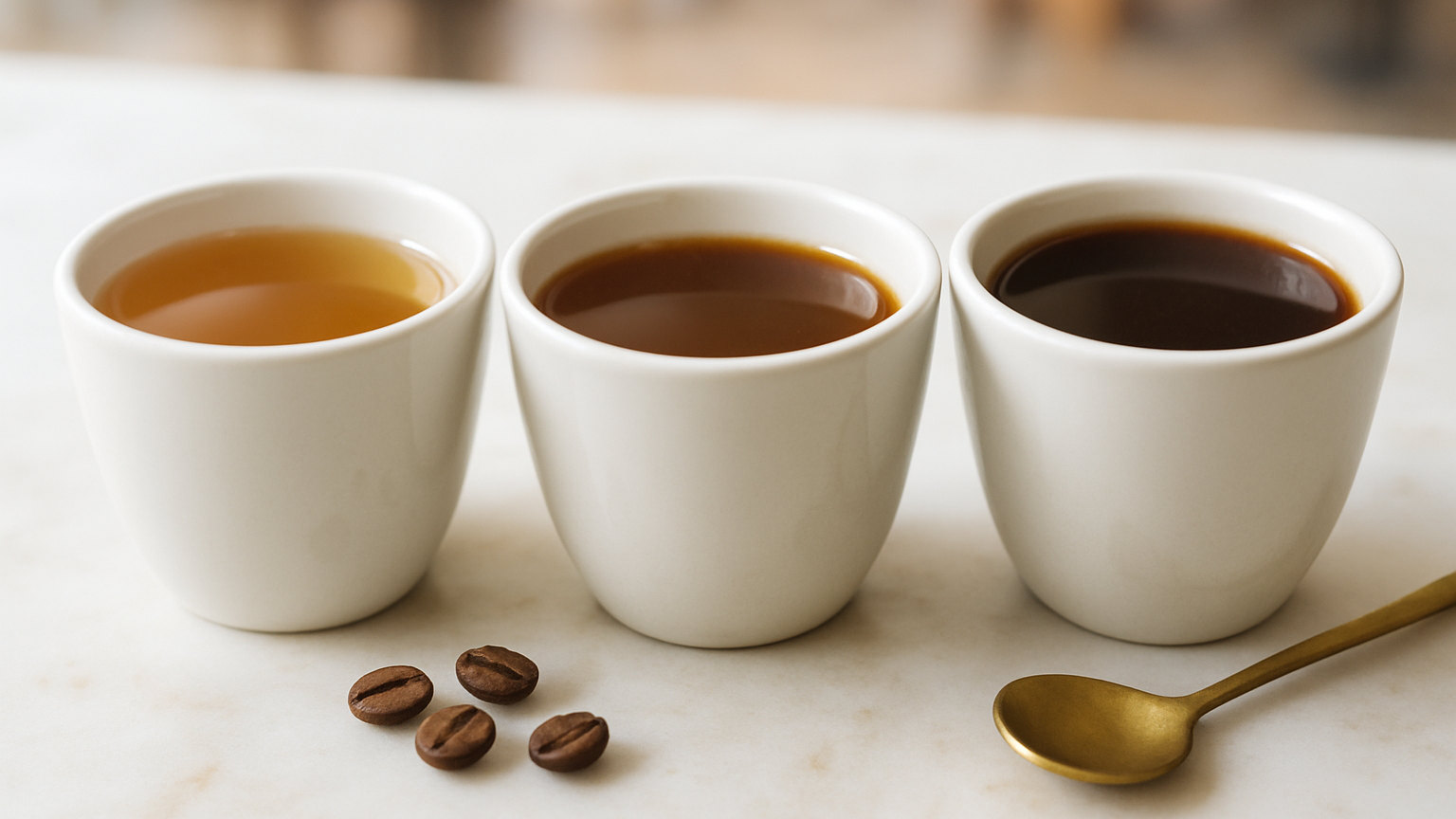
Roasting transforms a green, grassy seed into something recognisable as coffee. How far that process is taken determines a great deal about the final taste, often more than where the beans were grown.
What happens during roasting?
Heat drives off moisture, then triggers browning reactions that create hundreds of aromatic compounds. Sugars caramelise, acids break down, and the bean expands and becomes brittle.
Two audible events mark the stages. First crack, when the bean expands and splits, marks the start of drinkable coffee. Second crack, later and quieter, marks the point where oils migrate to the surface.
What are the roast levels?
- Light. Stopped shortly after first crack. Bright, acidic, fruity, origin character prominent.
- Medium. Between the cracks. Balanced, caramel and nut, some acidity retained.
- Medium-dark. Around second crack. Chocolate, richer, less acidity.
- Dark. Past second crack. Smoky, bitter, oily surface, origin largely gone.
Why does light roast taste more acidic?
Because roasting breaks down the acids present in the green bean. A shorter roast leaves more of them intact.
Those acids are what carry fruit character, which is why light roasts taste of berries and citrus while dark roasts taste of chocolate and smoke.
Does dark roast mean stronger?
Stronger tasting, not stronger in caffeine. Dark roasts taste bolder because of roast character, and they contain slightly less caffeine by weight, since the beans lose mass and swell during roasting.
Measured by scoop, dark roast has less caffeine than light. Measured by weight, the difference is small.
Why are dark beans oily?
Because prolonged roasting drives oils from inside the bean to the surface. Those oils oxidise quickly, which is why very dark roasts go stale faster and can taste rancid within weeks.
Oily beans also clog grinders more readily.
Which roast suits which method?
- Light. Filter, pour over, aeropress. Where clarity and acidity show.
- Medium. Almost anything. The safe default.
- Medium-dark. Espresso, moka pot, milk drinks.
- Dark. Espresso and milk drinks, where the milk balances the bitterness.
Light roasts are harder to extract and generally need a finer grind or hotter water. Dark roasts extract quickly and over-extract easily.
Why do supermarket blends lean dark?
Because dark roasting evens out differences between beans and masks defects, which makes large-scale consistency easier. It also produces a flavour many people associate with coffee.
Speciality roasters generally go lighter, since the aim is to show where the coffee came from rather than what the roaster did to it.
Which should you buy?
Medium, if you drink coffee black and are unsure. Medium-dark if you drink it with milk. Light if you want to taste origin character and are willing to adjust your brewing.
Roast level is a matter of preference rather than quality, and a badly roasted light coffee is far worse than a well-roasted dark one.
How can you tell the roast level?
Colour and surface. Light roasts are pale brown and dry; medium are mid-brown and matt; dark are almost black with visible oil.
Descriptions on bags vary, since what one roaster calls medium another calls dark. The beans themselves are more reliable than the label.
Does roast level affect how long beans keep?
Yes. Dark roasts have oils on the surface that oxidise quickly, so they stale faster and can turn rancid within a few weeks.
Light roasts keep slightly longer, since less oil has migrated outwards. Neither lasts as long as the best-before date on most bags suggests.
Is one roast level better?
No, and preference varies genuinely. What matters is that the roast suits the bean and the brewing method, and that it was done well.
A carefully roasted dark coffee is far better than a carelessly roasted light one, whatever the current fashion suggests.
How does roast interact with grind?
Darker roasts are more brittle and grind finer at the same setting, and they also extract faster. Both push in the same direction, so a dark roast usually needs a coarser grind than a light one on the same brewer.


