
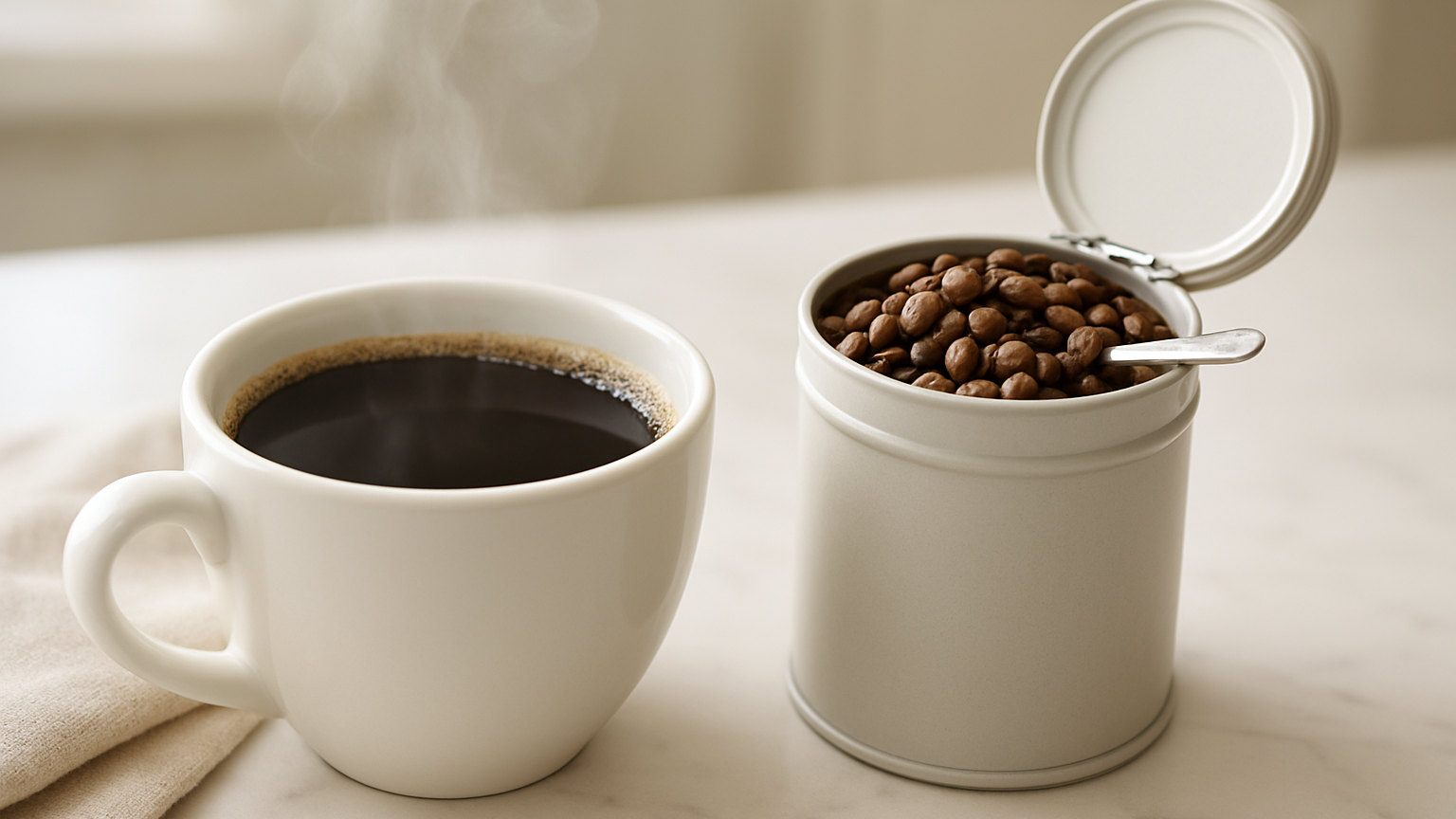
Coffee does not spoil in a way that makes it unsafe. It goes stale, losing the aromatic compounds that make it worth drinking, and it does so faster than most people realise.
What causes staling?
- Oxygen. The main enemy. Oxidises the oils and aromatics.
- Moisture. Degrades the beans and encourages staling.
- Heat. Accelerates every reaction.
- Light. Contributes, less than the others.
- Time. Aromatics escape steadily regardless.
How long do beans last?
Whole beans are at their best from around 3 days to 4 weeks after roasting. Before 3 days they are still degassing; after a month the aromatics have faded noticeably.
Ground coffee stales far faster, since grinding exposes an enormous surface area. It is noticeably duller within a week and flat within a fortnight.
What is degassing?
Freshly roasted coffee releases carbon dioxide for several days. That is why speciality bags have a one-way valve, letting gas out without letting air in.
Very fresh coffee can also brew unevenly, since escaping gas pushes water away from the grounds. A few days after roasting is generally better than the day after.
How should you store them?
In an airtight, opaque container at stable room temperature, away from the cooker and out of direct light.
The original bag with the valve, rolled down and clipped, is perfectly good. A dedicated container with a one-way valve is slightly better and not essential.
What about the freezer?
Genuinely contested, and the evidence favours it if done properly. Freezing slows staling substantially, which is useful for beans you cannot get through quickly.
The requirement is that beans are frozen in small airtight portions and taken out once, not repeatedly. Condensation forms on cold beans in warm air, and moisture is what causes the damage.
Freeze in weekly portions, take one out at a time, and let it come to room temperature before opening. Never refreeze.
What about the fridge?
Poor. The temperature swings when the door opens, it is humid, and coffee readily absorbs smells from other food.
Of all the common storage locations, the fridge is the one to avoid.
Should you buy whole beans?
If you can grind them, yes, and the difference is larger than most equipment upgrades. Grinding immediately before brewing preserves aromatics that are otherwise lost within days.
A hand grinder costs modestly and is the most cost-effective improvement available to most home brewers.
How much should you buy?
What you will use in three or four weeks. A 250 gram bag gives roughly 16 mugs at 15 grams each, which suits most households for a fortnight.
Buying a large bag because it is better value is a false economy if the last third is stale.
What does the roast date tell you?
More than a best-before date, which is usually a year out and tells you nothing useful. A stated roast date is a sign of a roaster confident about freshness.
Does the container material matter?
Only that it seals and blocks light. Glass jars work if kept in a cupboard; clear jars on a worktop expose the beans to light continuously.
Ceramic and stainless containers are opaque by default, which is their main advantage over glass.
How can you tell if beans have gone stale?
Smell them. Fresh coffee is strongly aromatic when the bag is opened; stale coffee smells faint, flat or slightly cardboard-like.
In the cup it shows as a loss of aroma and a thin, dull finish rather than any obvious off flavour, which is why it goes unnoticed.
Is buying in bulk ever worth it?
Only with the freezer, portioned properly. A large bag kept in a cupboard is stale long before it is finished, so any saving is spent on worse coffee.
Two or three smaller bags bought over a month beat one large one at the same price.
Does grinding ahead ever make sense?
For convenience on busy mornings, and grind a day or two ahead rather than a fortnight. Ground coffee kept airtight for 48 hours is still perfectly good.
Beyond about a week the loss is obvious, which is why pre-ground supermarket coffee tastes flat compared with the same beans ground fresh.


