
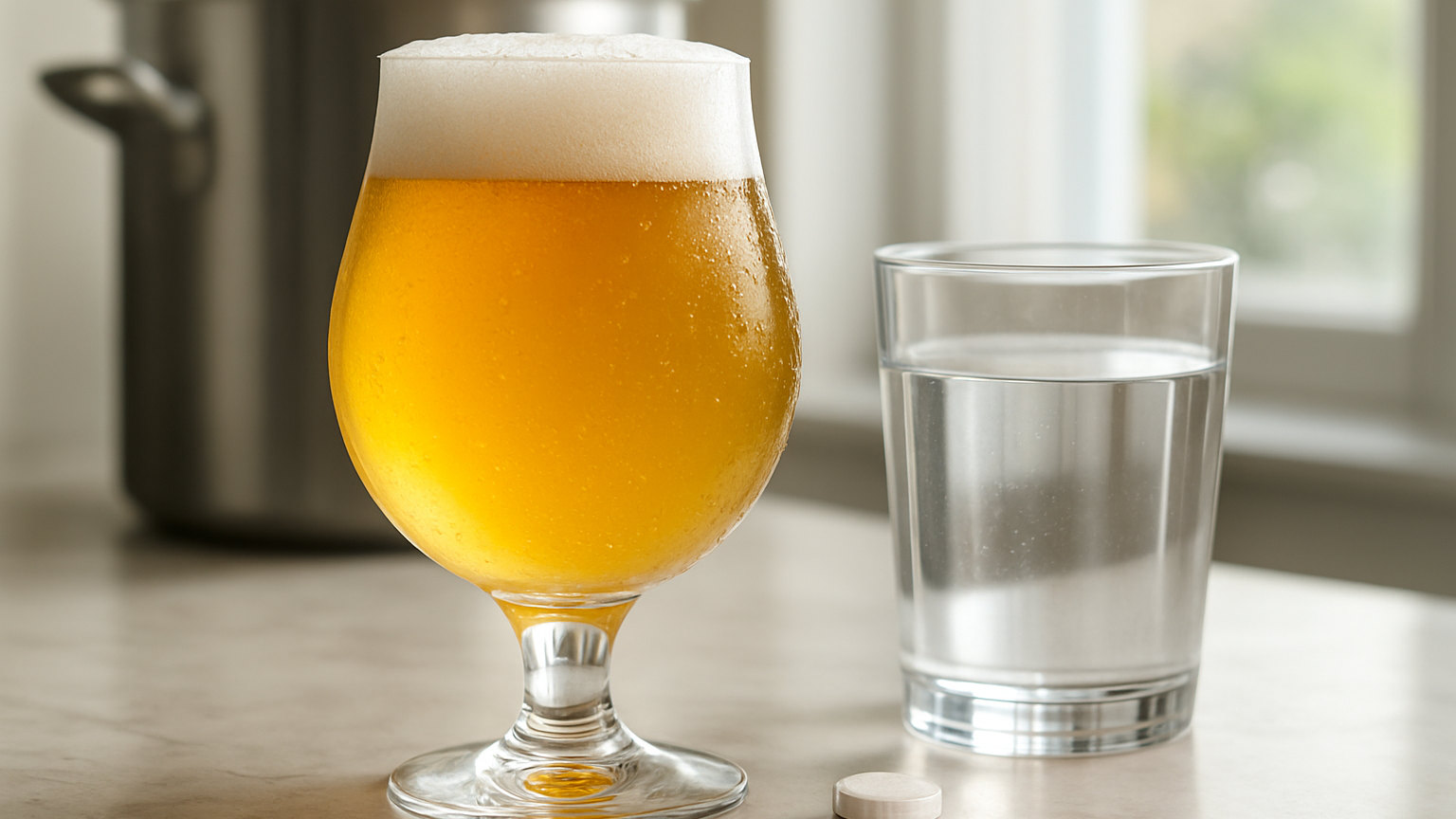
Water is 90 per cent of beer and it gets almost no attention on a first brew day, which is mostly fine. There is one issue worth dealing with immediately and several that only start mattering once the basics are reliable.
What is the one thing that matters immediately?
Chlorine and chloramine. Both are added to UK tap water for disinfection, and both react with compounds in wort to produce chlorophenols, which taste medicinal, plastic or antiseptic at extremely low concentrations.
It is a distinctive fault and it is entirely preventable. Half a crushed Campden tablet treats 25 litres and neutralises both instantly. Add it to the water, stir, and wait fifteen minutes before using.
Does boiling remove it?
It removes chlorine and does not remove chloramine, which most UK water companies now use because it is more stable. Leaving water standing overnight has the same limitation.
A Campden tablet handles both, costs pennies and takes no time. It is the single best-value thing you can do to your brewing water.
Is tap water otherwise suitable?
In most of the UK, yes, particularly for darker beers. Water suitable for drinking is suitable for brewing, and the mineral content across most of the country is workable without adjustment.
Very hard water from a chalk region suits stouts and porters, where the dark grains provide acidity to balance it. Very soft water suits pale, delicate beers. Neither prevents brewing anything, it just makes some styles easier than others.
When does treatment start mattering?
Once fermentation temperature and sanitation are consistently right. Adjusting water before those are under control is optimising the wrong variable.
At that point, two adjustments give most of the available benefit:
- Gypsum, calcium sulphate. Raises sulphate, which makes bitterness feel crisp and dry. Suits pale ales and IPAs.
- Calcium chloride. Raises chloride, which makes beer feel fuller and rounder. Suits malty beers and stouts.
Around 5g of either in a 23 litre batch is a meaningful adjustment. The sulphate to chloride ratio changes the perceived character of a beer more than a change of hop variety does.
What about mash pH?
It affects enzyme activity and extraction efficiency, with a target range of roughly 5.2 to 5.6. Dark grains are acidic and pull it down naturally, which is why stouts made with hard water work well.
For a first year of brewing this can be ignored. It becomes relevant when brewing very pale beers with hard water, where the mash can sit too high and produce a slightly harsh, astringent result.
Should you use bottled water?
Rarely worth it. Twenty-eight litres of bottled water per batch is expensive, heavy and mostly unnecessary once the chlorine is dealt with.
The exception is if your tap water tastes strongly of anything, or if you are on a private supply of unknown composition. In that case a low-mineral bottled water gives a blank slate to build on.
Can you find out what is in your water?
Yes. UK water companies publish a water quality report by postcode, giving hardness, alkalinity and the main ions. It is free and takes a minute to look up.
Those figures are averages and vary through the year, so treat them as a guide rather than a specification. For home brewing they are accurate enough to base adjustments on.
What about a water filter?
A carbon filter jug removes chlorine effectively and removes chloramine only partially. It also removes some minerals you may want to keep.
For the volumes involved, a Campden tablet is faster, cheaper and more thorough.
Does the same apply to kit brewing?
Yes. A kit tin is topped up with a lot of tap water, so the chlorine question applies just as much. A Campden tablet in the topping-up water is worth doing on every kit batch.
What if the beer tastes medicinal anyway?
Check the sanitiser next. Chlorine-based sterilisers that were not rinsed thoroughly produce the same chlorophenol character as untreated tap water, and it is a common cause once the water has been ruled out.


