
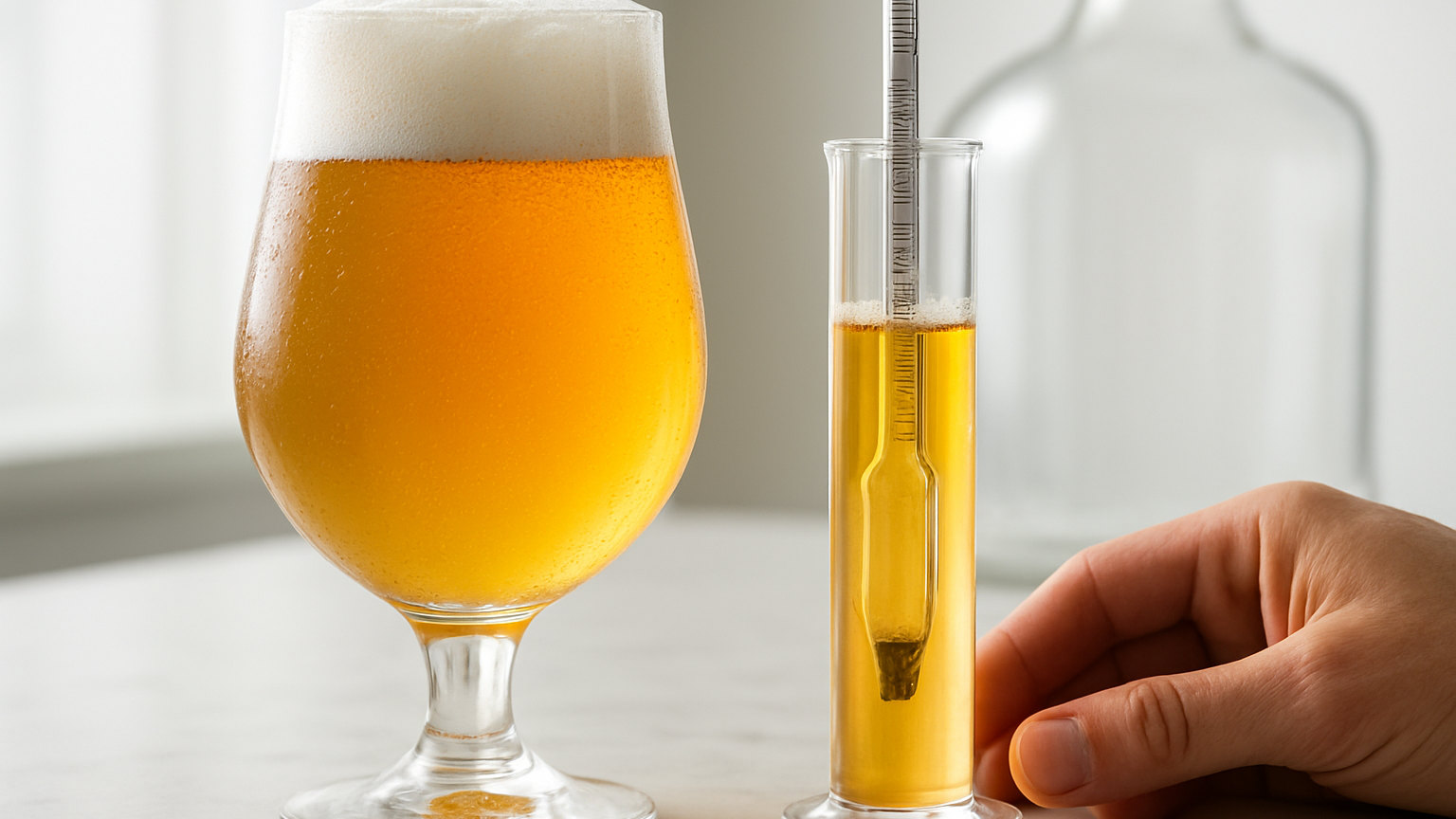
This is the single most consequential judgement in home brewing, because everything after it is irreversible and one particular error is genuinely hazardous. The test that answers it properly takes three days and one instrument.
What is the reliable test?
Take a hydrometer reading, then another 24 hours later, then a third after another 24. Three identical readings mean fermentation has finished. Anything still falling, even by a point, means it has not.
Two readings are not enough. Fermentation slows unevenly and a beer can appear static for a day before dropping further.
Why is the airlock unreliable?
- Fermentation can continue too slowly to produce visible bubbles.
- A lid that is not fully seated lets gas escape silently around it.
- Temperature changes make an airlock move with no fermentation at all.
- Dissolved carbon dioxide bubbles off for days after fermentation ends.
An airlock tells you something is happening early on. It is not evidence of anything once activity has slowed.
What about the krausen dropping?
The foam layer collapsing means the vigorous phase is over, not that fermentation has finished. There is usually several days of slow work left, and beers routinely drop another five or six gravity points after the krausen falls.
What final gravity should you expect?
It depends on the starting gravity and the yeast, but as rough guidance:
- Standard ale from 1.045: finishes around 1.010 to 1.012.
- Dry, highly attenuated beer: 1.006 to 1.009.
- Full-bodied or high mash temperature: 1.014 to 1.018.
A beer sitting at 1.020 and stable is either underattenuated or stalled. Bottling it is a risk unless you are confident it will not restart.
How long does it normally take?
Seven to ten days for a standard ale, and up to three weeks for a strong beer or a stubborn strain. Judge by readings rather than by the calendar.
Leaving beer an extra week on the yeast does no harm and often helps, since the yeast reabsorbs diacetyl and other compounds produced early on. There is no rush to bottle.
Why does bottling early matter so much?
Because a sealed bottle has nowhere for carbon dioxide to go. Beer bottled with fermentable sugar remaining will keep fermenting and build pressure over the following weeks.
Priming sugar is added deliberately in a measured amount to produce the right carbonation. Unfermented wort sugar on top of that is unmeasured, and the result ranges from gushing bottles to glass failing under pressure.
Store any batch you are unsure about in a sealed crate, in a place where a failure would be contained, rather than on an open shelf.
How do you take a reading properly?
Draw a sample with a sanitised siphon or turkey baster into a trial jar rather than floating the hydrometer in the fermenter. Spin it gently as you release it to knock off bubbles, which otherwise lift it and give a falsely high figure.
Read at eye level at the bottom of the meniscus, and adjust if the sample is far from the hydrometer’s calibration temperature, usually 20 degrees.
What if it has stalled?
Warm it to 21 or 22 degrees, swirl the fermenter gently to rouse the yeast, and give it three days. That resolves most stalls. If nothing moves, pitch a fresh, robust yeast rather than bottling and hoping.
Is there any harm in waiting longer?
Very little. Beer left on the yeast for an extra week generally improves, since the yeast reabsorbs diacetyl and other compounds produced early in fermentation. Only after several weeks does yeast begin to break down and contribute a bready character.
Given that waiting is free and bottling early is hazardous, there is no argument for rushing.
What if the readings never stabilise?
Check that the sample is well mixed and free of bubbles, since both produce inconsistent figures. If the beer is genuinely still dropping after three weeks, it is a slow strain rather than a problem, and it will finish given warmth and time.


