
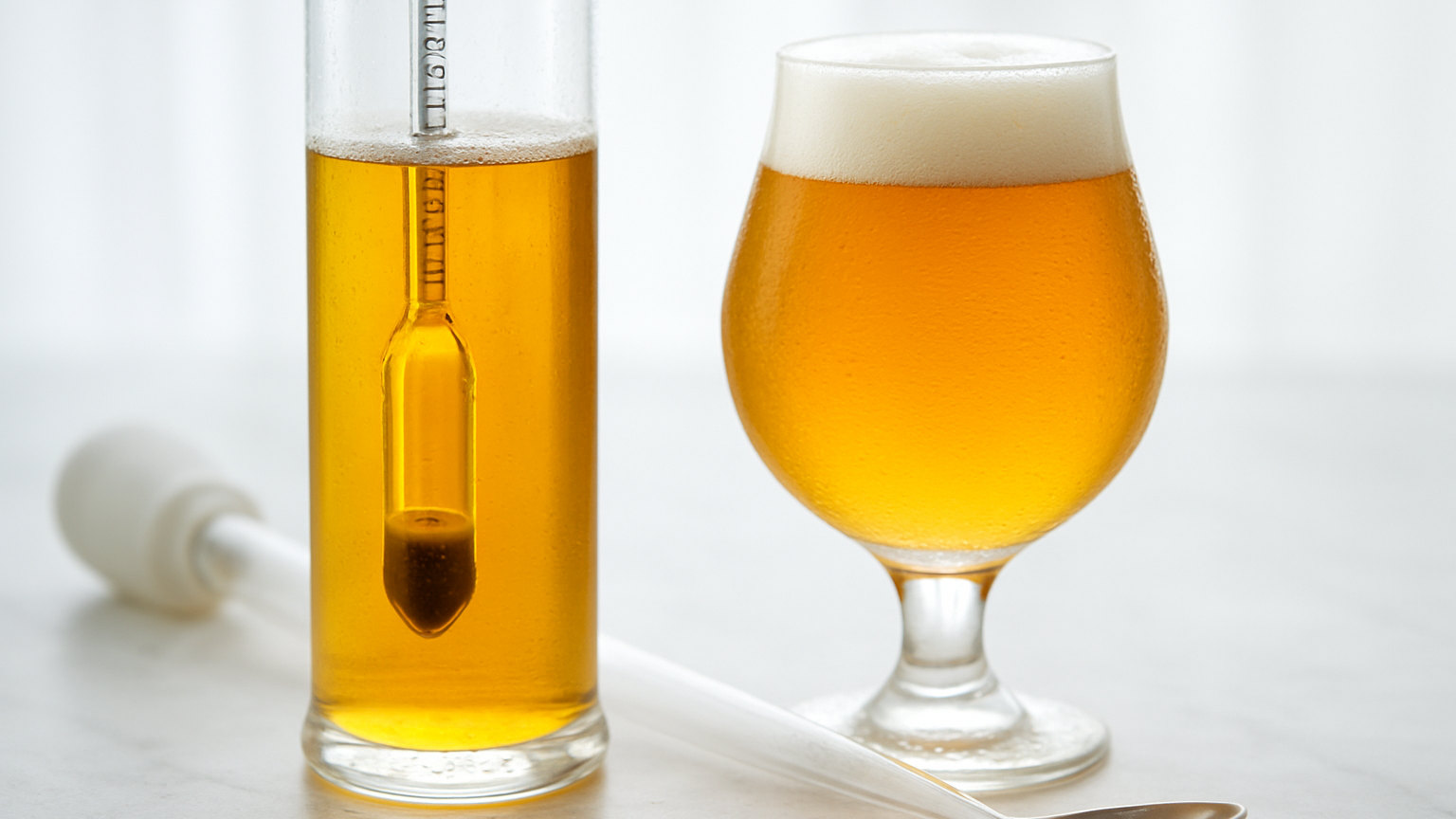
A hydrometer is a sealed glass float with a weighted bulb and a graduated stem. It costs very little and it is the only piece of equipment in home brewing that is genuinely not optional, because it answers a safety question as well as a curiosity one.
What does it measure?
The density of a liquid relative to water, expressed as specific gravity. Water reads 1.000. Sugar dissolved in water makes it denser, so wort reads higher, typically 1.040 to 1.055 for a standard beer.
Alcohol is less dense than water, so as fermentation converts sugar to alcohol the reading falls. That fall is what the calculation uses.
What are the two questions it answers?
- How strong is the beer? From the difference between the starting and final readings.
- Has fermentation finished? From three identical readings on consecutive days.
The second matters more. Bottling beer that is still fermenting produces unmeasured pressure in a sealed glass container, and nothing else tells you reliably whether that risk exists.
How do you take a reading?
- Sanitise a trial jar and a siphon or turkey baster.
- Draw a sample and fill the jar about three quarters.
- Lower the hydrometer in and spin it gently as you release.
- Let it settle without touching the sides.
- Read at eye level, at the bottom of the meniscus.
The spin matters. Bubbles clinging to the stem lift the hydrometer and give a falsely high reading, sometimes by several points.
Should you return the sample?
Only if everything it touched was sanitised, and even then most brewers discard it. A sample is around 150ml out of 23 litres, which is a small price for removing an infection risk.
What is the alcohol calculation?
Subtract the final gravity from the original gravity and divide by 7.36. So a beer starting at 1.048 and finishing at 1.010 gives 38 points divided by 7.36, or roughly 5.2 per cent alcohol by volume.
Some references use 7.45 or 7.6 as the divisor, which gives slightly lower figures. The differences are within the accuracy of the method, which is roughly plus or minus a quarter of a per cent at best.
Why does temperature matter?
Liquid expands as it warms, so a warm sample is less dense and reads low. Hydrometers are calibrated to a temperature printed on the stem, usually 20 degrees.
A sample at 30 degrees reads about 0.002 low. If you take an original gravity reading from warm wort and a final reading from a cool fermenter, the error compounds across both and can shift the calculated strength noticeably.
What is attenuation?
The percentage of available sugar the yeast has fermented. Subtract the final gravity from the original, divide by the original gravity points, and multiply by 100.
A beer from 1.048 to 1.010 has attenuated 79 per cent, which is typical for a clean ale yeast. A figure well below the packet’s stated range suggests a stall.
What are the common errors?
- Trapped bubbles. The most frequent, and it reads high.
- Reading the top of the meniscus. Consistently a point or two high.
- Forgetting the original reading. No calculation is possible without it.
- Unmixed wort. Topping up with water without stirring gives a stratified sample.
The last one catches kit brewers regularly. If you top a concentrate up to 23 litres, stir thoroughly before taking a reading or the figure will be meaningless.
What about a refractometer?
It measures sugar optically from a few drops rather than a full sample, which is convenient on brew day. Alcohol distorts the reading once fermentation has started, so it needs a correction formula for final gravity.
A hydrometer is cheaper and more reliable for the reading that matters. A refractometer is a convenience for original gravity rather than a replacement.
How accurate is the alcohol figure?
Roughly plus or minus a quarter of a per cent under good conditions. That is fine for knowing whether you made a 4 per cent beer or a 6 per cent one, and it is not precise enough to distinguish 5.1 from 5.3.


