
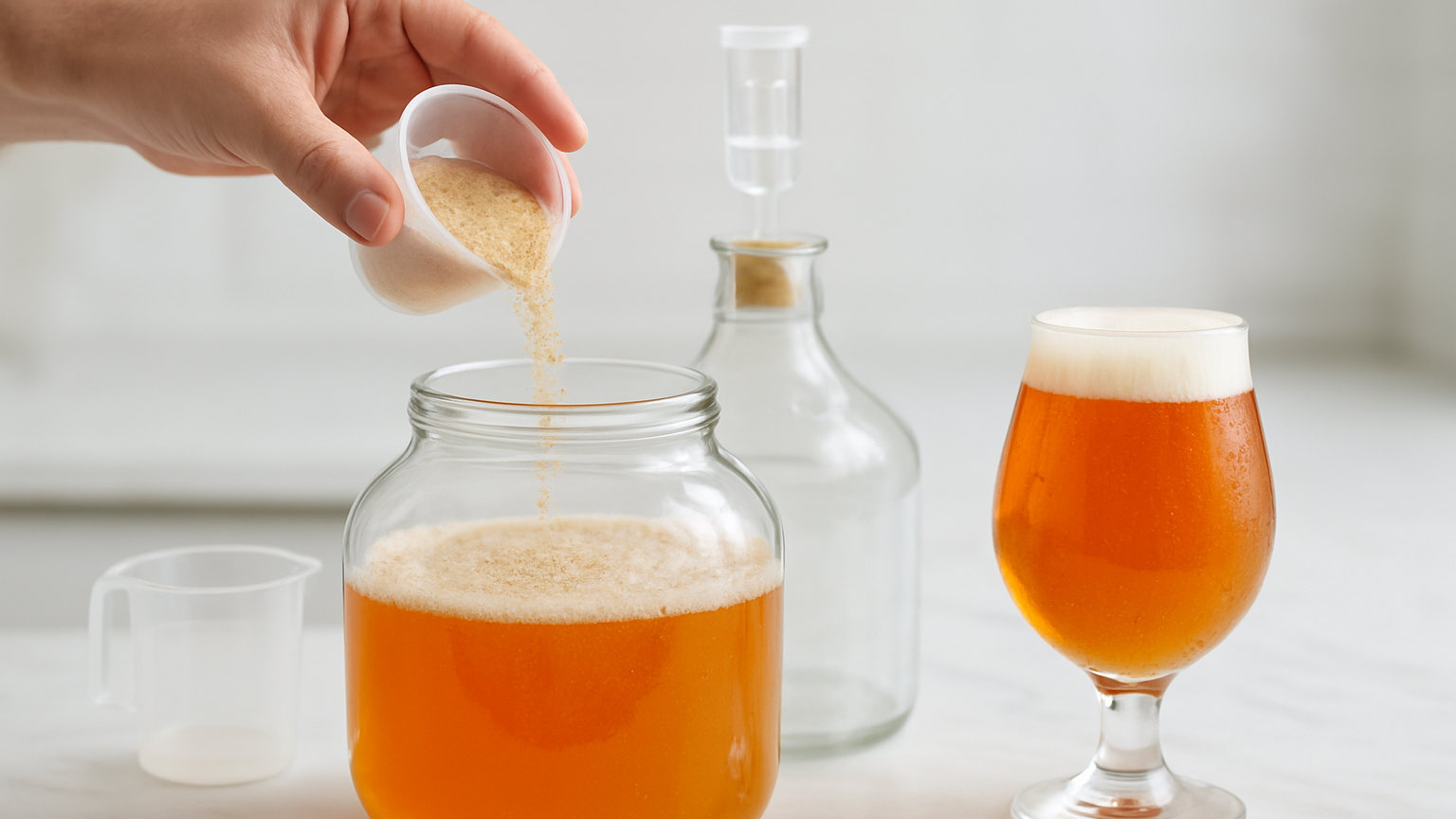
Everything else in brewing is chemistry. Yeast is biology, and a colony that starts stressed produces stressed-tasting beer. Pitching well takes an extra twenty minutes and prevents a category of faults that are otherwise hard to diagnose.
Should you rehydrate dry yeast?
It helps, and opinions differ on how much. Sprinkling dry yeast straight onto wort loses a proportion of the cells to osmotic shock, since they rehydrate in a high-sugar liquid rather than plain water.
To rehydrate: boil 100ml of water, cool it to 30 degrees, sprinkle the yeast on the surface and leave fifteen minutes without stirring. Then stir gently, leave ten more minutes, and pitch.
Modern dry yeasts are robust enough that sprinkling works, particularly if you use a whole 11g packet for a standard batch. Rehydrating gives a faster start and a healthier colony.
What about liquid yeast?
Do not rehydrate it. Liquid yeast is already in suspension and should be brought to room temperature and pitched directly, or built up in a starter for a stronger beer.
What temperature should the wort be?
At or slightly below your intended fermentation temperature, so around 18 to 20 degrees for a standard ale.
Pitching into wort that is too warm is a common mistake. Yeast pitched at 28 degrees produces a burst of esters and fusel alcohols in the first few hours that persists in the finished beer, even if the temperature is brought down afterwards.
Cool the wort properly before pitching. It is worth waiting an hour rather than pitching hot.
How much yeast do you need?
One 11g packet of dry yeast is correct for a standard 23 litre batch up to around 1.050 starting gravity. Above that, use two packets or make a starter.
Underpitching means the yeast has to reproduce more before it can start fermenting, and that reproduction phase is when most ester production happens. It is a frequent cause of beer that tastes fruitier than intended.
Does the wort need oxygen?
Yes, and this is the one point where oxygen is desirable rather than harmful. Yeast needs oxygen to build healthy cell walls during the growth phase.
The simplest method is to splash the wort vigorously when transferring to the fermenter, or seal the lid and rock the bucket for a minute. That is enough for a standard-strength beer.
After fermentation begins, oxygen becomes an enemy again. Everything from that point should be handled gently.
What is a starter and when do you need one?
A small volume of weak wort in which yeast is grown before pitching, to increase the cell count. Around 1 litre of water with 100g of dry malt extract, boiled, cooled and pitched, left 24 hours with occasional swirling.
Needed for liquid yeast, for old packets, and for any beer above about 1.060. Unnecessary for a fresh packet of dry yeast in a standard-strength batch.
How do you know it has worked?
Visible activity within 12 to 24 hours: a foam layer forming, the airlock moving, a distinctly yeasty smell. Anything beyond 48 hours with no sign suggests a problem.
The usual causes are yeast past its date, wort pitched too hot, or a fermenter too cold. Check the temperature first, since that is the easiest to fix.
How should you store yeast?
Dry yeast in the fridge, sealed, and it will remain viable well past the printed date at reduced cell counts. Liquid yeast in the fridge and used within a few months, with a starter if it is more than a month or two old.
Can you reuse yeast from a previous batch?
Yes, and it is common practice. Save some of the sediment from a finished fermenter in a sanitised jar, refrigerate, and use within a week or two.
The risk is that the sediment carries whatever else was in the batch, so only harvest from a beer you are confident was clean.


